
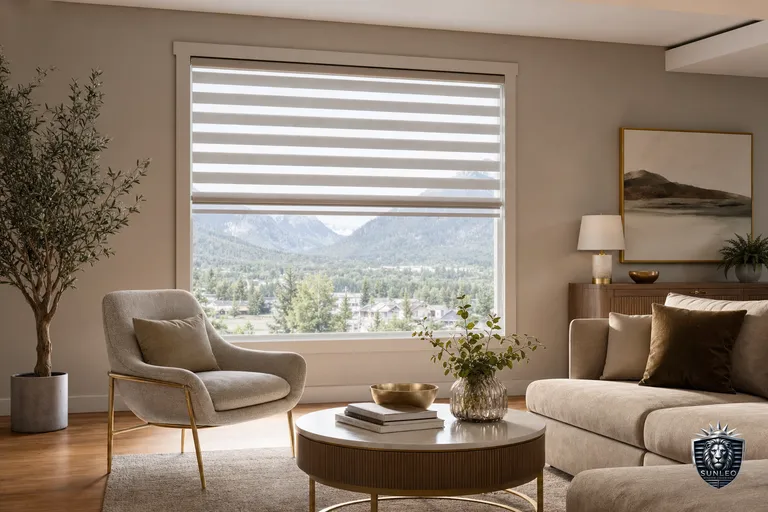
A sunroom is the hardest room in the house to get right. It is mostly glass, often on the west or south side, so it bakes in the afternoon, blinds you at sunset, and quietly fades your floors and furniture all summer. Then a Chinook rolls through, the temperature jumps twenty degrees overnight, and the same room that was an oven becomes a cold box. Calgary makes this worse than most cities: we sit at high altitude, so UV is more intense than the latitude suggests, and the low winter sun drives glare deep into the room when you least expect it. The right window coverings have to manage heat, UV, glare and insulation all at once — sometimes on sloped or skylight glass you cannot reach. Sunleo is a mobile service with no showroom. A consultant brings fabric samples to your sunroom, measures every window (including the awkward angled ones), and sends a written quote within 48 hours. You see how each fabric reads in your actual light before deciding.
Zebra and roller blinds: glare and UV control without losing the view
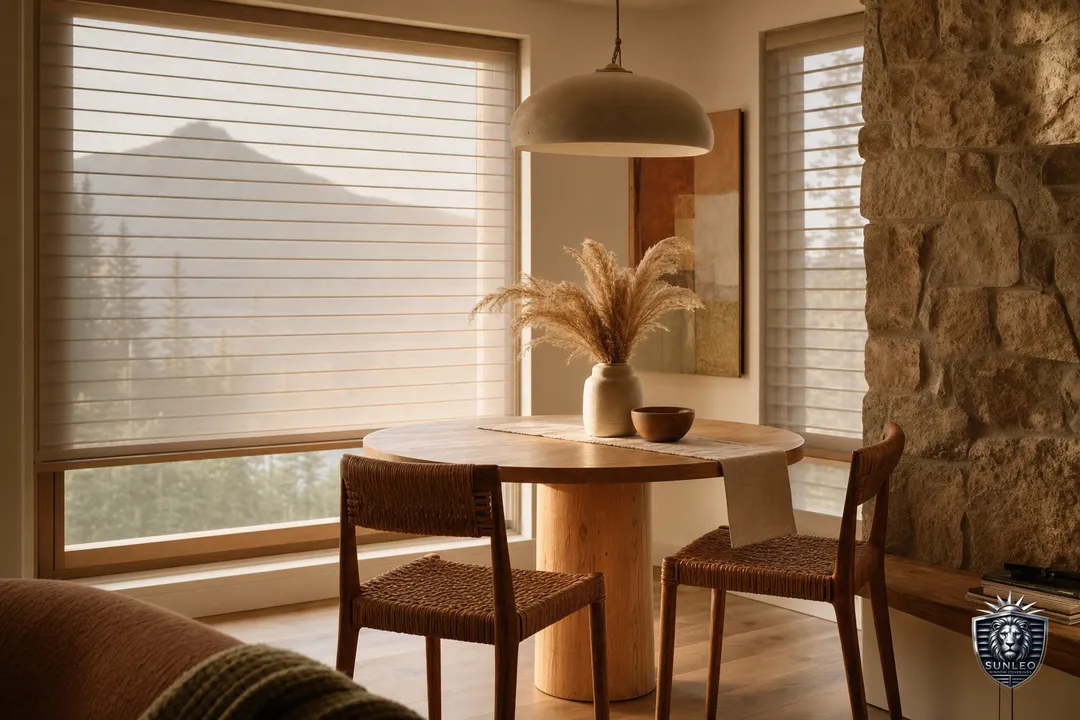
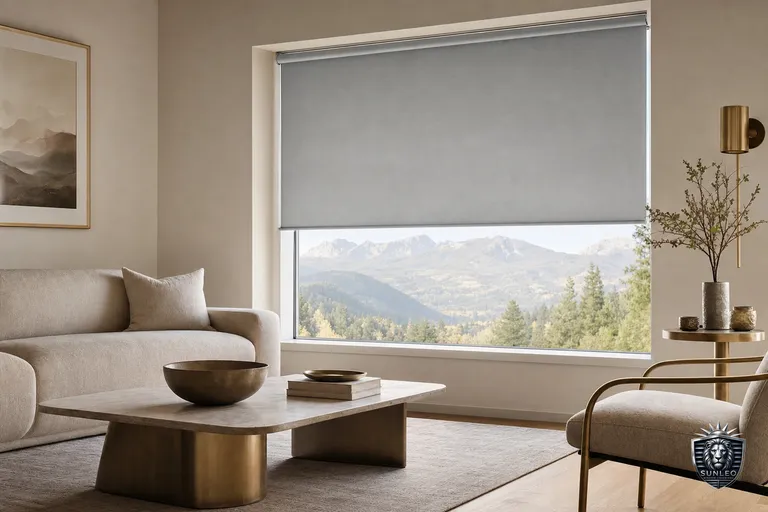
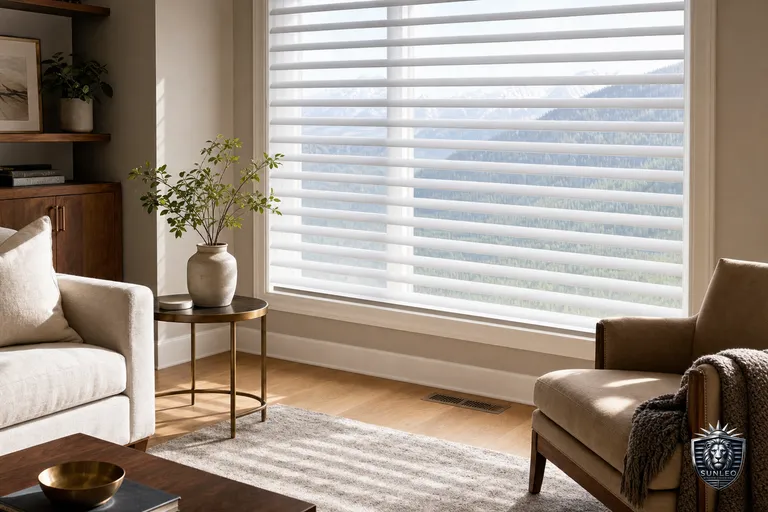
Most sunrooms exist for the view, so the first instinct — blacking the windows out — defeats the purpose. Zebra blinds and sheer shades are the standard answer: tilt the bands open and you still see through to the yard or mountains; close them and they knock down glare, heat and UV. A light-filtering roller is the simpler alternative, softening the sun into a bright glow, though it hides the view while it is down. In a west-facing Calgary sunroom that gets hammered at 6 p.m. in July, a dim-out roller or a zebra with its solid bands closed controls glare far better. The honest trade-offs: sheer bands are not blackout and are not private at night. After dark, with the lights on inside, anyone outside can see in through them, so a zebra or sheer alone is wrong if you use the room as an evening living space facing a street. They also do little for insulation — they are a heat-and-glare tool, not a thermal one. That is why we often pair a daytime layer with a second, more opaque or insulating one, or steer toward honeycomb if winter cold is the bigger complaint. For a bright daytime sunroom where keeping the view is the whole point, though, a zebra or light-filtering roller is usually the most cost-effective fix.
Cellular honeycomb shades: the insulation play for Calgary swings
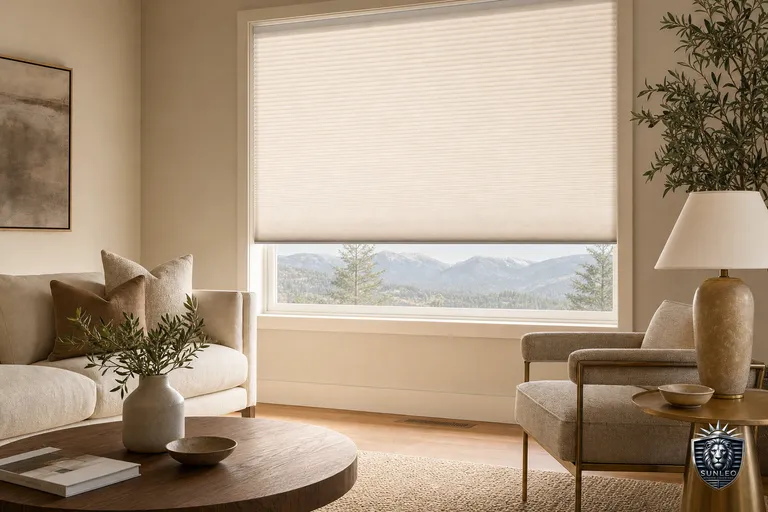
If your sunroom is unusable in January — cold radiating off the glass, the furnace fighting a losing battle — insulation matters more than glare. Cellular (honeycomb) shades are built for exactly this. The pleats form trapped-air pockets against the glass, slowing heat loss in winter and heat gain in summer. In a room that is essentially a glass box exposed to Chinook swings, that buffer is the difference between a three-season and a year-round space. Honeycombs come in light-filtering and room-darkening fabrics, and in a double-cell version that insulates more for harsh exposures. They also look clean and modern, with no slats or cords cluttering the view. The honest trade-offs: honeycomb fabric is not see-through, so when it is down you trade the view for comfort — it does not preserve the vista the way a zebra or sheer does. It is also a fabric shade, so on a humid sunroom with a hot tub or lots of plants, ventilate well; trapped moisture is not its friend. And while it cuts UV when lowered, raised it offers nothing, so it protects floors only when you remember to close it. For most Calgary sunrooms the smart move is a combination: a zebra or sheer layer for daytime glare with the view intact, and honeycomb for cold evenings and deep winter. Sunleo can spec both on the same windows so you switch based on season rather than compromising year-round.
Sloped, skylight and out-of-reach glass: where motorization earns its keep
Plenty of Calgary sunrooms have angled roof glass, transom windows above the main run, or a peak you would need a ladder to reach. Standard blinds do not work on sloped glass — gravity pulls the fabric away from the pane and it sags. Skylight and sloped-glazing systems solve this with side channels or tensioned tracks that hold the shade flat against the angle along its whole travel, so it actually blocks the overhead sun that causes the worst heat and fade. For glass that is simply too high to operate by hand every day, motorization is the practical answer rather than a luxury. A rechargeable or hardwired motor lets you drop the upper shades from a remote, wall switch, or your phone, and you can schedule them to close before the afternoon sun hits — protecting floors and furniture even when you are at work. They integrate with Alexa, Google Home and Matter setups. The honest trade-offs: track-guided skylight systems and motors cost more than a basic manual roller, and motorized units need either occasional battery recharging or an electrician for hardwiring. For overhead and unreachable glass, though, a manual shade you never bother to operate is worse value than a motor you actually use. During the in-home visit Sunleo measures the slope angle and reach, confirms what each opening needs, and tells you honestly which windows justify motorization and which are fine on a simple wand or chain.
Fade protection and managing the seasons honestly
UV damage is the slow, invisible cost of a sunroom. Calgary's high-altitude sun fades hardwood, area rugs, leather and artwork faster than people expect, and it does the damage whether or not the room feels hot. No fabric blocks 100% of UV unless it is fully opaque and closed, so be skeptical of any blind sold as total fade-proofing. What good window coverings do is cut the UV dose dramatically during peak hours, which is what actually preserves your finishes. Blinds cut UV most while down; heavier, more opaque fabrics block more. The practical strategy is a routine, not a single product: close the worst-facing shades during the strongest part of the day, and let motorization handle that automatically on schedule so protection does not depend on memory. Seasons flip the priority. In summer the enemy is afternoon heat and glare from low west sun; in winter it is cold glass and that same low sun cutting in at a sharp angle around midday. A single shade type rarely nails both, which is the honest case for a layered setup — a view-preserving daytime layer plus an insulating or darkening layer. The honest trade-off is cost and a slightly busier window. But it is how a Calgary sunroom becomes genuinely four-season instead of comfortable for only part of the year. Sunleo's consultant maps your room's exposure on site and recommends only the layers your specific orientation needs.
What a sunroom project costs and how the in-home visit works
Sunroom cost depends on how many windows there are — their sizes, the product and fabric you choose, whether any glass is sloped or out of reach, and whether you motorize all drive the total. A simple run of manual light-filtering rollers on standard vertical windows sits at the affordable end; a large room with sloped skylight tracks and motorization is a bigger investment. Rather than guess, Sunleo works the way that fits this room best: a consultant comes to your home, measures every opening precisely (including angled and high glass, which are easy to mismeasure), and shows you fabric samples in your sunroom's real light — a fabric can look completely different at noon versus 6 p.m., and you should see that before you commit. You get a written, itemized quote within 48 hours, so you can compare options — say, zebra blinds alone versus a zebra-plus-honeycomb layered setup — with real prices, not ballparks. There is no showroom to visit and no online checkout; this is a measure-and-quote service, and professional installation is part of it, which matters most on sloped and motorized glass where a poor fit shows immediately. The honest note: book the visit before the peak summer rush if you want the room ready for the season, since custom fabrication takes time. Calgary's free in-home measurement carries no obligation — you can take the quote and think it over.


