
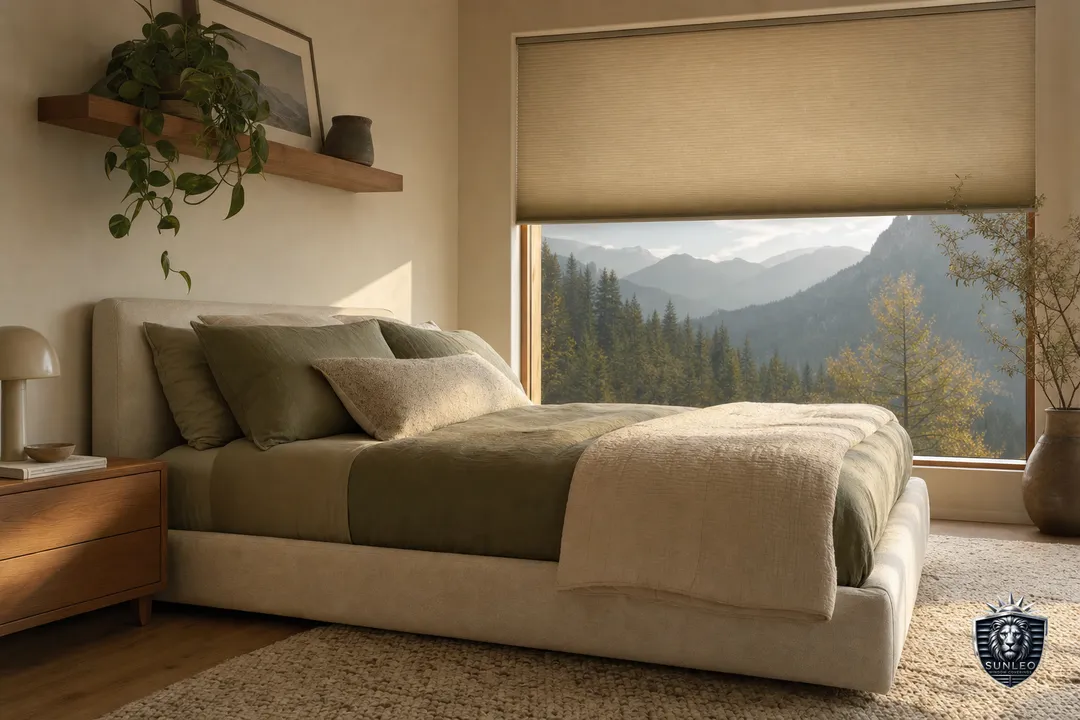
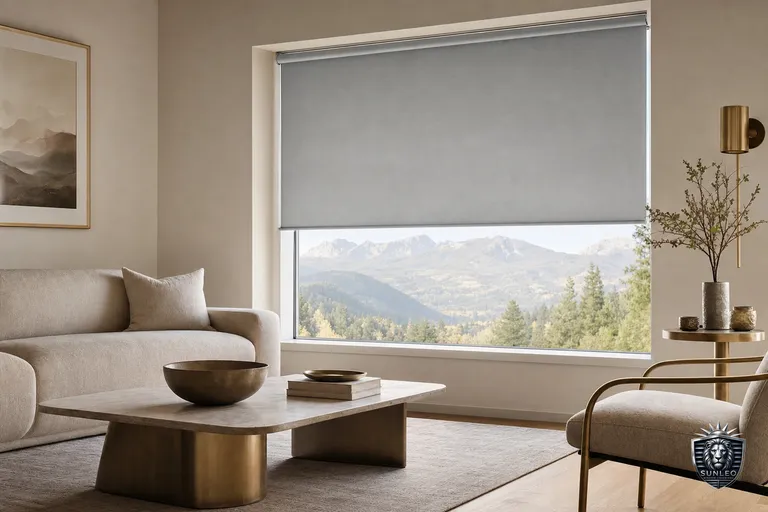
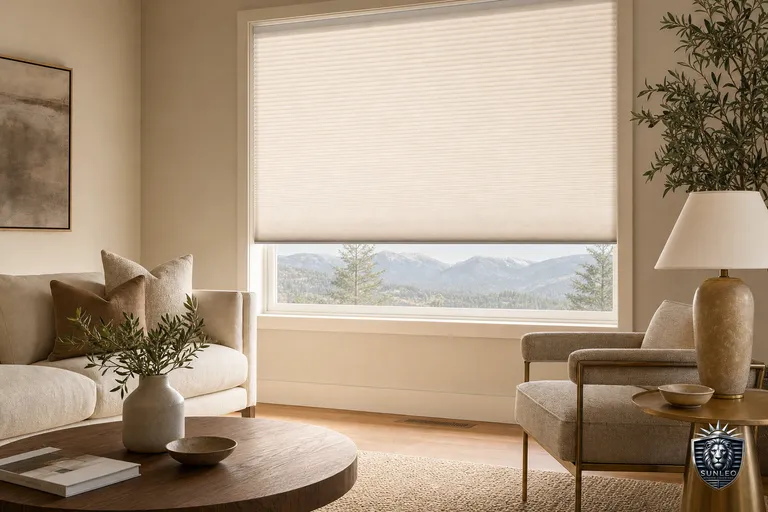
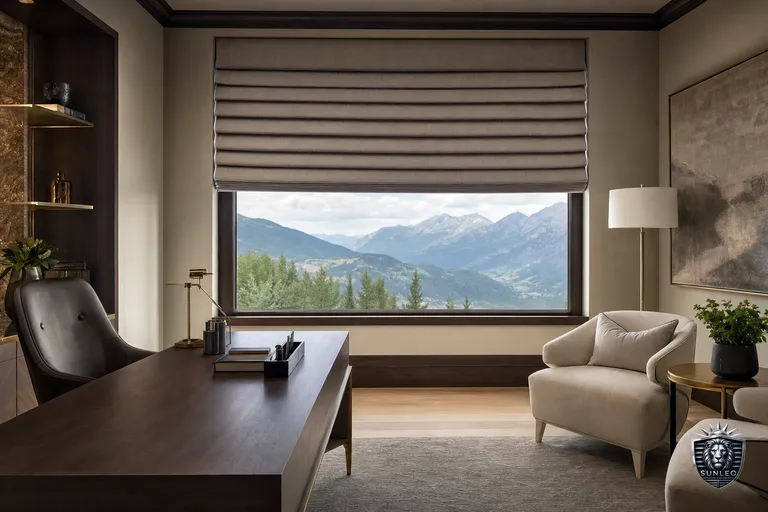
Getting a room truly dark in Calgary is harder than it looks. Our high-altitude prairie sun is intense, summer daylight stretches past 10 p.m., and the low winter sun glares straight through south- and west-facing glass. Many newer Calgary and Airdrie builds also have large windows and open sightlines that let light leak in around a standard blind. A blackout fabric alone is not enough — light sneaks through the gaps at the sides, top and bottom, so the room reads grey rather than dark. True blackout comes from pairing a blackout-rated fabric with a system that seals those edges: side channels, a cassette headbox, or an outside mount that overlaps the frame. Sunleo measures every window in your home, recommends the right blackout fabric and channel system for each room, and builds it made-to-measure. There's no showroom and no online cart — we bring the samples to you, then install. You get a written quote within 48 hours.
How blackout blinds actually work
Blackout is about two things: the fabric and the edges. A true blackout fabric is woven tightly or coated with an opaque backing — often an acrylic foam layer — so no light passes through the material itself. That's different from 'room-darkening' or 'dim-out' fabric, which heavily reduces light but still lets a faint glow through. If you can hold a fabric to a bright window and see no light through the weave, it's blackout-rated.
But fabric is only half the job. The biggest source of light leak is the gap around the blind — the slivers of daylight along the sides, over the top of the roll, and under the bottom rail. On a plain inside-mounted blind, those gaps can light up a whole bedroom at 5 a.m. in a Calgary summer. That's why the system matters as much as the cloth.
There are three ways to close the gaps. Side channels (also called light-blocking or 'zip' channels) run down each edge and trap the fabric so light can't sneak past. A cassette or headbox caps the top where the fabric rolls. And a generous outside mount — fabric wider and taller than the opening — overlaps the frame. We assess each window and combine these so the room goes genuinely dark, not just dim. The right approach depends on the window's depth, the frame and how dark you need it.
Side channels and cassettes: the secret to true darkness
If you remember one thing about blackout, make it this: the channel system does more for darkness than the fabric grade. Side channels are slim aluminum tracks mounted on each side of the window. The blackout fabric runs inside them, so the edge of the cloth is captured rather than hanging free — closing the vertical light gaps that defeat most off-the-shelf blinds. On rollers this is sometimes branded as a 'zip' or light-blocking side channel.
A cassette (or fascia headbox) covers the top of a roller where the fabric wraps the tube. Without it, light spills over the roll and bounces off the ceiling. With it, the top gap is sealed. Pair side channels with a cassette and a sill-level bottom channel and you get a near-light-sealed box around the window — the closest thing to a fully dark room.
For honeycomb shades, the equivalent is a track-guided side-channel system, which also helps the cellular fabric insulate better against Calgary's cold. For Roman and roller shades on rooms that don't need 100% darkness, a deep outside mount that overlaps the frame by several inches on every side is often enough, and looks cleaner.
Which combination is right depends on the window. During your free in-home measurement we check frame depth, obstructions like handles and cranks, and how dark each room truly needs to be — then quote the exact system per window.
Best blackout blind types compared (and why zebra isn't one)
Three styles give true blackout when built correctly. Blackout roller blinds are the most popular: a single sheet of opaque fabric, clean and minimal, ideal with side channels and a cassette for a sealed bedroom. Blackout honeycomb (cellular) shades add insulation — their air-pocket cells block light and slow heat loss through cold Calgary windows, a real bonus in winter. Blackout-lined Roman shades give the soft, tailored, drapery look of fabric folds with an opaque lining sewn behind, perfect when you want darkness without a hard, modern blind.
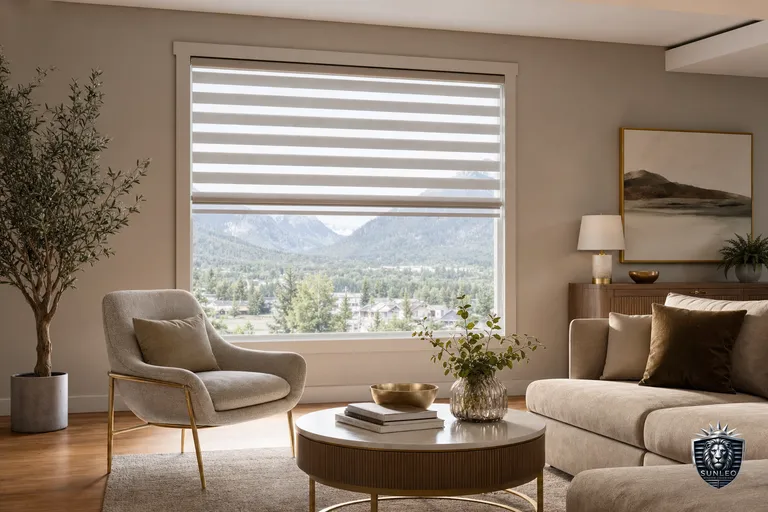
One important honesty note: zebra (day-night) blinds are not fully blackout. Their alternating sheer-and-solid bands are designed to dial between view and privacy, and even with the solid bands aligned, light passes through the seams and sheer sections. They room-darken beautifully and look fantastic in living rooms, but on their own they won't black out a nursery. If you love the zebra look in a bedroom, the fix is to pair them with a separate blackout roller behind, on the same window — a dual-roller setup we install often.
Which style wins comes down to the room and the look you want: roller for clean and modern, honeycomb for insulation, Roman for warmth and softness. We bring samples of all three to your home so you can see the fabrics against your own light before deciding.
Best rooms for blackout in Calgary homes
Blackout earns its keep in three rooms. Bedrooms top the list — Calgary's long summer evenings and early sunrises make true darkness the difference between sleeping until your alarm and waking at 5 a.m. South- and west-facing master bedrooms in newer suburbs like Mahogany, Evanston and Nolan Hill get especially bright. Nurseries are second: babies and toddlers nap during the day, and a genuinely dark room helps them settle and stay asleep, so a sealed blackout system (channels and cassette) is worth it here more than anywhere. Media rooms and home theatres are third — even a little daylight washes out a screen, so blackout keeps contrast crisp for movie nights and gaming.
Beyond those, basements and walkout lower levels often double as guest rooms or theatres and benefit from blackout. Shift workers — nurses, first responders, energy-sector crews on rotation — frequently ask us for bedroom blackout so they can sleep through the day.
A practical Calgary note: pairing blackout with insulating honeycomb fabric also helps with our temperature swings, trimming heat loss on -30°C nights and blocking solar heat in summer. So the same blind that darkens the room can make it more comfortable and a little cheaper to heat and cool. We'll walk each room with you, flag which windows need full sealing versus a simple outside mount, and quote accordingly.


