
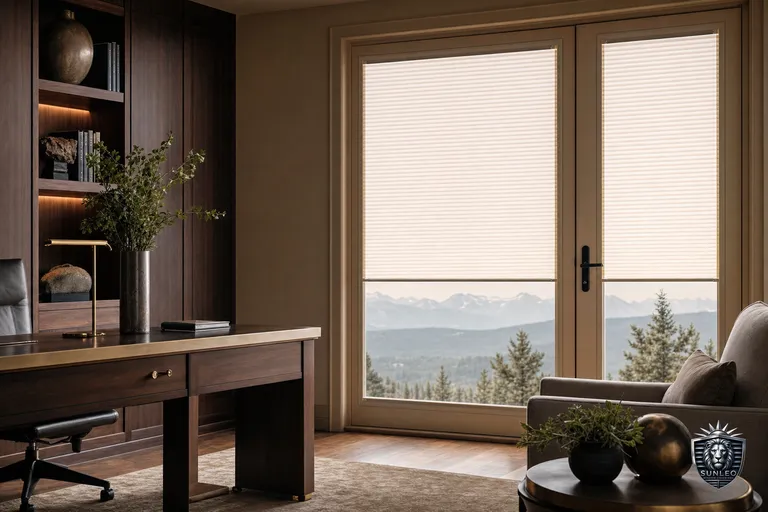
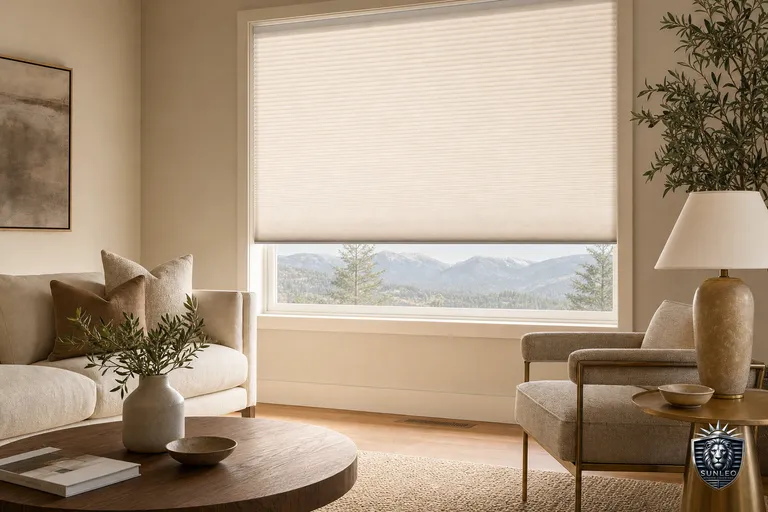
A sliding patio door is one of the trickiest openings in any home to cover. It is wide, it is tall, and — unlike a fixed window — part of it has to keep moving so you can actually walk through. Whatever you hang there has to clear the door handle, stack out of the way on the side you use, and still block Calgary's low winter sun and summer glare across a big sheet of glass. Get the mount height or stack direction wrong and the blind fouls the door every time you open it. Sunleo solves this in your home, not a showroom: a specialist measures the exact opening, checks which way the door slides and where the traffic flows, and brings real samples so you can see how vertical, zebra, roller or no-drill door blinds behave on your own patio door — then sends a written quote within 48 hours.
Why patio and sliding doors need a different approach
A sliding or patio door is really two challenges in one frame. First, it is a doorway: it has to open dozens of times a day, so the covering can never block the handle or the path through. Second, it is a very wide, very tall expanse of glass — often the largest single window in the house — which means glare, heat loss and privacy are all magnified. A covering that works beautifully on a bedroom window can be useless here. A standard blind that rolls straight up has to be fully raised before you can step outside; a heavy drape drags on the floor and tangles in the track. The covering also has to respect the door's geometry. Most patio doors have one fixed panel and one sliding panel, with a handle that protrudes from the glass. Whatever you choose must clear that handle, stack toward the fixed side, and leave the active panel free to glide. In practice that narrows the field to a handful of systems built for the job — vanes that rotate and slide sideways, no-drill blinds that clip to each panel, or a single wide blind you raise when the door is in use. Choosing among them comes down to one honest question: how often do you actually use the door?
Vertical blinds: the classic patio-door answer
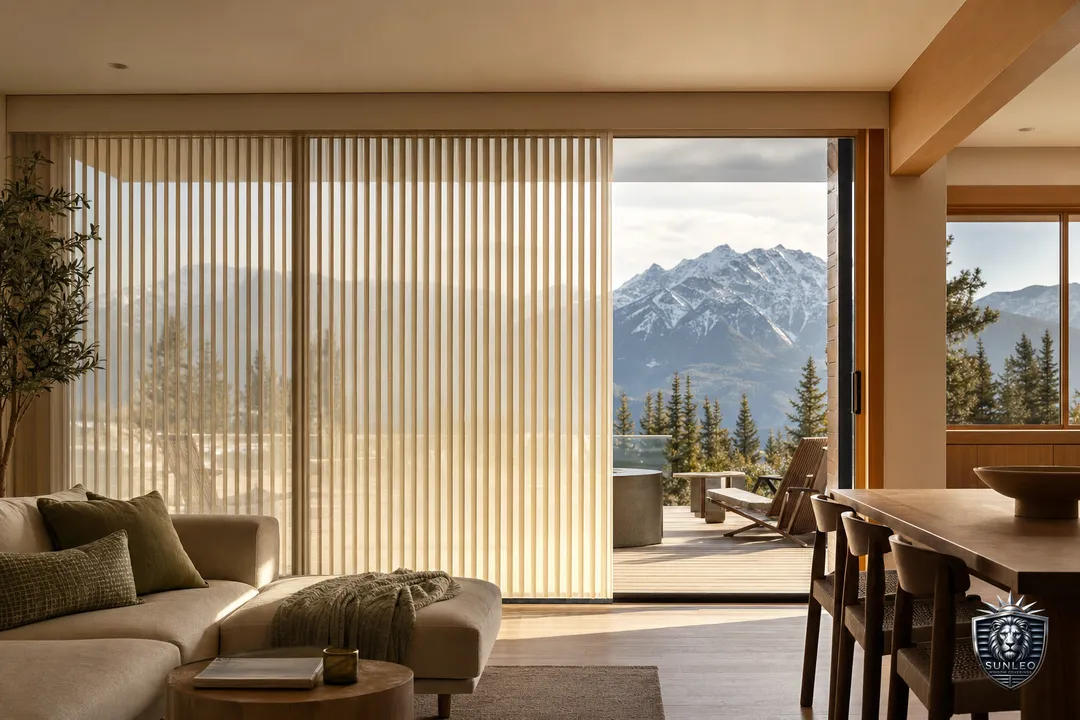
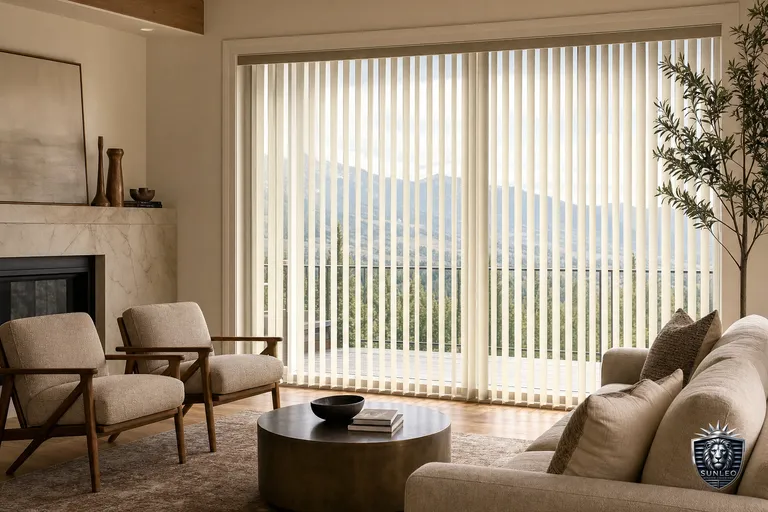
Vertical blinds remain the default solution for sliding doors for one simple reason — they move the same way the door does. The vanes hang from a top track and do two independent things: they rotate in place to dial light and privacy up or down, and they slide along the track to stack neatly out of the way when you want the glass clear. That means you can tilt them closed for privacy while sliding just the active panel's worth of vanes aside to step out, without disturbing the rest. They handle width and height effortlessly; a single headrail can span a wide door that would overwhelm a horizontal blind. Sunleo's vertical vanes come in fabric, PVC and faux-wood looks, and an individual vane can be swapped if one is damaged — handy on a busy door with kids or pets. The honest trade-offs: vanes can sway or clatter in a draught from an open door, and they read as more practical than luxurious. But if you want the everyday function of a patio-door covering nailed — full access, full light control, and the lowest cost per square foot of any option here — vertical blinds are still the most sensible starting point, and the one most Calgary homeowners land on.
Roller, zebra and panel-style alternatives — and the stacking trade-off
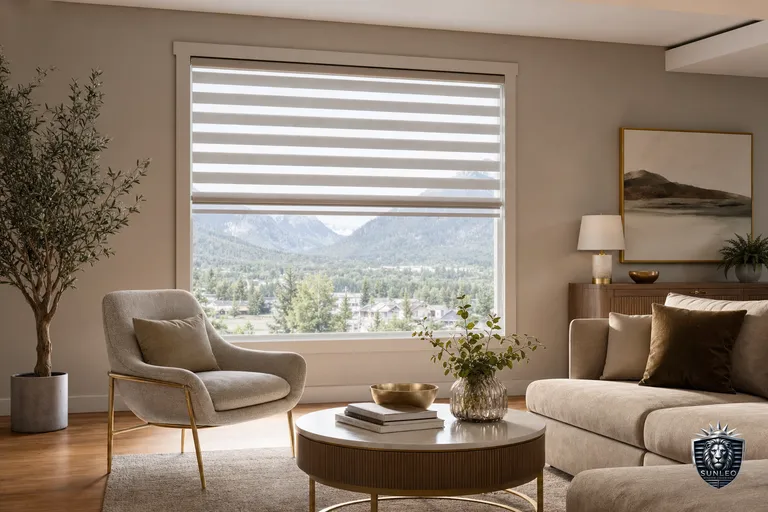
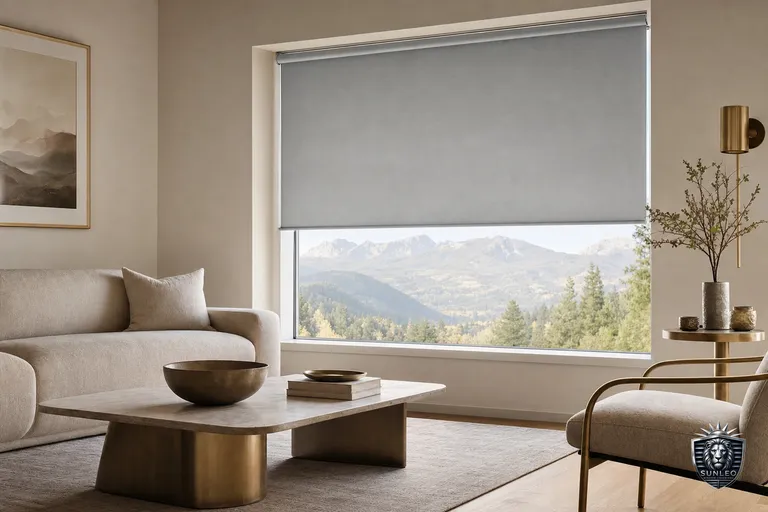
If vertical vanes feel dated, there are cleaner-looking options — with one trade-off to understand. Roller and zebra (day-and-night) blinds can be built as a single wide blind across the whole door. They look modern and minimal, give you excellent light control (a roller in light-filtering or blackout fabric; a zebra's sheer-and-solid bands for stepless privacy), and disappear into a slim cassette at the top. The catch is direction: they raise and lower vertically, so to walk through you lift the entire blind rather than sliding part of it aside. That is perfectly fine for a patio door you use occasionally — a dining-room walkout, say — but less convenient for a kitchen door you pass through twenty times a day. On a wide opening a single roller can also be heavy to operate by hand, which is exactly where motorization earns its place: one tap raises the whole thing. Panel-track style systems (wide flat panels that slide sideways) are the other modern route some homeowners ask about; where you want that sideways-stacking behaviour, Sunleo more often delivers it through vertical vanes or by splitting the opening into sections. The right pick comes down to one question: do you need to clear only part of the door quickly, or is raising the whole blind now and then fine?
Clearance, stacking and mounting: getting it right
The difference between a patio-door blind that delights and one that annoys is almost always in the details of clearance and stack. Stack-back is the space your covering occupies when fully open: vertical vanes and panels bunch up on one side, so you decide which side — usually the fixed panel, away from the traffic path — and accept that a sliver of glass stays partly covered there. Mount height matters too. Fixing the headrail above the frame, closer to the ceiling, lets a raised roller or zebra clear the top of the door completely and makes the whole window look taller. The door handle is the next culprit: an inside-mount blind sitting tight to the glass can collide with a protruding handle, so the bracket projection has to be measured against the handle, not guessed. Floor clearance is the last one — vanes and hems should hang just above the track so they never drag or catch underfoot. None of this is visible in a catalogue; it depends on your specific door, which way it slides, and how the room is used. This is the part that goes wrong most often with ready-made or self-measured blinds, and exactly what a professional in-home measurement is designed to get right the first time.
Calgary patio doors: big glass, newer builds and mobile service
Calgary homes lean hard on big sliding doors — walkouts to the deck, basement patio doors, and the wide glass that newer builds in communities like Mahogany, Seton, Cochrane and Airdrie use to pull in light. That glass is a comfort problem as much as a style one. A large single expanse is where a home loses heat fastest on a −30°C night and bakes on a west-facing summer afternoon, so the covering you choose has a real job to do beyond looks. Honeycomb (cellular) construction traps air against the glass and is the most insulating option for a patio door; light-filtering and blackout roller fabrics cut the strong, high-altitude UV that fades floors and furniture near these doors. Because Sunleo is mobile-only with no showroom, the measurement and sample selection happen at your door, in your light — which matters more here than on a small window, since you are judging how a fabric handles a huge, bright, often south- or west-facing pane. A specialist confirms the opening, the slide direction and the handle clearance on site, brings samples to hold against the actual glass, and follows up with a written quote within 48 hours, with professional installation across Calgary, Airdrie, Okotoks, Cochrane, Chestermere and Strathmore.


