
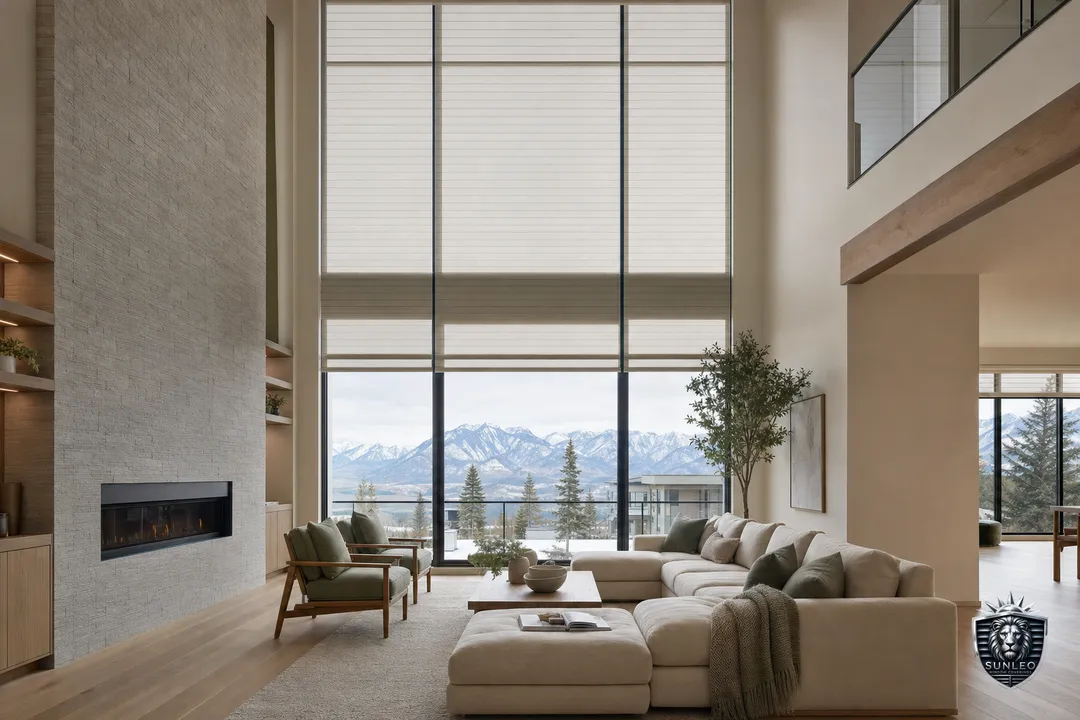
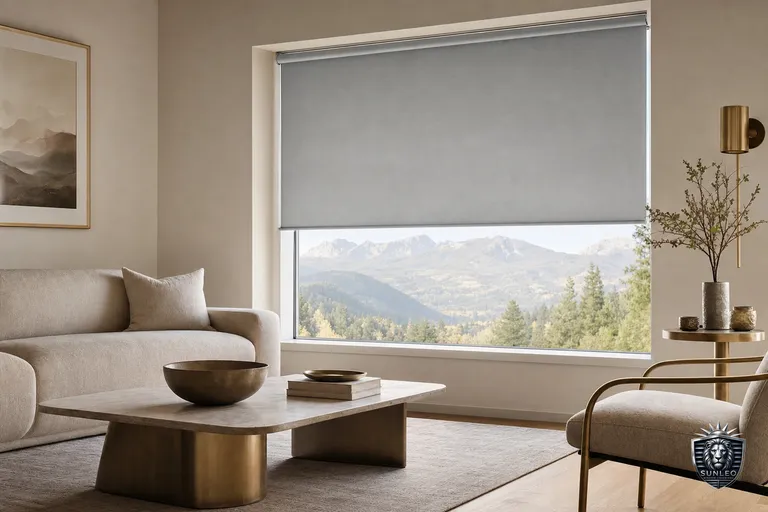
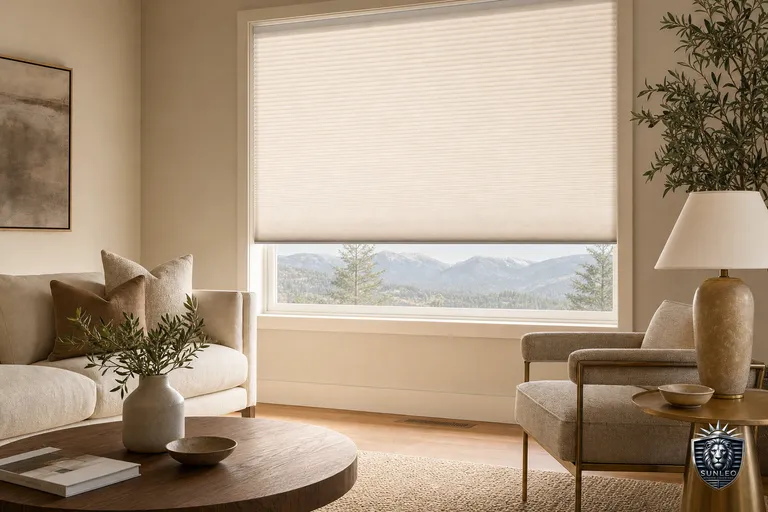
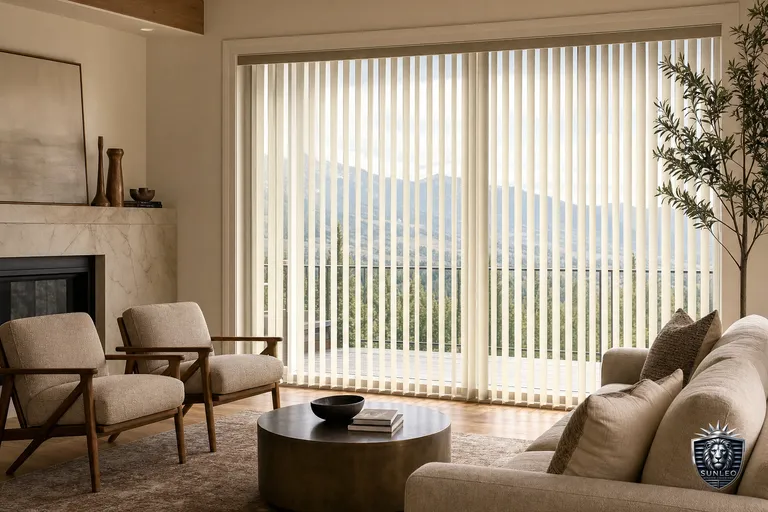
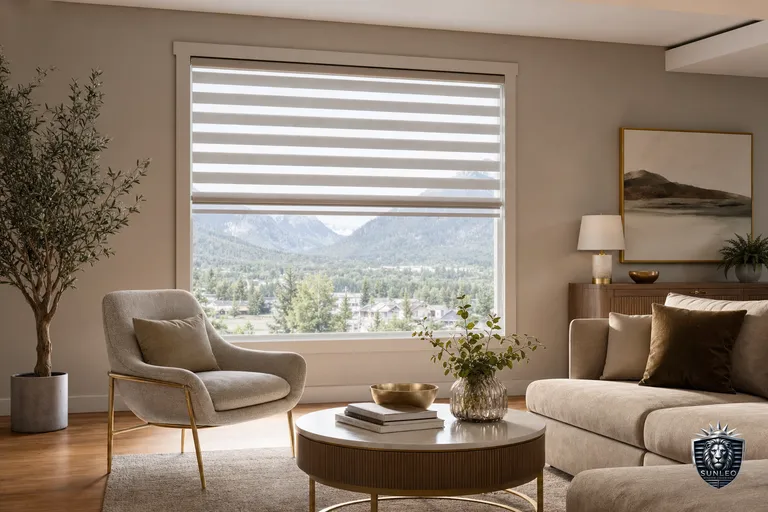
A two-storey great-room window looks spectacular in a listing photo — and dresses badly with anything off-the-shelf. Newer open-plan builds in communities like Mahogany, Seton, Cochrane and Airdrie love these tall windows and wide patio walls, but their size brings real problems standard blinds can't solve. A single shade that tall and wide gets heavy: the fabric can sag, the tube or headrail has to be engineered for the span, and reaching a cord nine feet up is awkward at best. Often the smart answer is to split the glass into two or three coordinated panels on one headrail, and to motorize the ones you can't easily reach. Because every large window is a different size — and big custom blinds aren't returnable — Sunleo measures yours in person. We're a mobile, no-showroom service: we bring the fabrics and motors to your home, measure to the millimetre, and send a written quote within 48 hours.
Can one blind cover a whole floor-to-ceiling window?
Sometimes, but often it shouldn't. Every blind type has a practical maximum width and drop, and large great-room glass frequently exceeds it. As a shade gets wider and taller it also gets heavier, which means more strain on the tube or headrail, more chance of fabric sag or 'smile' across a wide roller, and a harder pull by hand. That's why big windows are usually built as two or three blinds that share a single headrail or fascia. Each panel stays a sensible size, rolls or stacks cleanly, and you can operate sections independently — close the west half against afternoon glare while leaving the rest open. Splitting also lets the seams line up with the window's mullions, so the wall reads as one continuous treatment rather than a patchwork. The right number of splits depends on the fabric (a heavy blackout weighs more than a light-filtering fabric), the overall span, and whether you're motorizing. Honeycomb and roller fabrics each have their own drop and width limits, and a wide vertical blind behaves differently again. This is exactly the kind of judgement call that's hard to get right from a website — it depends on your actual glass, which is why we work it out at the in-home measurement.
Reaching the top: why large windows get motorized
Floor-to-ceiling and two-storey great-room windows can run eight, ten or more feet tall, and that height creates two issues: reach and weight. A long control chain on a tall, heavy blind is awkward to pull and slow to operate, and a dangling cord that long is a genuine safety hazard around children and pets. Motorization removes both problems. You raise and lower by remote, smartphone app, or voice through Alexa, Google Home and Apple Home — no ladder, no wrestling with a chain. For windows split into several panels, the real advantage is grouping: multiple blinds can move together as one with a single tap, so a whole great-room wall opens or closes in unison. You can also schedule shades to follow sunrise and sunset, or close automatically during the hottest part of a summer afternoon to cut heat and protect furniture. Power is either a rechargeable battery — no wiring, recharged every few months — or a hardwired motor if you prefer. You don't have to motorize every window in the house; many homeowners automate only the tall, out-of-reach panels and keep simple manual controls on the windows they can comfortably reach. We'll walk through which ones actually benefit during the visit.
Heat, glare and winter cold on big Alberta glass
A wall of south- or west-facing glass is gorgeous until mid-afternoon, when it becomes a heat-and-glare machine. Calgary's high elevation means thinner air and stronger UV, so large windows fade furniture, flooring and artwork faster than you'd expect, and throw glare across screens and TVs. The same glass is also a home's biggest source of winter heat loss — and a two-storey window is a lot of single-line defence against a −30°C night. Different treatments tackle different parts of this. A zebra blind with its bands tilted open, or a sheer shade, cuts glare while keeping your view of the mountains or backyard. A light-filtering or blackout fabric handles privacy and evening darkness on bedroom-adjacent glass. Honeycomb shades go after the temperature problem directly: their cellular pockets trap a layer of air at the glass, slowing heat loss in winter and heat gain in summer, which can improve comfort and help with energy bills on all that exposed area. Many large-window owners combine ideas — zebra or honeycomb on the upper, sun-facing panels, with motorized scheduling so the shades close themselves during peak sun even when nobody's home. Because orientation and sun exposure vary window by window, seeing the actual fabrics in your own light is the only reliable way to choose.
Big windows in newer Calgary builds — and how we measure them
Open great-room layouts with soaring glass are a signature of newer Calgary and Alberta builds — Mahogany, Seton, Legacy, Cochrane, Airdrie and Okotoks are full of them. They look incredible, but they rarely come in standard sizes, often sit above deep sills or staircases, and frequently need a decision between an inside mount (clean, tucked into the casing) and an outside mount (covers the whole opening, hides an awkward frame). Getting any of that wrong on a large custom blind is expensive, because made-to-measure shades can't be returned. That's where our model helps. Sunleo is mobile and appointment-based — there's no showroom to visit. A specialist comes to you, brings the actual fabrics, finishes and a motor to try against your own windows and daylight, and measures every opening properly, including the tall ones you'd need a ladder for. We confirm how to split wide spans, which panels to motorize, and the right mount for each window, then send a written quote within 48 hours with no obligation and no online checkout. We serve Calgary and the surrounding communities, including Airdrie, Okotoks, Cochrane, Chestermere and Strathmore.


