Comparison
Zebra vs Roller Blinds: Which Is Right for Your Calgary Home?
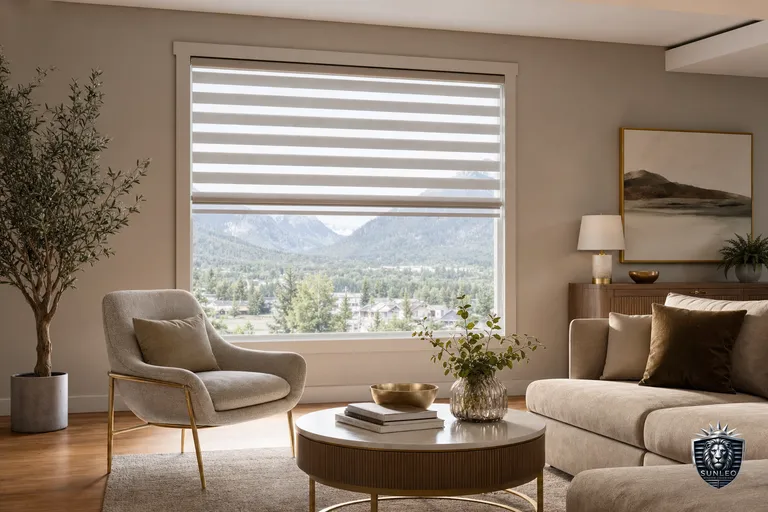
If you're choosing between zebra and roller blinds, you're really choosing between two versions of the same idea. Both are roll-up window coverings that mount cleanly above the window and pull down on a smooth tube. The difference is the fabric. A roller blind is one continuous piece — you raise it or lower it, and that's your light control. A zebra blind (also called a day-night or transitional blind) is built from alternating horizontal bands: sheer stripes and solid stripes. As you move the blind, the bands slide over each other, so you can line up solid-on-solid to block light, or sheer-on-sheer to let a soft, glowing view through without ever fully opening the window. That single design difference changes how each blind handles glare, privacy, view, style, and price. In a Calgary context — intense high-altitude sun, low-angle winter light that pours in sideways, and big west-facing windows that bake all afternoon — the right pick really depends on the room. This guide walks through each factor honestly so you can decide which fits where.
How each blind actually works
Both blinds share the same hardware: a fabric tube mounted at the top of the window, a chain or motor to roll it up and down, and a bottom rail that keeps the fabric flat. The mechanics are proven and low-maintenance, which is part of why both are so popular.
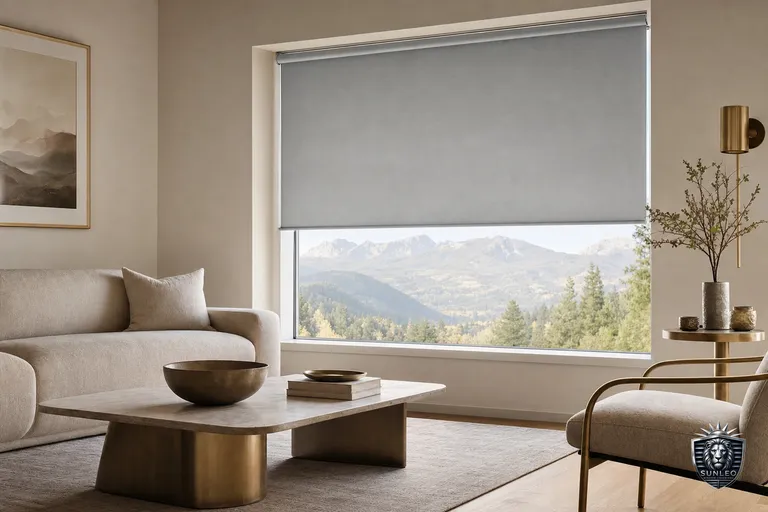
A roller blind is the simplest window covering there is. One panel of fabric wraps around the tube. Lower it and the window is covered; raise it and the window is clear. Your only variable is height — how far down you pull it. The fabric you choose (sheer, light-filtering, or blackout) sets the mood at full coverage, but the blind itself does one thing well.
A zebra blind is essentially two layers of striped fabric joined into a loop around the tube. Each layer alternates a sheer (translucent) band with a solid (opaque) band. When you nudge the chain, the front layer shifts relative to the back. Align the solid bands and they overlap to block light; align the sheers and you get a striped, glowing view to the outside. Between those two extremes you have an infinite range of filtered settings. That sliding-band system is the whole appeal — and the whole reason zebra blinds cost more and don't fully black out a room.
- Roller: one fabric layer, controlled by height only
- Zebra: two striped layers, controlled by band alignment plus height
- Both roll up compactly into a slim top stack
- Both available in chain-operated or motorized versions
Light control and the Calgary sun
This is where the two blinds separate the most, and where Calgary's specific light matters.
Zebra blinds are the better tool for managing glare through the day. South and west windows here take a beating — summer afternoons are blinding, and our thin mountain air means UV is harsher than the temperature suggests. With a zebra blind you can dial in just enough sheer to cut the glare on a screen or a TV while still seeing the yard. As the sun drops, you slide toward solid. You're constantly adjusting without ever choosing between 'blinding light' and 'cave.'
Roller blinds give you a cleaner binary. With a quality light-filtering fabric, a lowered roller softens a room beautifully and tames UV. With a blackout fabric — especially paired with side channels that close the light gap along the window frame — a roller blind gets a room genuinely dark. That's a real advantage in Calgary, where summer daylight stretches past 10 p.m. and low winter sun rakes in at eye level. For sleeping, a roller blackout simply outperforms zebra.
The honest trade-off: zebra excels at flexible daytime filtering but leaks light at the edges and between bands when 'closed,' so it never fully darkens a room. Roller is less nuanced through the day but can deliver true darkness when you need it.
- Zebra: best for adjustable daytime glare control on sunny rooms
- Roller blackout + side channels: best for true room darkening
- Both help block UV that fades floors and furniture over Calgary summers
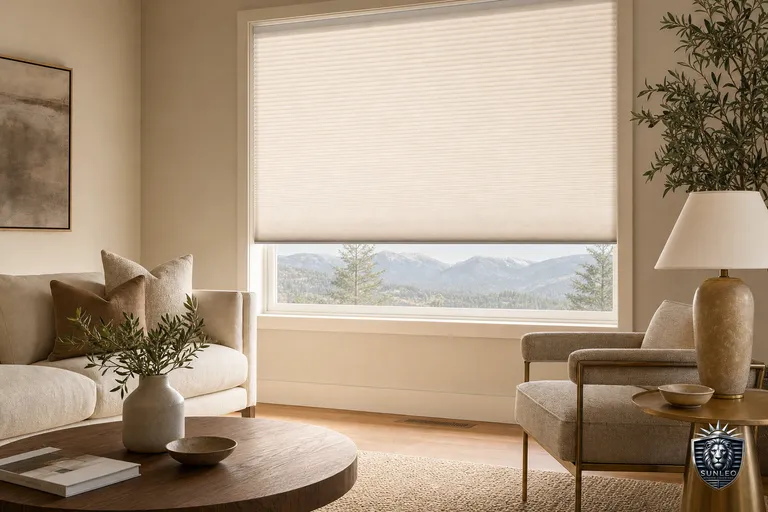
- Neither will fully insulate — for winter warmth, cellular shades lead
View, privacy, and style
If keeping your view is a priority, zebra blinds have a clear edge. Through the sheer bands you can see out — softened, a little dreamy — while the fabric still obscures the sharp details that let people see in during daylight. For a living room that looks onto the mountains, a park, or a nice street, that 'lowered but still open' setting is genuinely lovely and hard to replicate with a roller.
Privacy is where you need to think in day and night terms. In daylight, zebra's sheer setting gives you privacy-with-a-view; people outside see a striped surface, not your living room. After dark, though, interior lights flip that — sheer bands let outsiders see in, so you slide to solid for night privacy. A roller blind is more absolute: down means private, up means open, day or night. For street-level windows and bathrooms, that certainty is reassuring.
On style, both are clean and modern, but they read differently. Zebra blinds have a layered, contemporary look with subtle horizontal banding that suits open-concept condos and newer builds. Roller blinds are the minimalist's choice — they all but disappear into the wall, letting trim, drapery, or a view do the talking. Many Calgary homes pair the two: zebra in the social spaces, roller (or blackout roller) in bedrooms.
- Zebra: keeps a soft outward view even when lowered
- Roller: simple, absolute privacy when down
- Zebra suits open living areas and feature windows
- Roller layers neatly under drapes or in tight, minimal spaces
Cost, durability, and which room gets which
Roller blinds are almost always the more affordable option. There's less fabric and a simpler mechanism, so a roller will typically come in below a comparable zebra blind of the same size and quality. Zebra blinds carry a premium for the dual-layer fabric and the precision of the band system. We won't quote numbers here because real pricing depends on your window sizes, fabric, and whether you motorize — that's exactly what a free in-home measurement sorts out.
Durability tilts slightly toward roller. With one fabric layer and fewer moving parts, there's simply less to wear. Zebra blinds are reliable too, but the sliding bands can shift out of perfect alignment over years of heavy use, and the sheer sections show dust more readily — worth noting in Calgary, where Chinook winds and dry air move a lot of fine dust around. Both wipe down easily; sheers just ask for a bit more attention.
For room-by-room: put zebra blinds where you live during the day — living room, kitchen, dining nook, home office — anywhere you're constantly trading glare against view. Put roller blinds where darkness, privacy, durability, or budget lead: bedrooms (blackout), nurseries, media rooms, bathrooms, and rental units. There's no wrong answer, only the right tool per window.
- Roller: lower cost, fewer moving parts, easiest to maintain
- Zebra: premium for flexibility; sheers show dust sooner
- Zebra rooms: living, kitchen, dining, office
- Roller rooms: bedrooms, nurseries, bathrooms, media rooms
Installation, motorization, and a quick note from us
Both blind types install the same way and fit nearly any window. They can be mounted inside the window recess for a tidy, built-in look, or outside on the frame or wall to cover more glass and block more light — handy for a roller blackout where you want to minimize the light gap. Deep, square Calgary new-build windows usually take a clean inside mount; older or out-of-square frames sometimes do better with an outside mount, which a measurement visit will flag.
Motorization is available for both and is worth considering for large or hard-to-reach windows — think tall stairwell glass or a bank of west-facing living-room windows you adjust constantly. Motorized versions integrate with smart-home systems and can run on schedules, which is a nice way to pre-empt that 4 p.m. summer glare automatically.
You can absolutely install either blind yourself if you're comfortable with a drill, a level, and careful measuring — measuring is where most DIY jobs go sideways, since a fraction of an inch decides whether a blind sits flush or gaps. Or we install it free. Every Sunleo order includes professional installation, and it starts with an in-home visit where we bring real fabric samples, measure precisely, and hold the zebra and roller options up against your actual light and view, with nothing to sign on the spot. Seeing both fabrics against your own window settles the choice faster than a showroom ever could — and since the samples travel to you, there's no showroom to drive to in the first place.
- Inside mount for a clean built-in look; outside mount to block more light
- Motorization suits large, high, or frequently adjusted windows
- DIY is doable, but measuring is where errors happen
- Free professional installation and in-home samples with every Sunleo order
| Zebra (Day-Night) | Roller | |
|---|---|---|
| Light control range | Excellent — sheer, filtered, or near-dark by sliding bands | On/off by height; precise with the right fabric |
| View when lowered | Keeps a soft, see-out view through sheer bands | View blocked once fully down |
| True blackout | Limited — light leaks between bands even when closed | Yes, with a blackout fabric and side channels |
| Daytime privacy | Good with view; sheer bands obscure but soften | Full privacy down, full exposure up |
| Style | Modern, layered, contemporary look | Clean, minimal, blends with any decor |
| Typical cost | Higher — dual-layer fabric and mechanism | Lower — simplest roll-up system |
| Best rooms | Living rooms, kitchens, dining, home offices | Bedrooms, media rooms, bathrooms, rentals |