Comparison
Wood vs Faux Wood Blinds: Why We Use Faux Wood in Calgary
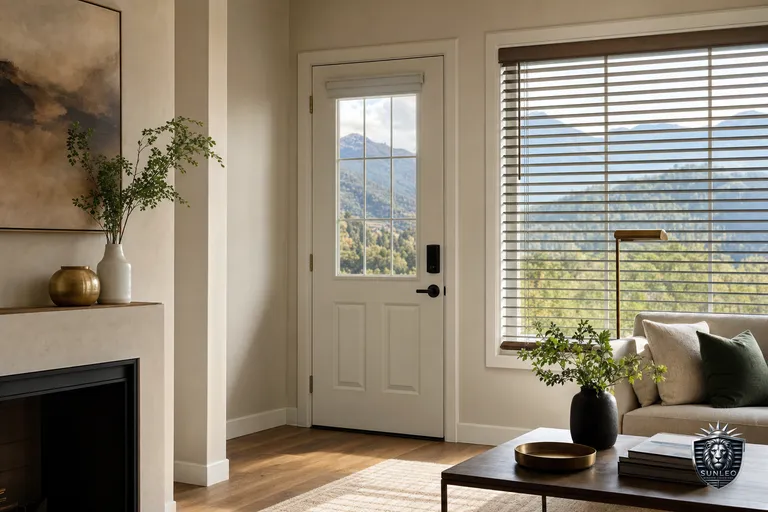
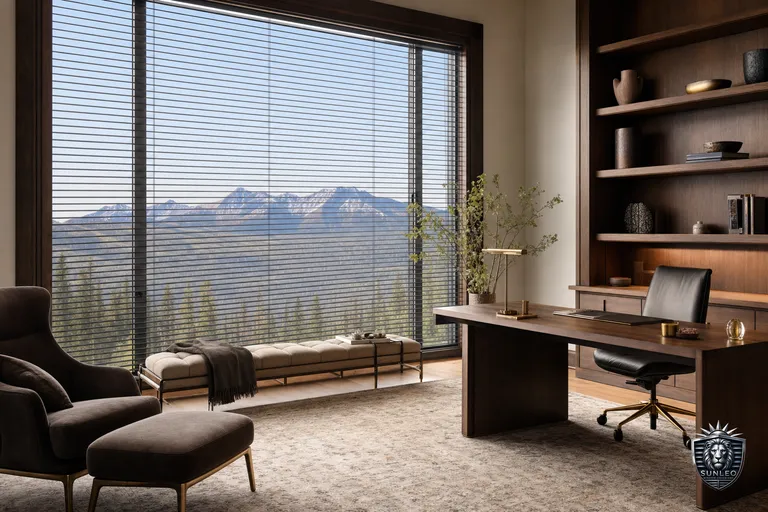
If you love the classic look of horizontal venetian slats, you have probably wondered whether real wood or faux wood is better. From across a room they can look almost identical. The differences show up in the details that matter for everyday Calgary living — how they handle moisture and steam, how they hold up to our intense high-altitude UV and Chinook humidity swings, and how much they weigh on a wide window. Natural wood can warp, crack and fade over time; faux wood — made from PVC or a wood-composite — shrugs off humidity and won't warp, which is why it's the material we use for our wood-look venetians. This guide explains why, compares faux wood with aluminum, and covers the best room-by-room matches so you can choose with confidence. And because every window in your home is a slightly different size and condition, the easiest way to get it exactly right is a free in-home measurement, where we bring faux wood and aluminum samples to compare in your own light.
The short answer: why faux wood
Start with the room, and you'll see why we build our wood-look venetians in faux wood. A lot of Calgary windows live in spaces that get steam, splashes or swings in humidity — a bathroom, an ensuite, a kitchen above the sink, a laundry room or a basement. PVC and composite slats simply don't care about moisture: they won't swell, warp, crack or grow discoloured the way natural wood eventually can. That same stability means one faux-wood finish can run through the whole house, from the ensuite to the living room, principal bedroom or home office, where the warm grain look does the emotional work.
After the room, weigh three practical factors: weight, budget and finish. Faux wood is heavier than aluminum, so on very wide openings we often recommend splitting the window into two blinds on one headrail. On budget, aluminum is the friendlier number, which is why many Calgary homeowners use faux wood where the look matters and aluminum in utility rooms.
- Choose faux wood for: bathrooms, kitchens, laundry, basements, high-humidity or splash-prone windows
- Faux wood also suits: living rooms, bedrooms, dining rooms, offices and feature windows
- Choose aluminum for: a slimmer modern line, very wide windows or the lowest cost across many windows
Moisture, warping and Calgary's climate
This is the single biggest reason we use faux wood. Natural wood is hygroscopic — it absorbs and releases moisture with the air around it. In a steamy ensuite or above a busy kitchen sink, that constant cycle can eventually cause slats to bow, warp or develop fine cracks, and the finish can lift over time. Faux wood is immune to all of that, which is exactly why it dominates bathrooms and kitchens.
Calgary adds its own wrinkles. Our air is famously dry for much of the year, then a Chinook can swing temperature and humidity dramatically in a single afternoon. Rooms with big seasonal swings — or homes that run a humidifier hard in winter — put stress on natural slats, while faux wood stays dimensionally stable through all of it.
There's also UV to consider. Calgary sits at high elevation with strong, direct sunlight, and low winter sun streams deep into south- and west-facing rooms. Intense UV can fade and, over years, dry out natural wood finishes, especially on a window that bakes every afternoon. Quality faux wood is engineered to resist fading and won't dry-crack from sun exposure, so it holds up on a sun-blasted west window — even in a dry room.
- Steam and splashes: faux wood and aluminum both shrug them off
- Big humidity swings from Chinooks or winter humidifiers: faux wood stays stable
- Strong south/west sun: faux wood resists fading and drying over the years
- Dry, shaded or north-facing rooms: faux wood looks just as warm there
Looks, weight and the feel of the room
Faux wood has come a long way. Modern composite and PVC slats are embossed with convincing grain and offered in clean whites and warm wood tones that look right at home in most rooms, and you can match a tone to your floors or a warm Calgary mountain-modern palette during the consultation. The trade-off is weight: faux slats are denser, so on a very wide window the blind gets heavy. That's not a dealbreaker — it just means we'll often recommend a two-on-one configuration or a slightly narrower slat to keep operation smooth and the stack tidy. If you want the lightest blind on a wide window, aluminum is the alternative.
A quick note on slat size and light: wider slats give a cleaner, more open view and let in more light when tilted, while narrower slats look more traditional and block a touch more. Whichever material you choose, getting the tilt and fit right is what makes the room feel finished — and that's much easier to judge with samples held up in your own windows.
- Faux wood: durable, uniform, convincing wood look, warm finishes
- Aluminum: lightest, slimmest and most budget-friendly
- Wide windows: faux may use a two-on-one headrail; aluminum stays light
Cost, value and where to spend
Honest version: aluminum costs less than faux wood, and that gap lets you make smart, room-by-room decisions instead of paying the same everywhere. A common and sensible Calgary approach is to run faux wood through the rooms where the warm look and moisture resistance both matter — bathrooms, kitchen, living room, principal bedroom — and use aluminum in laundry, utility or basement windows.
Value isn't only the upfront price, though. Think about lifespan in context: faux wood in a steamy ensuite keeps its shape for years, exactly where a natural wood slat might not age gracefully. Match the material to the room and you spend less over time, not just on day one.
Cost depends on product, fabric, size and control — for slat blinds, width, height, mount type, slat size and finish all move the number. As a guide, roller and zebra blinds start at 2 windows from $399 installed (honeycomb from $439). The most accurate way to compare is a free in-home measurement, where we measure precisely, bring faux wood and aluminum samples, and send a written quote within 48 hours. No showroom trip, no guesswork — we come to you anywhere in Calgary, Airdrie, Okotoks, Cochrane, Chestermere and beyond.
- Aluminum: lowest upfront cost — ideal for utility rooms and many windows on a budget
- Faux wood: a step up, best where the warm look and moisture resistance both count
- Best value = matching material to the room, so blinds last where they're installed
- Free in-home measurement gives you an exact, written quote with samples on hand
Installation and getting the fit right
Faux wood and aluminum blinds install the same way and can be mounted inside the window recess for a clean, built-in look or outside the recess to make a window feel larger and block more light leak. The fit is what separates a blind that looks custom from one that looks store-bought: inside mounts need accurate depth and square measurements so the slats clear the frame and stack neatly, while outside mounts need the right overlap to stop side gaps. If you'd like to measure yourself first, here's the safe, simple approach.
- Use a steel tape, not cloth, and measure to the nearest millimetre
- For inside mount: measure width at top, middle and bottom — use the narrowest; measure height in three spots too
- Check the recess depth so the headrail and tilt mechanism sit flush
- For outside mount: add overlap on each side and above for light control and privacy
- Note any handles, cranks or tile that the blind must clear
- Or skip all of it — book a free in-home measurement and we'll measure and install it for you, no charge for the measure
| Faux Wood | Aluminum | |
|---|---|---|
| Material | PVC or wood-composite (PVC + wood fibre) | Lightweight metal slats |
| Moisture & warp resistance | Excellent — won't warp, swell or rot | Excellent — resists moisture without warping |
| Weight | Heavier — better kept to narrower widths | Very light — easy to raise on wide windows |
| Look & feel | Convincing wood grain, warm and classic | Slim, crisp, contemporary |
| Best rooms | Living rooms, bedrooms, bathrooms, kitchens, basements | Kitchens, laundry, offices, rentals |
| Cost | Mid | Most budget-friendly |
| Cleaning | Wipe clean with a damp cloth | Wipe clean in seconds |