Buyer's Guide
Window Treatment Ideas for Every Room and Window Type
Great window treatments do two jobs at once: they solve a practical problem — glare, heat, privacy, a too-bright bedroom — and they quietly set the mood of a room. The hard part is that no single blind is right for every window. A patio door, a bay, a skylight and a two-storey great-room wall each ask for something different, and Calgary's climate adds its own demands: intense UV, chinook brightness and −30 °C winters. This guide walks through window treatment ideas the way a designer actually plans a home — room by room and window type by window type — plus how to layer for depth and which looks suit modern Calgary builds. Whether you're furnishing a new Mahogany build or refreshing an inner-city character home, you'll leave with a shortlist worth measuring. And because every window is custom, the last step is always seeing samples in your own light.
How do you choose window treatments room by room?
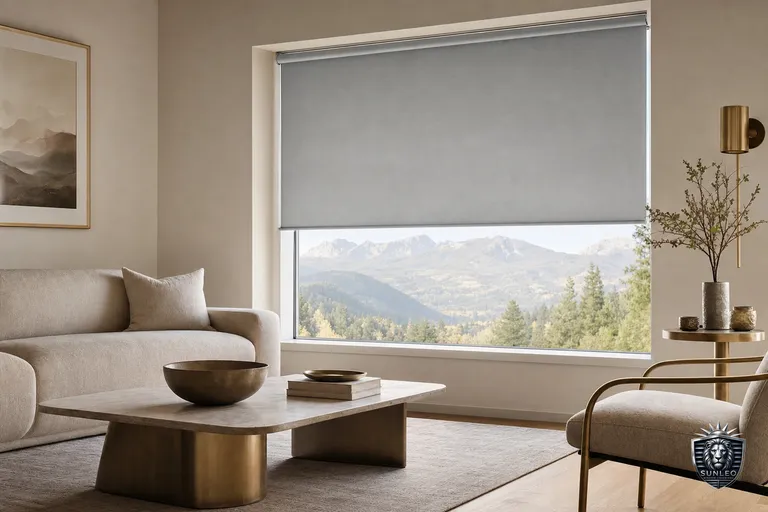
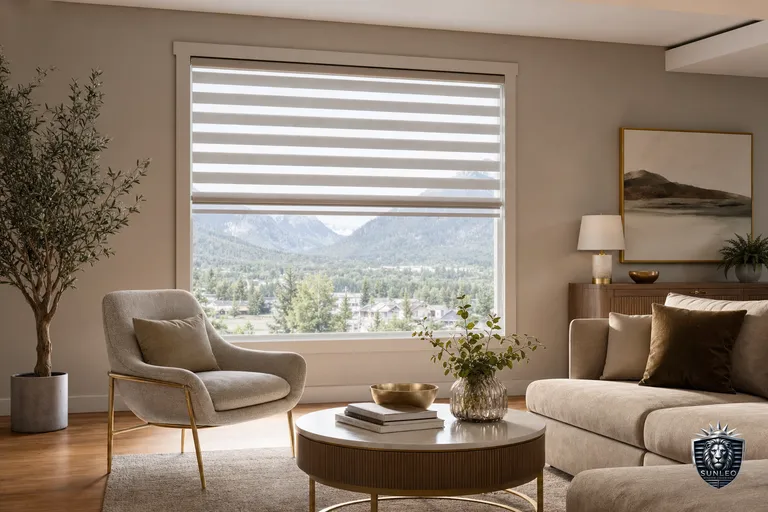
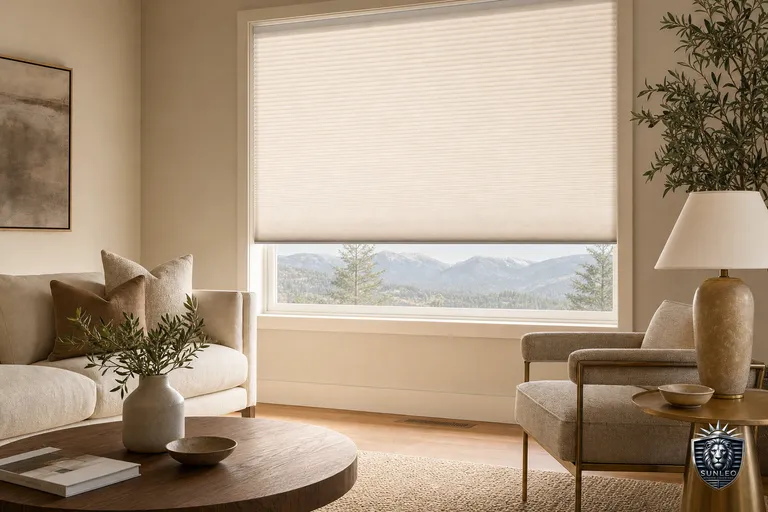
Start with what each room actually needs from light and privacy, then pick a fabric to match. In living and dining rooms you usually want flexible daytime light and an easy switch to evening privacy — zebra (day-night) blinds and light-filtering roller blinds both do this beautifully and read as clean and modern against open-concept layouts. Bedrooms are the opposite priority: here a blackout roller or a blackout-lined honeycomb shade keeps Calgary's very early summer sunrises out of the room, while the cellular version also buffers cold overnight temperatures. Kitchens and bathrooms call for moisture- and dust-resistant fabrics that wipe clean, so a light-filtering roller is the practical pick over anything fabric-heavy. Home offices benefit from glare control on screens — a light-filtering roller or a zebra blind with its sheer bands aligned softens harsh light while keeping your view of the yard. In transitional spaces like hallways and stair landings, a simple roller or honeycomb keeps the look consistent throughout the house. A good rule: choose no more than two or three fabric families for the whole home, then vary the opacity — sheer, light-filtering, blackout — room by room. That keeps the exterior view uniform from the street and the interior calm, while still giving every room exactly the light it needs.
- Living/dining: zebra or light-filtering roller blinds for flexible daytime light
- Bedrooms: blackout roller or blackout-lined honeycomb for darkness plus insulation
- Kitchens/baths: moisture-resistant light-filtering rollers that wipe clean
- Home office: zebra blind or light-filtering roller to cut screen glare while keeping the view
What are the best window treatments for bay and bow windows?
Bay and bow windows are everywhere in Calgary's character homes and newer builds, and the trick is to treat each pane as its own window rather than trying to span the whole bay with one covering. Order an individual blind for every facet — typically three to five panels — in the same fabric, mounted inside each casing. They sit flush, turn the corners cleanly, and let you angle light differently on each side as the sun moves across the sky. Roller blinds and honeycomb shades are the easiest fit here because their slim stacks don't crowd the corners where two panels meet. For a softer, more dressed look, fabric-vane styles like sheer shades give a bay a boutique-hotel feel while still diffusing that strong south and west Alberta light. If your bay is a reading nook or breakfast seat, consider top-down/bottom-up honeycomb so you can pull privacy up from the bottom while keeping the sky and mountain view open above. Measuring a bay accurately is where DIY most often goes wrong: the angles are rarely a perfect 90 or 135 degrees, and a millimetre of error per panel compounds across five windows. This is exactly the kind of window where a precise in-home measurement pays for itself, because each panel has to be templated to its own opening.
How do you cover patio doors and big sliding glass?
Patio doors and wide sliding glass are the most-used and most-awkward openings in the house — the covering has to clear a walkway, survive constant use, and not tangle when the door opens. A few ideas that work well. Vertical blinds remain the classic for full-height sliders because the vanes stack tightly to one side and you can angle them for light without fully opening; modern fabric vanes look far softer than the old plastic louvres. For French and tilt-and-turn patio doors, Perfect Fit / door blinds clip into a slim no-drill frame fixed to the door bead, so the blind hugs the glass and moves with the door — no banging, no holes, ideal for renters and condos. Zebra blinds also suit a single sliding panel where you want a clean band of fabric and step-less light control. Whatever you choose, plan the stack: decide which side the door opens from so the blind parks out of the traffic path, and consider a wand or motorized control rather than long cords on a door you use daily — it's safer with kids and pets and looks tidier. For a big glass wall facing a Calgary backyard, a light-filtering fabric keeps the connection to the outdoors during the day, while a dim-out option gives you privacy once the patio lights come on next door.
- Full-height sliders: vertical blinds that stack to one side
- French / tilt-and-turn doors: no-drill Perfect Fit blinds that move with the door
- Single sliding panel: zebra blinds for clean, step-less light control
- Daily-use doors: choose a wand or motorized control over long cords
What's the best way to shade a skylight or angled window?
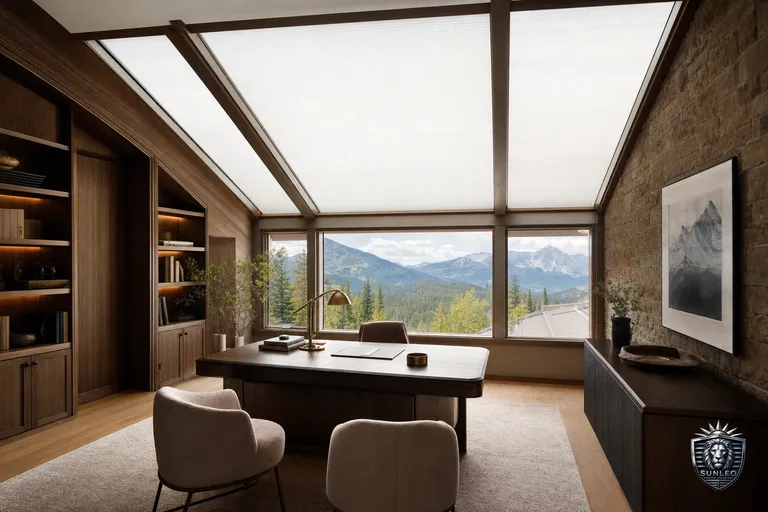
Skylights and angled gable windows are a signature of Calgary's mountain-modern and bungalow-renovation builds, and they bring the same problem: glorious light plus a lot of heat, UV and glare you can't reach to control. A standard blind will sag away from sloped or overhead glass, so the answer is a track-guided skylight blind that runs in side channels and stays held flat against the glass at any angle. Insulating honeycomb fabric is the smart core here, because it cuts the heat gain that makes a sunny loft unbearable in July while reducing winter heat loss through that overhead glass. Because skylights are almost always out of arm's reach, motorization earns its keep — a remote, wall switch, or voice control via Alexa, Google or Apple lets you tilt the whole bank at once, and you can schedule them to close against the midday sun automatically. The same track-guided approach handles angled gable and triangle windows in two-storey great rooms. These are genuinely custom builds: the shape, slope and channel hardware all have to be measured and made to the specific opening, which is why skylights are one of the categories where bringing samples and a measure to the home matters most. Done right, you keep the architectural drama of the glass and lose the squint and the heat.
How do you dress large or tall windows?
Two-storey great-room windows and floor-to-ceiling glass are the showpiece of a lot of newer Calgary homes — and the hardest to dress without it looking heavy or being impossible to operate. Scale is the first decision: a single giant blind can be unwieldy, so tall runs often look best split into a grid of matching panels that keep proportions human and let you cover only the section you need. For the practical upper reaches you'll almost certainly want motorization; reaching a blind twelve feet up with a cord isn't realistic, and a quiet motor on a remote or schedule solves it cleanly. Insulation matters more on big glass too, because that's where the most heat escapes on a −30 °C night and pours in on a bright afternoon — honeycomb cellular shades give you the largest comfort and energy payback per square foot here. If you want to preserve the view and the airy feel, a light-filtering roller or a sheer fabric-vane shade keeps the glass feeling open while knocking down glare on screens and floors. A balanced approach many homeowners land on: light-filtering or sheer shades on the tall upper windows for daytime softness, and a dim-out or blackout layer only where the room is used in the evening. Keep the fabric identical top to bottom so the wall of glass reads as one calm, intentional surface from inside and out.
What is window treatment layering — and is it worth it?
Layering simply means putting two coverings on one window so you can move from soft daylight to full privacy without compromise — and it's the single biggest upgrade to how a room feels. The most flexible version is a sheer plus a privacy blind: a sheer shade or light-filtering roller diffuses daytime light and keeps the view, and a blackout or dim-out roller behind or beside it takes over after dark. Some products build the layering into one shade. Zebra blinds alternate sheer and solid bands, so a single pull moves you across the whole range from open view to private. Sheer shades float fabric vanes between two sheers, giving you tilt-for-privacy and a diffused glow in one elegant piece — a great way to get a layered look on a feature window without a second mechanism. Layering also adds the thing flat blinds can't: texture and depth. A sheer softens hard edges, a woven roller adds warmth, and the interplay of the two makes a window look designed rather than merely covered. Is it worth it? In bedrooms, media rooms and any west-facing room that bakes in the afternoon, yes — the control is genuinely better. In a low-traffic guest room or a north window that never gets harsh sun, a single well-chosen blind is plenty. Decide room by room, and spend the layering budget where you actually live.
Which window treatments suit modern Calgary homes and our climate?
Calgary homes have a specific brief: huge swings in temperature, intense high-altitude UV, sudden chinook brightness, and a design language that leans mountain-modern — warm neutrals, natural texture, clean lines and big views. A few ideas that consistently land here. Keep the palette quiet: creams, warm greys, sand and soft sage read as current, flatter the light, and don't fight the wood and stone in newer builds; save bold colour for a single feature room. Lean on honeycomb cellular shades wherever comfort and energy matter, because their trapped-air cells are the most effective fabric answer to −30 °C nights and warm summer afternoons alike. Treat UV as a real factor, not a nicety — that strong prairie-and-foothills sun fades floors and furniture, so a zebra blind or sheer shade on south and west windows softens that sun while keeping the view of the yard or skyline. Choose motorization for anything tall, angled or hard to reach, and link it to Alexa, Google or Apple so blinds can close on a schedule against the afternoon sun. And keep the look consistent: the same fabric family across the main floor makes an open-concept home feel calm and intentional. The throughline for a modern Calgary home is restraint — neutral, custom-fitted, and quietly functional against a climate that genuinely tests window coverings.
How much do custom window treatments cost, and how do popular styles compare?
Custom window treatments aren't priced like off-the-shelf blinds, because the cost is driven by your actual window — its size, the fabric and opacity you choose, whether you add motorization, and how many windows you're doing at once. As a rough guide, simple light-filtering roller blinds sit at the more affordable end, fabric-vane styles like sheer shades and specialty builds like track-guided skylight blinds at the upper end, and zebra and honeycomb shades in between; motorization adds cost per window but is often worth it on tall, angled or daily-use openings. Rather than guess from a generic online figure, the honest answer is that the price depends on the exact windows in front of you — which is why we measure in your home and give a written, no-obligation quote within 48 hours. To help you weigh two of the most popular choices, the table below shows how zebra (day-night) blinds compare with honeycomb cellular shades, since buyers ask about these two more than any others. Use it to narrow your shortlist, then let the room decide: zebra for graphic, contemporary light control in living spaces; honeycomb where insulation, blackout and energy savings matter most. Most Calgary homes end up mixing a couple of styles across the house rather than committing to one — which is exactly what a room-by-room measure is for.
| Zebra (day-night) | Honeycomb | |
|---|---|---|
| Light control | Step-less sheer-to-solid bands | Light-filtering to full blackout |
| Insulation | Light — single fabric layer | Strong — air-pocket cells trap heat |
| Privacy after dark | Tilt bands closed (slight glow) | Blackout fabric fully blocks light |
| Best rooms | Living, dining, home offices | Bedrooms, big glass, north walls |
| Look | Graphic, contemporary banding | Soft, clean, minimal profile |
| Motorization | Available | Available |
| Typical cost | Mid-range estimate | Mid-to-upper estimate |