Buyer's Guide
Window Condensation and Blinds: A Calgary Homeowner's Guide
Every Calgary winter, the same question comes up during in-home measurements: "Will new blinds make the fogging on my window worse?" It's a fair question, especially in cold snaps when glass can turn into a sheet of water overnight. The short version: blinds aren't the cause of condensation, but the wrong covering, or the wrong habits, can make an existing problem worse — and the right materials make it a non-issue.
Why Calgary Windows Fog Up in Cold Weather
Condensation forms when warm, moisture-laden indoor air touches a glass surface that's colder than its dew point — the moisture in the air simply has nowhere else to go and settles on the glass. Calgary's winters push outdoor temperatures far below indoor comfort levels, so interior glass surfaces run cold, especially near the bottom edge and corners where airflow is weakest. Ironically, newer, tightly sealed homes can trap more humidity from showers, cooking, laundry, and houseplants than older, drafty ones, which is why fogging sometimes gets worse after a renovation, not better.
- Bathrooms and laundry rooms — highest humidity sources in the house
- Bedrooms with several houseplants or a fish tank
- Basement windows — glass sits closer to below-grade cold
- Patio doors and sliders — large glass area, cold bottom track
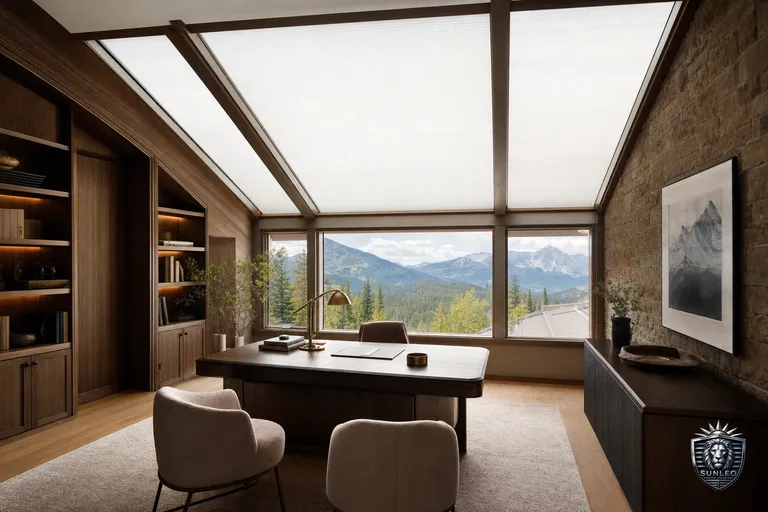
- Skylights — exposed to the coldest surface in the home, the roofline
Do Blinds Make Condensation Worse, or Better?
Blinds and shades don't create moisture — excess indoor humidity does. But a closed, tightly fitted covering, especially cellular/honeycomb shades or Perfect Fit frames designed to seal against the window for energy efficiency, isolates the glass from the warmer room air behind it. That's great for cutting heat loss, but it can also mean the glass itself runs colder and closer to the dew point, so you may actually see more visible condensation on the glass, even while your energy bill drops. Meanwhile, blinds left closed for days trap whatever moisture does form, letting it wick into slats, bottom rails, or fabric — the starting point for mold and mildew.
- Cellular/honeycomb shades and sealed Perfect Fit frames can increase glass-side condensation, even though they insulate the room well
- Fabric Roman shades and sheers sit close to the glass and can absorb and hold moisture longer
- Hard materials — faux wood, vinyl, aluminum — don't absorb moisture and wipe dry in seconds
Best Blinds and Shades for Condensation-Prone Windows
If a specific window fogs up every winter, the covering material matters more than the style. Non-absorbent, moisture-proof materials hold up without warping, staining, or growing mildew.
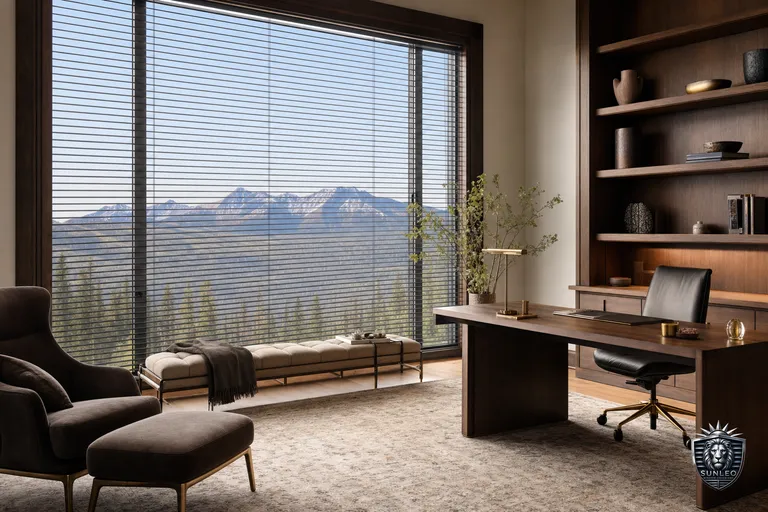
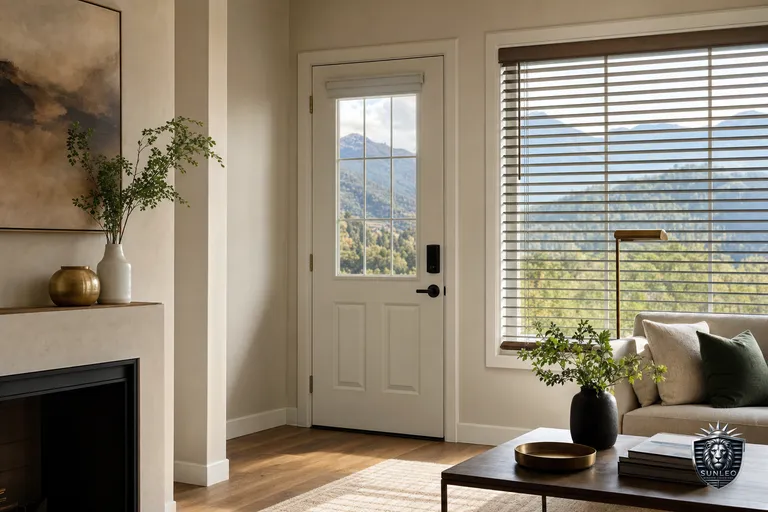
- Faux-wood blinds — the look of real wood, but a PVC/composite core that won't warp, crack, or swell when damp; a safe choice for bathrooms, kitchens, and basements
- Vinyl and aluminum venetian blinds — fully moisture-proof and wipe clean in seconds; a good match for laundry rooms and any window that fogs regularly
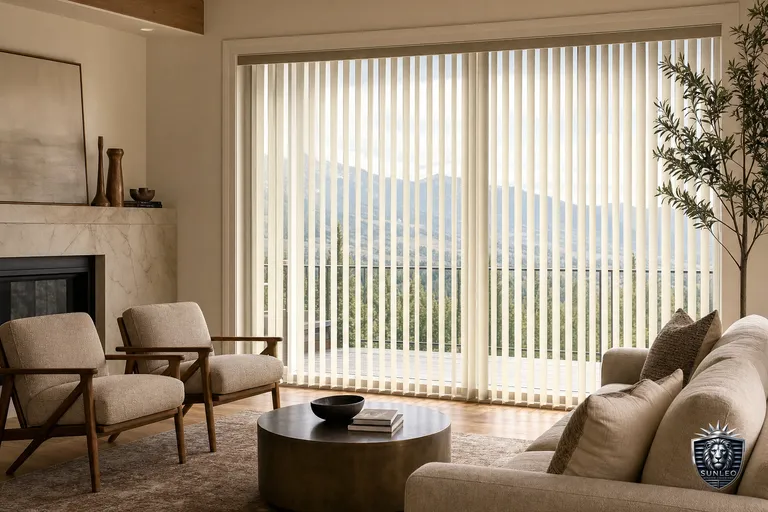
- Vertical blinds — practical for large patio doors where condensation collects along the bottom track; vinyl slats resist swelling
- Be cautious with heavy fabric (Roman shades, some honeycomb fabrics) directly on glass that condensates often, unless you're committed to daily wiping and good ventilation
Preventing Mold and Mildew Around Your Blinds
Most condensation problems are fixed by managing humidity and airflow, not by avoiding window coverings altogether.
- Run bathroom and kitchen exhaust fans during and after showers or cooking
- Keep indoor humidity around 30-40% in winter — an inexpensive hygrometer makes this easy to track
- Tilt slats open or raise shades during the day to let air circulate across the glass
- Wipe visible moisture off the glass and bottom rail each morning during cold spells
- On chronically damp windows, leave a small gap between the covering and the glass rather than a fully sealed fit
- Have blinds professionally installed so slats or frames aren't sitting flush against wet glass
Special Cases: Skylights, Basements, and Patio Doors
Skylights face the coldest surface in the house and are often the most condensation-prone spot in a Calgary home — track-guided skylight blinds with side channels give you light control without sealing moisture in, as long as the room is ventilated regularly. Below-grade basement windows benefit from the same moisture-resistant materials, since the glass runs cooler than the rest of the house. Patio doors, especially older sliders, are another common problem area — vertical or aluminum blinds hold up better over time than fabric panels. If a window in your home fogs up every winter, it's usually a sign about ventilation or the window itself, not the blinds. A free in-home measurement is a good time to flag any at-risk windows to your Sunleo consultant so we can recommend materials that hold up, not just look good on day one.