Buyer's Guide
What Is R-Value for Window Coverings? A Buyer's Guide
If you are shopping for blinds or shades to cut winter heat loss, you will keep running into one number: R-value. It is the single most useful metric for comparing how much a window covering will actually insulate your home. This guide explains what R-value means for blinds and shades, how honeycomb (cellular) air-cells trap heat, the typical R-values you can expect by product type, and why the difference matters more in Calgary than almost anywhere in Canada. No jargon, no sales pressure, just what you need to make a confident buying decision.
What R-value actually means
R-value is a measure of thermal resistance, how well a material resists the flow of heat through it. The higher the R-value, the slower heat escapes in winter (and enters in summer), and the better the insulation. It is the same metric used to rate attic insulation and wall batts, just applied to window coverings. R-value is the inverse of U-value (heat transfer): a high R-value equals a low U-value, and both describe the same thing from opposite directions.
One important point buyers often miss: a window covering's R-value stacks on top of the window's own R-value. A standard double-pane window sits around R-2 to R-3 on its own. Add an insulating cellular shade and the combined assembly can meaningfully outperform the glass alone. The covering does not replace good windows, it supplements them, which is exactly why it is such a cost-effective upgrade.
- Higher R-value = better insulation = slower heat loss
- R-value is the inverse of U-value (heat transfer)
- A covering's R-value adds to the window's existing R-value
- Same metric used for attic and wall insulation, applied to fabric
How honeycomb air-cells insulate
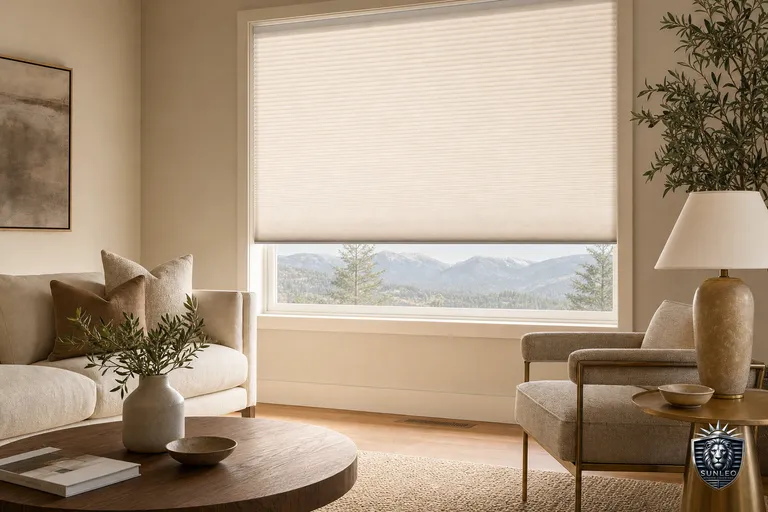
The reason cellular (honeycomb) shades top the R-value charts comes down to physics: still, trapped air is one of the cheapest and most effective insulators available. When you look at a honeycomb shade from the side, you see rows of hexagonal pockets. Each pocket holds a captive layer of air that cannot circulate, and because heat struggles to move through motionless air, that trapped layer becomes a thermal buffer between your warm room and the cold glass.
Single-cell shades have one row of pockets; double-cell shades stack two rows, adding a second air chamber and a second insulating boundary, which is why they score higher. The tighter the shade fits the window opening, the better it performs, because it limits the convection currents that would otherwise sneak warm air down the cold glass. This is also why an inside-mount shade with side channels or a snug fit insulates better than a loosely hung covering.
Typical R-values by window covering type
R-values vary by fabric, construction, and how the covering is mounted, so treat these as realistic ranges rather than fixed guarantees. As a rule of thumb, the more air a covering traps and the tighter it seals the opening, the higher it lands.
- Honeycomb / cellular shades (double-cell): roughly R-4 to R-5, the top insulators
- Honeycomb / cellular shades (single-cell): roughly R-2 to R-3
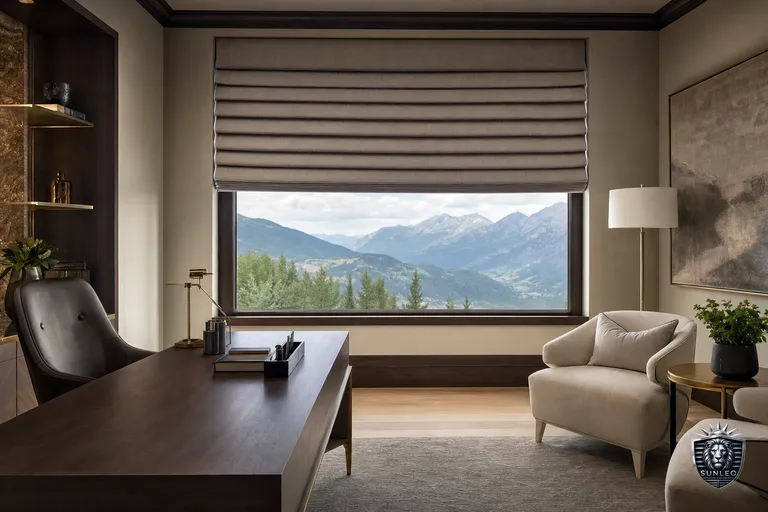
- Roman shades (lined / thermal-backed): roughly R-2 to R-3
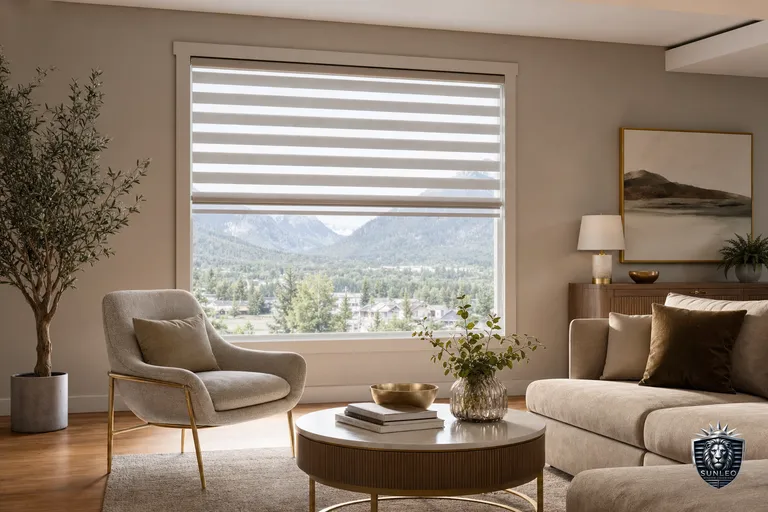
- Roller and zebra blinds with blackout fabric: roughly R-1 to R-2
- Faux wood and venetian blinds: roughly R-1 to R-2 when fully closed
- Aluminum and vertical blinds: modest, roughly R-1, they block light more than heat
- Bare double-pane window (for reference): roughly R-2 to R-3
Why R-value matters for Calgary energy bills
Calgary's climate is exactly where R-value earns its keep. With long, deep-cold winters, big daily temperature swings, and plenty of large windows in newer homes, glass is often the weakest link in the building envelope, even good windows leak heat compared to insulated walls. A significant share of a home's winter heat loss can pass straight through windows, so improving that surface pays back in comfort and furnace runtime.
Insulating coverings also fight the cold-glass draft effect: on a -25C morning, the air near an uncovered window cools, sinks, and creates that chilly downdraft you feel across a room. A high-R shade slows that heat transfer, keeps interior glass warmer, and reduces condensation on the pane. In summer, the same trapped-air barrier works in reverse, slowing solar heat gain through sun-facing windows. Pairing an insulating shade with automation, closing shades at dusk in winter or during peak afternoon sun in summer, squeezes out even more savings, which is why motorized scheduling is a popular add-on.
How to compare R-value when you buy
R-value is a strong signal, but it is not the whole story. Use it to shortlist, then weigh it against light control, privacy, view, and budget so you do not overpay for insulation you do not need on every window. A north-facing bedroom might justify a double-cell blackout honeycomb, while a shaded hallway may only need a simple roller.
- Compare like-for-like: single-cell vs single-cell, not against loose blinds
- Check the mount, inside-mount and side channels boost real-world R-value
- Match the room: prioritize high-R coverings on cold, sun-exposed, or drafty windows
- Balance R-value against light, privacy, view, and cost, not every window needs the maximum
- Ask about fabric options, blackout and thermal linings raise insulation and privacy together
- Remember the covering's R-value adds to, not replaces, your window's rating
Getting the right R-value for your home
The most reliable way to know which coverings will actually lower your bills is to have someone assess your specific windows, orientation, and comfort problems in person. A room that faces the winter wind needs a different solution than a shaded south wall. Sunleo offers a free in-home measurement across Calgary and surrounding areas, where a consultant brings fabric and cellular samples, checks each window, and recommends the right R-value for each room, no showroom trip and no obligation. It is the simplest way to compare honeycomb and other insulating options against your real windows before you decide.