Calgary & Climate
UV Protection Blinds in Calgary: Why Your Fabrics Fade Faster Here
If your sofa, hardwood or artwork seems to be fading faster in Calgary than it did anywhere else you've lived, it isn't your imagination. Calgary's elevation and clear-sky sunshine hours put homes here under noticeably stronger UV exposure than lower-altitude cities, and ordinary blinds or curtains often let more of that light through than people expect. This guide explains why the fading happens, which fabrics and opacity levels actually block UV, and how to protect south- and west-facing rooms without turning them into caves.
Why does Calgary's altitude make UV fading worse?
Calgary sits at roughly 1,045 metres above sea level — one of the highest-elevation major cities in Canada. Atmosphere is thinner at altitude, and thinner atmosphere filters out less ultraviolet radiation before it reaches the ground. UV research generally shows intensity rising in the range of 10-12% for every 1,000 metres of elevation, so Calgary's baseline UV load is meaningfully higher than a coastal city like Vancouver at similar latitude.
That altitude effect stacks with Calgary's sunshine hours: the city logs well over 2,300 hours of sunshine a year, among the highest counts of any major Canadian city, and skies stay clear through much of the winter thanks to Chinook winds clearing cloud cover. More sun hours plus stronger UV per hour adds up to more cumulative UV dose hitting your windows over a year than most homeowners plan for when they pick window coverings.
None of this means Calgary is unlivable or that every fabric needs to be blackout — it means the margin for error on fade-prone materials is smaller here than in a lot of the guides and product descriptions written for other markets.
What does UV actually do to fabrics, floors and art?
UV radiation breaks down the chemical bonds in dyes and pigments, a process called photodegradation. It shows up as visible colour loss (fading), yellowing of whites, and eventually weakening of the fibres themselves so fabric feels thinner or more brittle. It isn't only your blinds at risk — the sofa, rug, hardwood floor, artwork and even wood furniture behind an unprotected window absorb the same UV that comes through the glass.
A few things worth knowing: - Ordinary window glass blocks most UVB but lets a significant share of UVA through — UVA is the wavelength most responsible for long-term fading. - Darker, saturated colours (deep reds, navy, charcoal) typically show fading faster and more visibly than light neutrals, because the contrast against the faded patch is more obvious. - Fading is cumulative and largely irreversible — by the time you notice a lighter patch on a rug or a faded stripe on upholstery, the damage is already done. - Heat from direct sun compounds the damage, drying out and stressing fabric fibres and wood finishes alongside the UV exposure itself.
This is exactly why the goal isn't just "block the view of the sun" — it's blocking the UV wavelength itself, which a fabric can do even while still admitting a good amount of visible light.
Which fabrics and opacity levels protect best?
Not all window coverings block UV equally, and opacity — how much light a fabric lets through — is the single biggest variable. A more opaque fabric means less UV passing through, but also less daylight and view; it's a genuine trade-off, not a free upgrade.
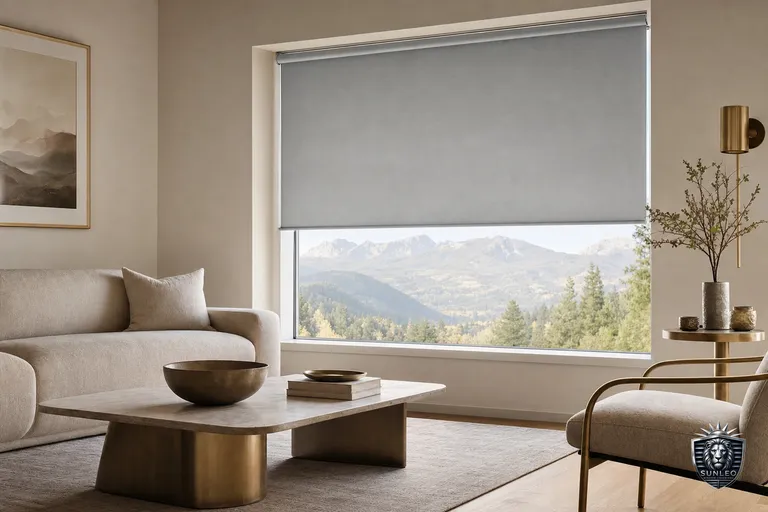
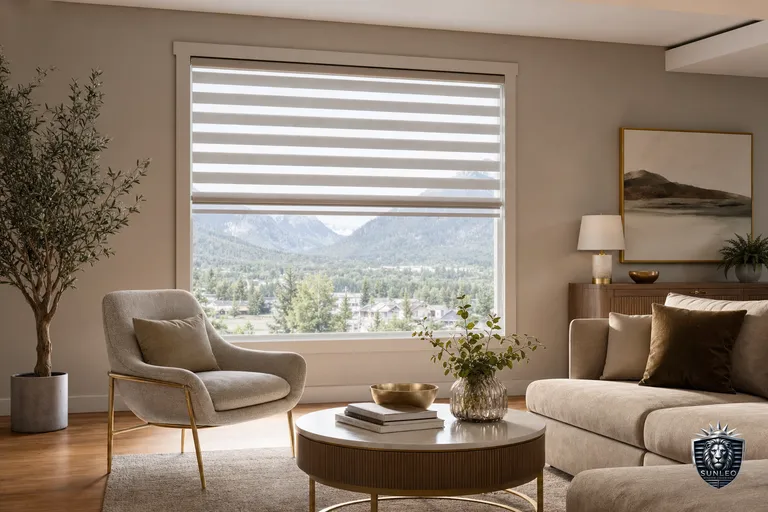
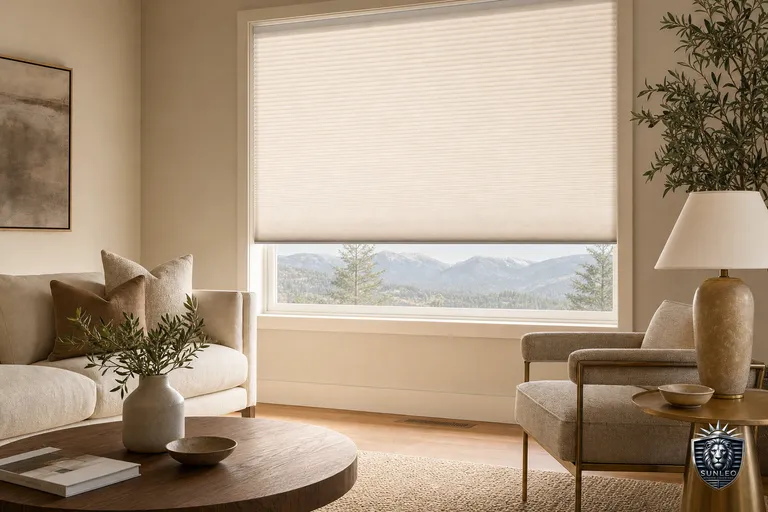
- Dim-out fabrics (roller blinds): block most incoming light and UV while letting a faint glow through, a middle ground for living spaces. - Blackout fabrics (roller blinds, Roman shades): block essentially all direct light and UV by design, since they're engineered for zero light transmission — the strongest option for bedrooms, media rooms and art-heavy walls. - Zebra / day-night blinds: alternating sheer and solid bands let you dial in UV protection room-by-room-mood — slide to the solid-overlap position for near-blackout protection during peak sun, sheer for daytime light. - Honeycomb shades: the cellular pockets add an insulating air layer that also softens direct UV exposure, useful on windows where you want light control and temperature control together. - Sheer or light-filtering fabrics: pleasant and airy, but offer the least UV protection of the group — fine for low-exposure windows, riskier for a sun-drenched south wall behind a good sofa.
Colour and backing matter too: a fabric with a light-reflective or foam backing generally blocks more UV than the same weave without one, since some of the radiation is reflected rather than absorbed and passed through.
South- and west-facing windows: what to do differently
In Calgary, south-facing windows get the most consistent daily UV exposure, while west-facing windows take the harshest hit in late afternoon, when the sun is lower in the sky and light rakes further into a room — often reaching furniture and flooring that a straight-overhead sun would miss. Both exposures deserve a deliberate fabric choice rather than whatever was on sale.
For south-facing rooms with furniture, art or hardwood you want to protect long-term, a dim-out or blackout fabric on a roller blind is usually the most effective everyday option, since these rooms are bright most of the day and benefit from consistent UV control.
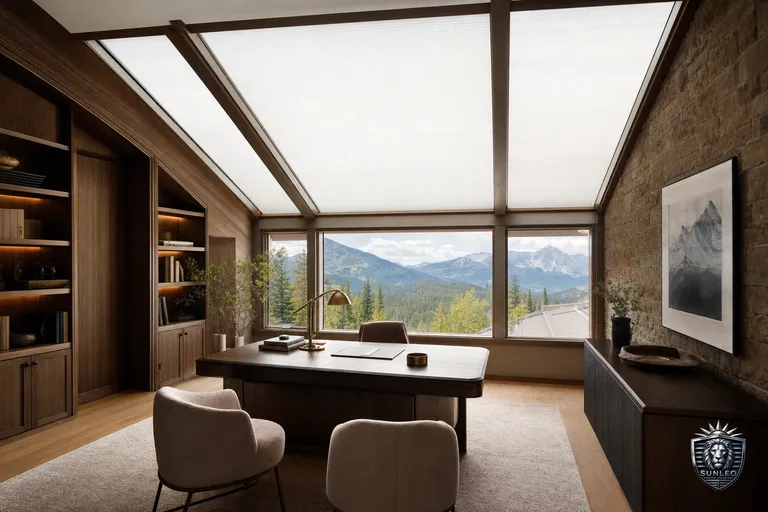
For west-facing rooms, the fix is often as much about angle as it is about fabric: low afternoon sun can sneak under or around coverings that work fine on an overhead-sun window. A zebra blind you can position to overlap the solid bands during the 3-7pm window, or a well-fitted roller with a close-to-glass mount, closes that gap. Skylight blinds deserve a special mention here too — skylights face straight up into the most direct sun exposure a room gets, and track-guided, side-channel systems keep the fabric flat and sealed against the glass rather than billowing away from it, which matters for both UV blocking and comfort.
How do you protect a room without losing all the light?
The good news is that UV protection and a bright, livable room aren't mutually exclusive. Zebra blinds are a strong answer for living rooms and home offices where you want protection without a dim, closed-off feel: they add flexibility by letting you shift between more light and more protection through the day, which suits Calgary's swing between winter low-angle sun and long summer daylight hours.
A sensible room-by-room approach usually looks like this: - High-value, sun-exposed rooms (living room, dining room, home office with hardwood or art): zebra blind, or a dim-out roller. - Bedrooms and media rooms: blackout roller or Roman shade, which blocks UV as a side effect of blocking light for sleep and screen glare. - Skylights and hard-to-reach glass: track-guided skylight blinds, often motorized for windows you can't reach by hand. - Lower-exposure or north-facing rooms: sheer or light-filtering fabrics are fine, since UV load is naturally lower there.
Because fabric weight, opacity and backing all affect UV performance differently, and every window's sun exposure is a little different, the most reliable way to get this right is to see fabric samples in your own rooms at the time of day they get the most sun. Sunleo brings samples to your home for a free in-home measurement, so you can compare opacity levels against your actual windows and get a written recommendation — no showroom trip, no obligation.