Room Guide
Blinds for Tilt Turn Windows: Best Options for Inward-Opening Windows
Tilt turn (European-style) windows are showing up more and more in Calgary new builds, infills, and renovated condos — they tilt inward from the top for ventilation and swing fully inward from the side for cleaning or egress. That inward motion is fantastic for airflow and safety, but it creates a real problem for window coverings: a standard inside-mount blind sitting a few centimetres inside the frame is exactly where the sash wants to go. Get this wrong and you'll hear about it the first time someone tilts the window and cracks a slat. Here's how to cover a tilt turn window properly, without a callback.
Why standard inside-mount blinds fail on tilt turn windows
Most blinds are designed for casement or double-hung windows, where the sash either doesn't move or swings outward. Tilt turn windows do the opposite — the whole sash pivots into the room. An inside-mount blind, roller, or shade hung on brackets inside the frame sits directly in that swing path.
- In tilt mode, the top of the sash drops inward several centimetres — enough to strike a roller tube or the bottom rail of a Roman shade mounted just above it
- In turn mode, the whole sash swings 90 degrees into the room and will hit any blind mounted on the same wall plane, cracking slats or bending the headrail
- Even shallow-profile cellular shades can get pinched between the sash and the frame if mounted too close to the glass
- Handles and hinges on tilt turn hardware often protrude further than a standard casement handle, reducing the clearance a blind has to work with
The three solutions that actually work
There isn't one universal fix — the right approach depends on the depth of your window reveal and whether you want the blind to move with the sash or stay fixed to the wall.
- Outside (face) mount — the blind or shade is fixed to the wall or trim above and beside the window opening, well clear of the swing radius. This is the simplest, most reliable fix for tilt turn windows and works with roller blinds, zebra blinds, Roman shades, and honeycomb shades alike
- Perfect Fit / clip-on frames — a no-drill frame clips directly onto the tilt turn sash itself, so the blind moves with the window as one unit. No brackets in the frame, no drilling into new uPVC or aluminum profiles, and no collision risk because the covering travels with the sash
- Top-down-bottom-up shades (mounted outside or on a deep enough reveal) — let you drop the top for privacy while keeping the view open below, which matters more on tilt turn windows since they're often floor-to-ceiling in newer Calgary builds
Which product to choose for your tilt turn windows
For most Calgary homes with tilt turn windows, we point clients toward one of these, depending on the room and how the window opens.
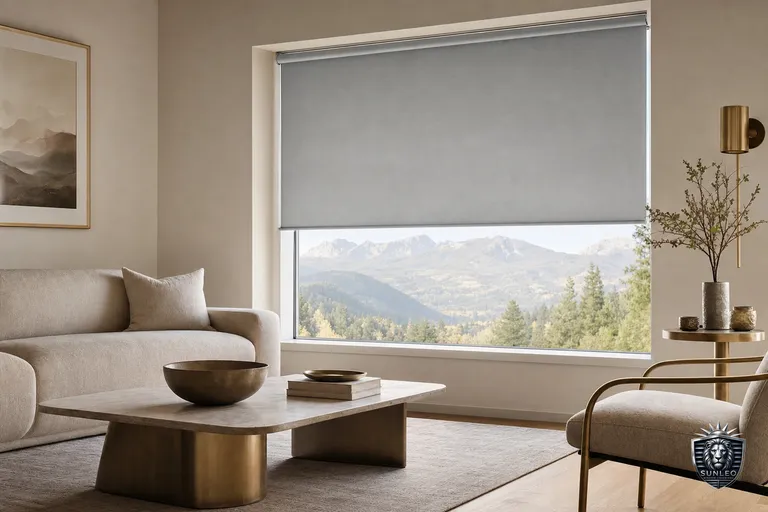
- Roller blinds (outside mount) — clean, low-profile, and easy to fit above the window trim; a solid default for living rooms and bedrooms
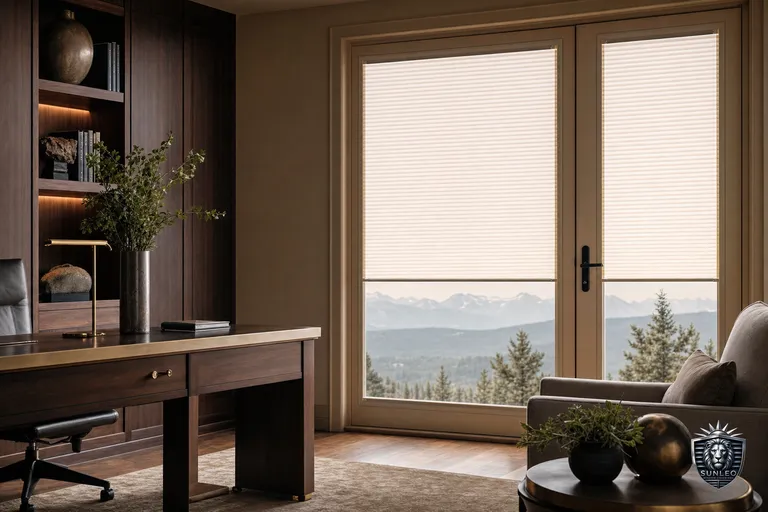
- Perfect Fit / door blinds framework — best when the tilt turn window doubles as a door-style egress point, since the covering opens and closes with the sash without dangling cords
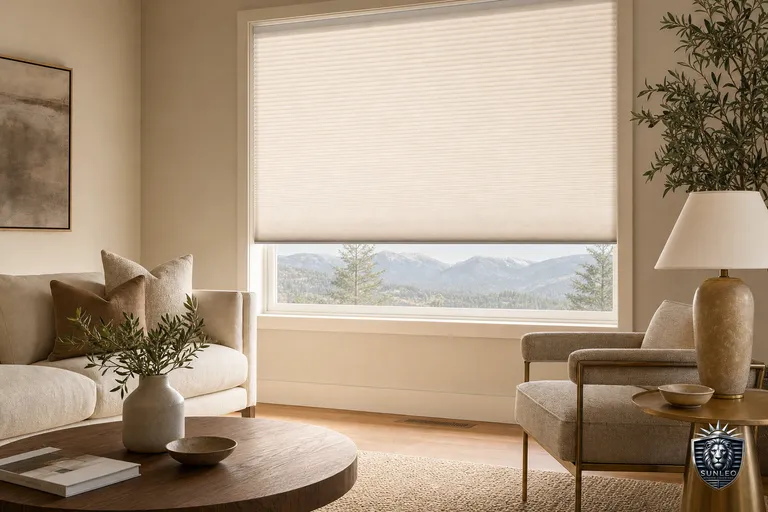
- Honeycomb / cellular shades (outside mount) — good insulation value for the large glass areas common in tilt turn installs, especially on Calgary's coldest days
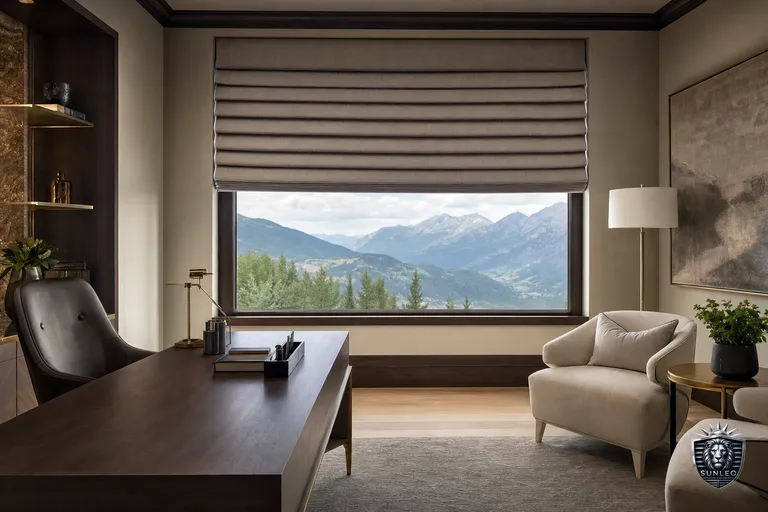
- Roman shades (outside mount) — a softer, more traditional look when the window sits in a formal dining or living space
What to check before you order
A quick measurement mistake here is expensive to fix later, so this is exactly the kind of window we recommend having measured in person rather than guessed from a tape measure.
- Confirm how far the sash projects when tilted and when fully turned open — this tells us the minimum clearance an outside mount needs
- Check the depth of the wall reveal; a deep enough reveal sometimes allows a shallow inside mount above the tilt hinge line, but this needs to be measured, not assumed
- Note the handle position and swing direction (left or right hinge) so brackets or clip-on frames don't interfere with daily use
- If the window is also a fire-egress point, make sure the chosen covering doesn't block quick, one-handed opening