Buyer's Guide
Safest Window Coverings by Child's Age: A Stage-by-Stage Guide
Child safety around windows isn't a one-time decision — it's one that evolves as your child grows. A product that's perfectly safe in a newborn's nursery can become a hazard once that same child starts pulling up on furniture at 9 months, and the risks shift again once they're a curious, climbing 4-year-old. Rather than treating "child-safe blinds" as a single checkbox, this guide walks through what actually changes at each stage — crib, crawling, and school-age — so you can match the product and operating style to where your child is right now, and where they're headed next.
Why "child-safe" isn't one fixed standard
Window covering safety guidance tends to focus on a single rule — no accessible cords near cribs. That's true and important, but it only covers the first stage of childhood. A room that's safe for a 3-month-old who can't move isn't automatically safe for the same room a year later, once that child is standing in the crib and reaching for anything within arm's length. As kids grow, three things change: how high they can reach, how mobile they are, and how curious they are about pulling, chewing, or climbing on things. The right window covering for a given room should account for all three, not just the age the room was originally set up for.
Stage 1: Infant & crib stage (0-12 months)
At this stage, the baby isn't yet mobile, but the room itself needs to be fully cord-free from day one — safety guidance is clear that any accessible cord near a crib, change table, or sleep area is a strangulation risk, regardless of how unlikely it seems for a newborn to reach it. Because cribs and furniture get rearranged often in the first year, the safest approach is to remove the risk at the source rather than rely on cord placement.
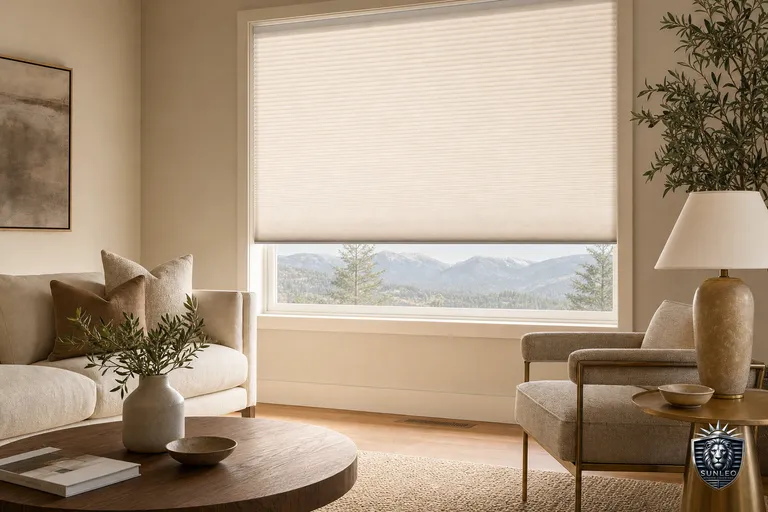
- Cordless cellular/honeycomb shades — clean, minimalist look that suits most nursery designs and offers strong insulation for temperature-sensitive napping
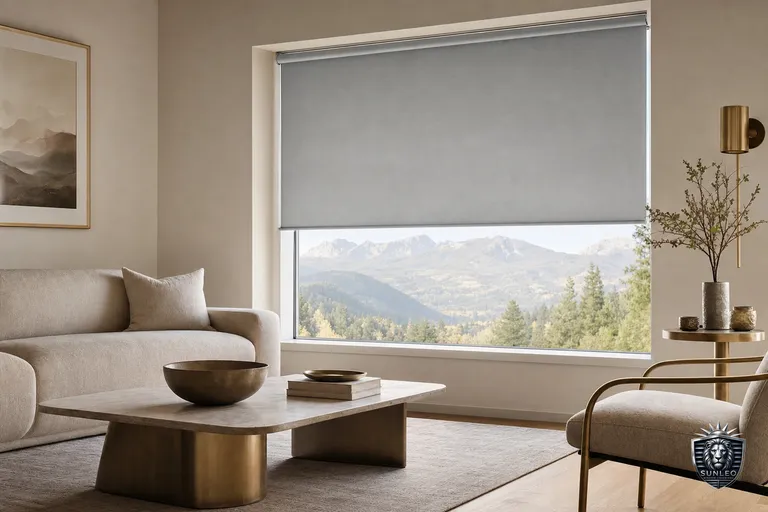
- Cordless roller blinds — simple, easy to operate one-handed while holding a baby, and available in blackout fabric for daytime naps
- Motorized blinds — remote or app control means zero cords or wands anywhere in the room, and you can adjust light without walking over to the window during feeds
- Avoid corded verticals or looped-chain systems in this room entirely, even with tie-downs or cleats — for a sleep space, cord-free is simpler and safer than cord-managed
Stage 2: Crawling & early walking (roughly 8 months - 3 years)
This is the stage where risk expands beyond the crib room to the whole house. A crawling baby who becomes a furniture-cruising toddler can reach window coverings that were previously out of range — especially once they start pulling up on window seats, toy chests, or low furniture placed near windows. It's also the stage where small parts, like a wand with a removable tip or a loose valance clip, become mouthing hazards. If your home has any older corded blinds left over in bedrooms, living rooms, or a playroom, this is the point to prioritize replacing them, not just the nursery.
- Continue cord-free operation in every room the toddler has access to, not just the bedroom
- Wand-operated faux wood/venetian blinds work well if the wand is a single continuous piece with no removable end cap, and mounted high enough to be out of a standing toddler's reach
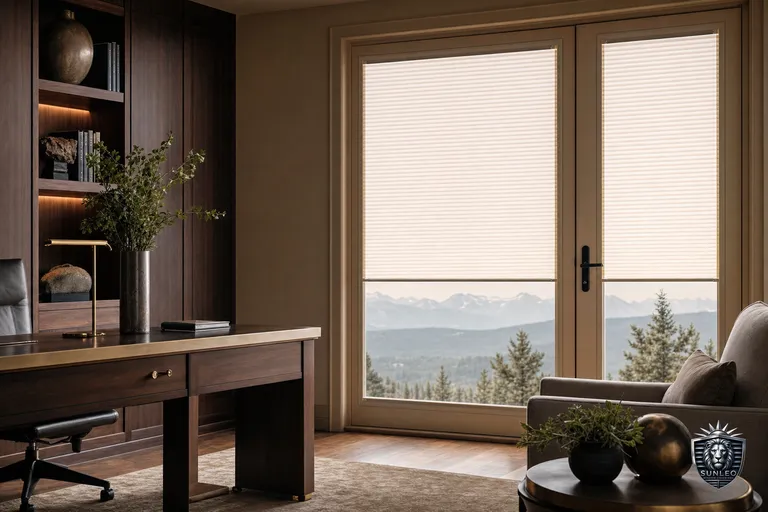
- Perfect Fit / door blinds are a strong pick for patio doors and playroom windows — the no-drill, sealed frame keeps operating parts fully enclosed, away from curious hands
- Skylight blinds (track-guided) are inherently safer here since they're mounted well overhead and out of reach entirely
- Move any furniture a toddler could climb — chairs, toy bins, low shelves — away from windows, regardless of which blind is installed
Stage 3: Curious school-age kids (roughly 4-10 years)
By this stage, strangulation risk from a dangling cord is much lower — the child understands cause and effect and is less likely to loop something around their neck by accident. But new risks appear: kids this age climb on window seats and beds to look outside, tug on blinds to see the yard, and are old enough to figure out how to force a mechanism if it isn't secured well. The safety question shifts from "can they reach a cord" to "can this product handle being pulled, climbed near, or operated roughly, without breaking or creating a new hazard."
- Zebra/day-night blinds and Roman shades hold up well to repeated adjusting since kids like controlling light — durable fabric and a sturdy headrail matter more here than at earlier stages
- Motorized blinds remain a good option for bedrooms with bunk beds or window seats, since there's no cord or wand to interact with at all, even if a child climbs close to the window
- If a corded product is used elsewhere in the home, make sure any cords are permanently secured with a cleat or tensioner mounted high on the wall, not just tucked away
- Keep reinforcing basic window safety with kids at this age — not climbing on furniture near windows, and not using blind hardware as a toy or step
One home, multiple stages: planning for what's next
Most families don't only have one child at one age — there's a toddler in one room and a newborn in another, or an older sibling's playroom shares a wall with the nursery. Rather than solving room by room in isolation, it helps to standardize on cord-free operation (cordless, single-piece wand, or motorized) across the main floor and all bedrooms once there's any child under school age in the home. It costs little to plan ahead this way during a single install, and it means you won't need to revisit the safety question again as your child moves from one stage to the next.
Getting the right fit for your home
Because the safest product depends on the room, the window type, and which stage your child is in, it's worth having someone look at your actual space rather than guessing from a photo online. A Sunleo consultant can walk through your home, flag any rooms that need attention first, and recommend cord-free options — including motorized — that fit your budget and each room's stage of use. Book a free in-home measurement and we'll bring samples so you can see and feel the options in person before deciding anything.