How-To Guide
How to Reduce Glare on Your TV with Blinds
If your TV or monitor washes out every afternoon, the problem usually isn't the screen — it's direct or reflected sunlight hitting the window behind or beside it. The right window covering, in the right position, closed at the right angle, solves this without blacking out the whole room. Here's what actually works and why.
Why TVs and Monitors Get Glare From Windows
Screen glare happens two ways: direct sunlight hits the glass panel and creates a hard reflection, or diffuse daylight raises the room's ambient brightness enough that dark scenes look grey and washed out. Rooms with a window directly across from or beside the TV — a common layout in west-facing living rooms and home offices — are the most affected, especially in late afternoon when the sun sits low on the horizon and beams in at eye level rather than from overhead.
- West- and south-facing rooms see the worst glare, typically 2-7pm depending on season
- Low sun angle (not overhead sun) causes the most screen washout, because light hits the glass and eye at a similar height
- Glossy screens reflect glare directly back at the viewer; matte screens diffuse it, but still lose contrast in bright rooms
- Glare from an adjacent window (not directly behind the screen) still lowers contrast even if there's no direct reflection
Best Blind Types for Cutting Screen Glare
Full blackout isn't necessary for most rooms — you want light control, not darkness. These options give the best balance of glare reduction and usable light:
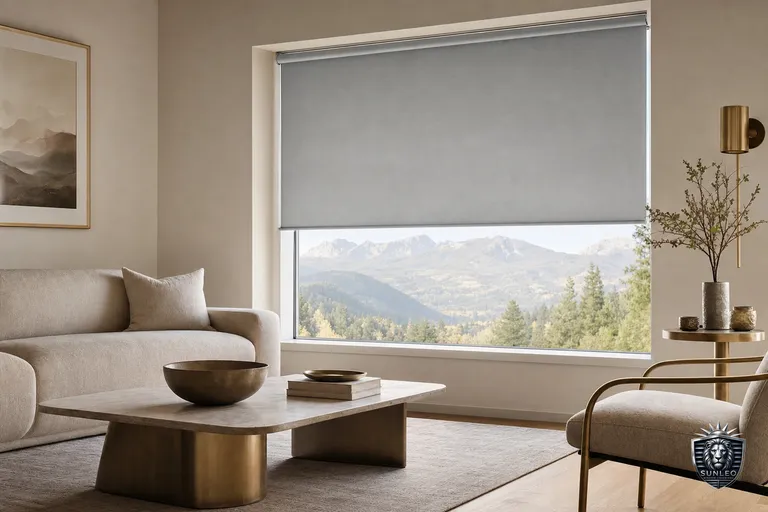
- Dim-out or light-filtering roller blinds: cut direct sun on the screen while keeping the room usable; a simple, common fix for TV and home office glare
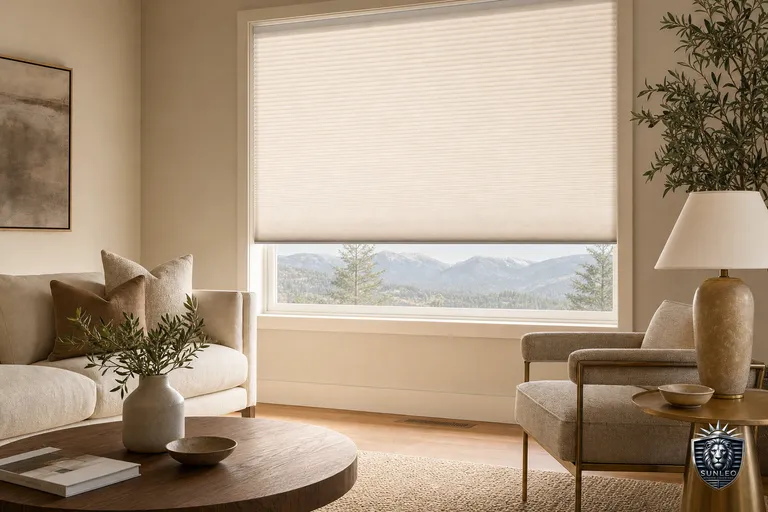
- Cellular (honeycomb) shades: diffuse light rather than blocking it outright, softening hard reflections in rooms that still need daytime brightness
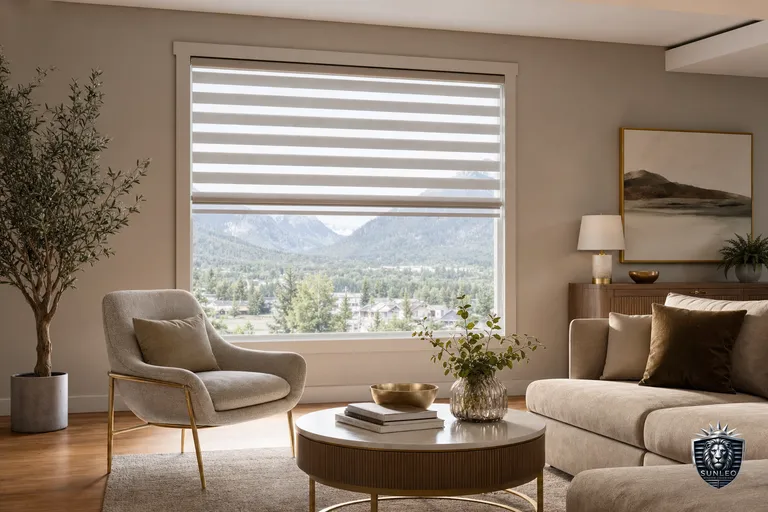
- Zebra (day/night) blinds: alternating sheer and solid bands let you fine-tune exactly how much direct light reaches the screen without fully closing the shade
- Venetian or aluminum blinds: slats angled downward or away from the screen redirect light onto the ceiling instead of the glass, useful in home offices with adjustable desks
- Blackout roller or Roman shades: the right call for home theatres or media rooms where zero ambient light is the goal
Placement and Angle Tips That Make the Difference
The blind type matters less than how it's mounted and used. A few placement habits fix most glare complaints even with modest fabric:
- Mount inside the window frame (inside mount) so light doesn't spill in around the edges of the shade
- On slatted blinds, angle slats away from the seating area, not fully horizontal — this bounces light up rather than straight across the room
- For skylights or overhead windows near a media room, a track-guided skylight blind with side channels stops light leaking around the edges, which flat panel skylights are prone to
- Keep the shade a few inches wider than the glass on outside-mount installs to eliminate light gaps on bright afternoons
- If the TV wall itself has a window, prioritize that one first — adjacent windows contribute less glare than one directly behind the screen
Motorized Scheduling for a Sun Angle That Keeps Moving
The sun's position relative to your window changes every day and every season, so a shade set once in the morning is often wrong by 4pm. Motorized blinds solve this by adjusting on a schedule rather than requiring someone to walk over and close them at the right moment.
- Set a daily schedule (e.g., lower to 70% at 3pm, fully close at 5pm) so the room is glare-free before anyone notices it's a problem
- Pair with a sun sensor or app-based schedule that shifts automatically as sunset time changes through the year
- Control via Alexa, Google Home, or Apple Home voice commands, or a wall switch, so no one has to pause a show to adjust the shade
- Combine with zebra or light-filtering fabric for the smoothest transition — motorized blackout shades work too, but are better suited to dedicated theatre rooms than everyday living rooms
Home Office and Monitor Glare Follows the Same Rules
Monitor glare is the same physics as TV glare, just at closer range and eye level, which makes it more noticeable and more likely to cause eye strain. The same fixes apply: a zebra blind, dim-out roller or honeycomb shade on the window behind or beside the desk, mounted close to the glass, adjusted through the day. Perfect Fit blinds are worth considering on office windows with French doors or narrow side-lites, since they mount directly to the frame without drilling and handle awkward window shapes well.