Buyer's Guide
Sustainable Blinds Trends for 2026: Natural-Look Fabrics Explained
Type "eco-friendly blinds" into a search bar and you'll get two very different kinds of results tangled together: fabrics that are genuinely lower-impact, and fabrics that are simply styled to look natural. The word "sustainable" gets thrown around loosely in home decor, and window coverings are no exception. This guide separates the two. We look at the biggest 2026 trend — natural-look textures like linen-style and textured fabrics — and then the actual materials question underneath it: PVC-free construction and recycled-content fabrics. Both matter, but they are not the same thing, and a good buying decision treats them separately rather than assuming "looks natural" means "is more sustainable." As always, Sunleo is white-label and made-to-measure, so every fabric here is available custom-fit to your own Calgary windows, with real swatches to see and touch before you decide.
What does "sustainable" actually mean for blinds and shades right now?
In window coverings, "sustainable" gets used to describe at least three different things, and they are worth telling apart before you shop. The first is aesthetic: a natural-look texture — a linen-style slub, a textured weave, a wood-tone slat — that reads as organic and earthy, whether or not the underlying fibre is natural. The second is material composition: whether a fabric is PVC-free, uses recycled or lower-impact synthetic content, or is a natural fibre or cotton-blend. The third is performance-driven efficiency: honeycomb and cellular shades that cut heating and cooling loss, a real, measurable sustainability benefit regardless of how the fabric looks. None of these three is "fake" — a synthetic recycled-content fabric styled to look like linen is still a legitimate, lower-impact choice. The honest approach is simply not to assume texture equals material, and to ask directly what a fabric is made of if that is the part that matters to you.
- Natural-look texture — linen-style and textured weaves, wood-tone finishes (a styling choice)
- Material composition — PVC-free construction, recycled-content or natural fibres (a materials choice)
- Performance efficiency — insulating cellular fabrics that cut energy loss (a functional choice)
The 2026 trend: linen-look and textured natural fabrics
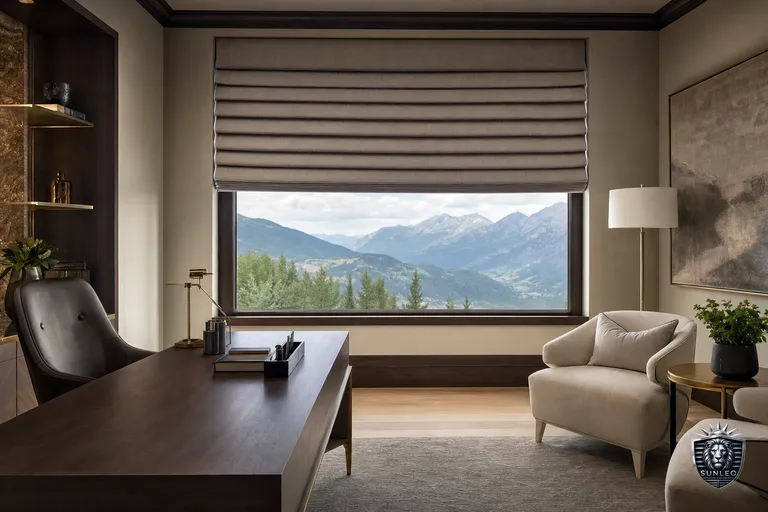
The clearest trend for 2026 is a shift away from crisp, glossy, obviously synthetic fabrics toward warmer, more textured, natural-looking ones. Real bamboo and woven-wood shades are part of this trend in the wider market (Sunleo doesn't carry them), but the same warmth now comes in textured fabrics with a grained, horizontal weave on Roman shades, natural-tone light-filtering rollers and sheer shades, without the upkeep of natural reed. Linen-look wovens are the other big mover: a soft, slightly irregular slub texture that reads as relaxed and organic, popular on roman shades and light-filtering rollers alike. These textures pair naturally with the mid-century-modern and Calgary mountain-modern interiors already popular locally — cream, sage and warm-neutral tones over a woven ground. It is a genuine style trend, not a gimmick, and it photographs beautifully next to wood trim, stone and natural-fibre rugs.
- Textured, grained weaves — warm horizontal texture, strongest on roman shades
- Linen-look wovens — soft, slightly irregular texture, works on romans and light-filtering rollers
- Pairs well with cream, sage, terracotta and warm-neutral Calgary interiors
What's genuinely more sustainable: PVC-free and recycled-content options
Underneath the trend, the material question is separate and, frankly, more useful if reducing environmental impact is your actual goal. PVC (vinyl) has long been common in vertical vanes, some venetian slats and vinyl-coated roller fabrics because it is durable, wipeable and inexpensive — those practical benefits are real, and PVC is not automatically a poor choice for a busy kitchen or bathroom. But for anyone looking to avoid PVC specifically, PVC-free alternatives exist across most product types: FSC-sourced faux-wood venetians instead of vinyl slats, woven fabric vertical vanes instead of PVC vanes, and roller, roman and honeycomb fabrics with recycled-polyester yarn or backing instead of virgin synthetic. None of this is a wholesale replacement for every product on the market yet, and availability varies by fabric collection, so this is a real conversation to have at your consultation rather than an assumption to make from a spec sheet.
- PVC-free venetians — FSC-sourced faux-wood slats in place of vinyl
- PVC-free vertical vanes — woven fabric vanes in place of PVC vanes
- Recycled-content fabrics — recycled-polyester yarns or backings on select roller, roman and honeycomb collections
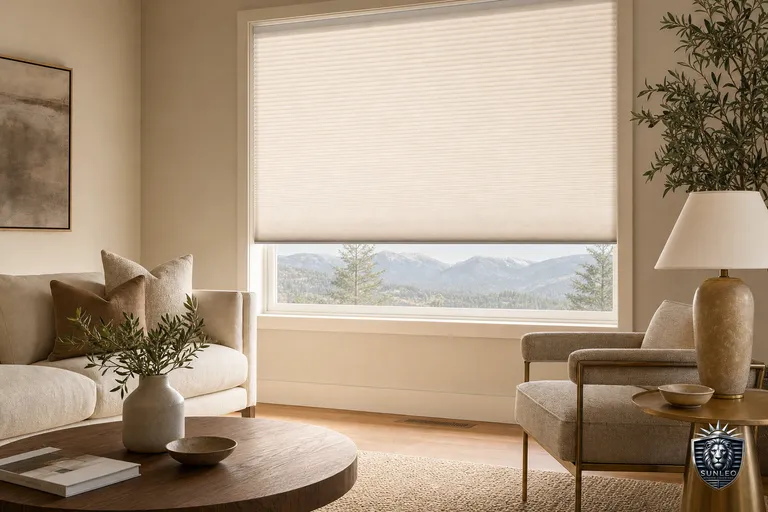
- Cellular/honeycomb shades — a genuine energy-efficiency win through better window insulation, independent of fabric sourcing
Where the natural and sustainable look works best
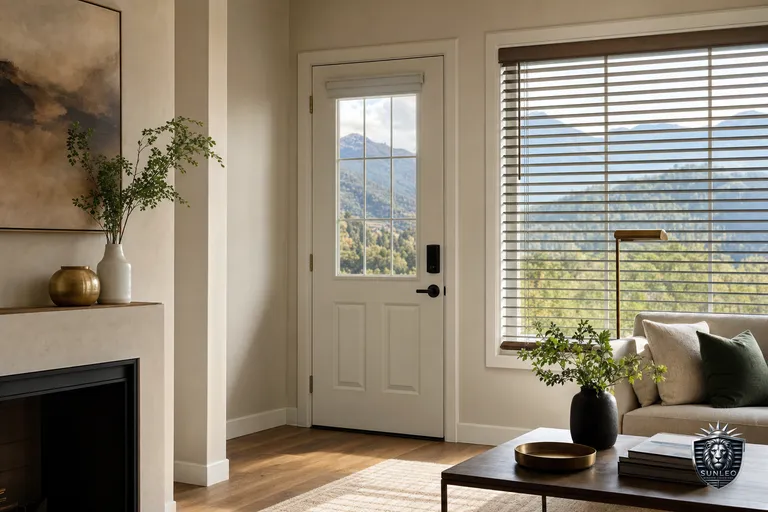
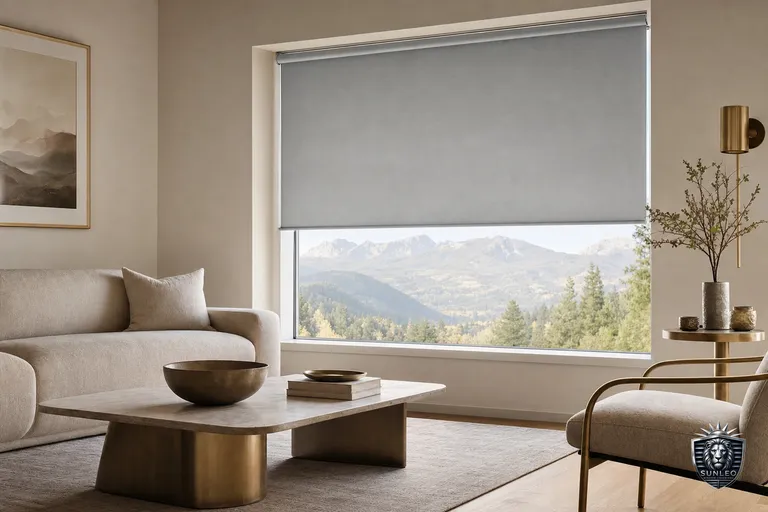
Not every product carries these trends equally, and matching the right one to the right room keeps the look honest rather than forced. Roman shades are the clearest home for textured and linen-look wovens — the soft folded fabric shows off texture the way a flat roller cannot, suiting living rooms, dining rooms and home offices where warmth beats sharp minimalism. Venetian blinds are where the PVC-free conversation is most concrete: FSC-sourced faux wood is a straightforward, already-available swap for vinyl slats, and it looks the part of a natural-material choice rather than just reading as one. Honeycomb shades bring the genuine energy-efficiency angle, and several collections now offer recycled-content fabric alongside their insulating cell structure, so you get both the performance story and a lower-impact material. Roller blinds sit in between — a great canvas for linen-look textures in light-filtering weights, plus a growing number of recycled-content light-filtering and blackout fabrics for anyone who wants the trend without changing product type.
- Roman shades — best showcase for textured and linen-look weaves
- Venetian blinds — clearest PVC-free swap (FSC-sourced faux wood vs. vinyl slats)
- Honeycomb shades — insulating performance plus recycled-content fabric options
- Roller blinds — linen-look light-filtering fabrics and recycled-content blackout options
How to choose without falling for greenwashing
A little skepticism serves you well here, because "eco" language is easy to print on a swatch card and harder to verify. Before treating a fabric as meaningfully more sustainable, it is worth asking a few direct questions rather than trusting the marketing name alone. What is the fabric actually made of, and is that documented rather than just implied by its colour or texture? Is it PVC-free specifically, or does it simply look wood-toned? Is there real recycled content, and roughly how much? And separately: does the product itself offer a functional benefit, like a honeycomb's insulation, that stands on its own regardless of fabric sourcing? A fabric can absolutely be worth choosing for its warm, natural look alone — that is a legitimate reason by itself — just do not let styling stand in for a materials claim you have not actually confirmed. Sunleo brings real swatches and honest sourcing information to your free in-home measurement, so you can ask these questions against the actual fabric in your own light rather than a product photo.
- Ask what the fabric is actually made of, not just what it's styled to look like
- Ask if a product is PVC-free specifically, if that matters to you
- Ask whether recycled content is real and roughly how much
- Separate the styling trend from the materials question — both are valid reasons, but they're different reasons