Buyer's Guide
How to Choose Blinds for Your Home: A Calgary Buyer's Guide
Picking window coverings sounds simple until you stand in a showroom-free world of fabrics, opacities, mount types and motors. The good news: there is a repeatable framework that takes the guesswork out of it. Instead of starting with a product name, start with the room and the problem you are solving. In this guide we walk through the six decisions that actually matter, add Calgary-specific notes on sun, cold and condensation, and explain how a free in-home measurement turns a maze of options into a short, confident shortlist for your home.
Start with the room, not the product
Every good blind choice begins with how a room is actually used, because that dictates the privacy, light control and durability you need. Walking room by room keeps you from over-buying in a spare bedroom or under-specifying in the space where it matters most. Map your home first, then match a covering to each job.
- Bedrooms: prioritize blackout or room-darkening fabrics for sleep, especially with Calgary's long June daylight.
- Living and dining rooms: balance daytime privacy with mountain and yard views, often a sheer or dual-layer shade.
- Kitchens and bathrooms: choose moisture-friendly, wipeable materials that handle steam and splashes.
- Home offices: control glare on screens without going fully dark.
- Kids' rooms: favour cordless or motorized options for safety.
Read the light direction and sun exposure
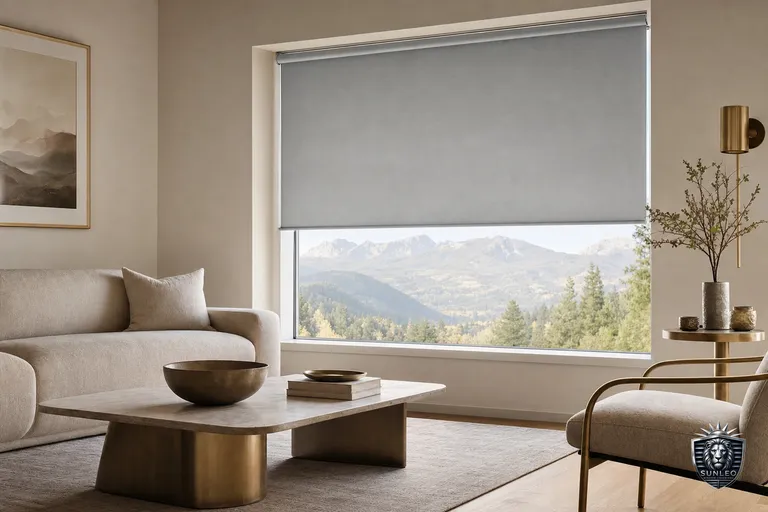
Which way a window faces changes everything about glare, heat and fading. In Calgary, intense high-altitude sun and snow glare can be surprisingly strong even in winter, so exposure should steer your fabric opacity. South and west windows take the most heat and UV; north windows stay soft and even; east windows get bright early mornings. A quick rule of thumb: the harsher the light, the more you benefit from a light-filtering fabric or a zebra blind that cuts glare while keeping the room bright, rather than a thin material that lets heat pour through.
- South/west: honeycomb shades or blackout rollers to tame heat and UV fade.
- East: room-darkening in bedrooms to block early sunrise.
- North: light-filtering sheers keep rooms bright without harsh glare.
- Screens nearby: pick a tighter weave to reduce computer and TV glare.
Decide how much privacy you need, day and night
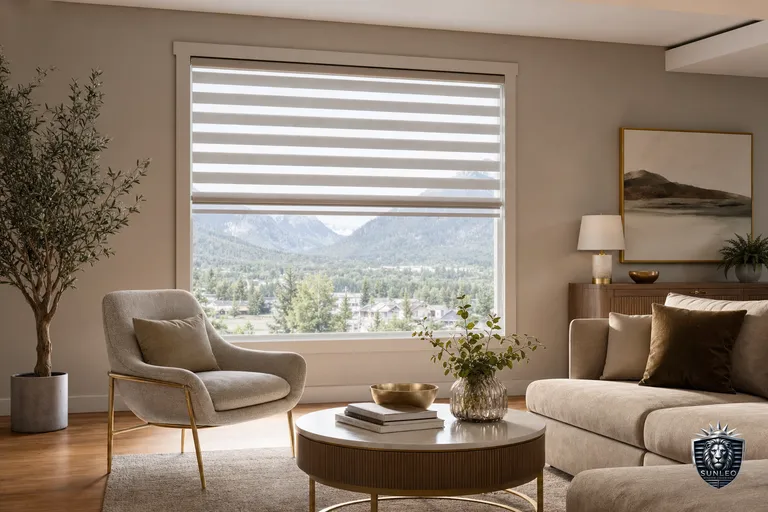
Privacy is not one setting; it changes after dark. A sheer fabric that feels private during the day can become see-through once your interior lights are on and the street is dark, which is a common surprise for homeowners on busier Calgary streets. Think about each window at night as well as midday. If you want both an open daytime view and full evening privacy, layered systems shine: a day-night zebra blind alternates sheer and solid bands, and dual shades pair a sheer with a blackout on one headrail so you can switch as the light changes.
- Street-facing main floors: plan for nighttime privacy, not just daytime.
- Bathrooms: top-down options let in light while staying covered.
- Want both view and privacy: consider zebra or dual-layer shades.
Factor in Calgary insulation and condensation
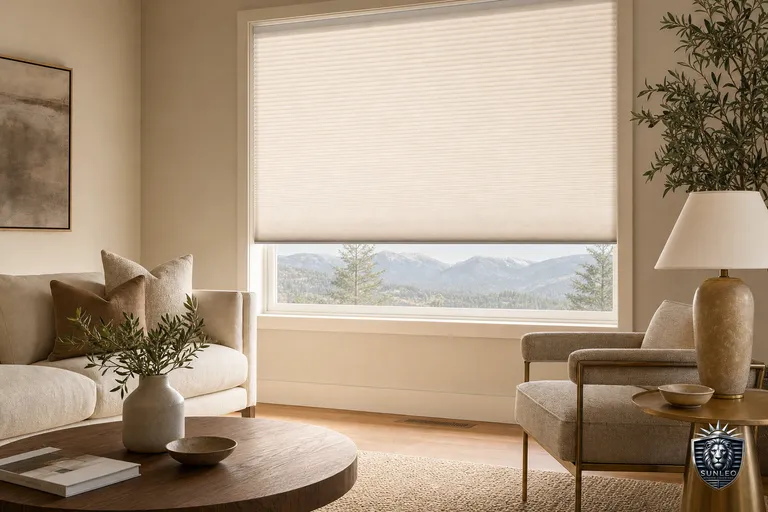
Window coverings do real work against Alberta winters. Cellular honeycomb shades trap air in their pockets, adding an insulating layer at the glass that helps hold heat in during cold snaps and block summer heat gain, which can ease the load on your furnace and reduce that cold draft you feel near windows. If your windows sweat in winter, look for breathable fabrics and mounting that allows airflow, and avoid trapping moisture tight against the glass in high-humidity rooms. For chinook-driven temperature swings, durable materials that don't warp with heat and cold hold up best over the years.
- Best insulators: cellular/honeycomb shades, especially double-cell for north and exposed walls.
- Drafty older homes: pair insulating shades with a snug inside mount.
- Condensation-prone rooms: choose breathable, mold-resistant fabrics.
Balance budget with motorization and smart control
Budget is easier to manage when you think in tiers rather than per-window sticker shock. Spend where it counts: bedrooms and main living spaces deserve the better fabrics and features, while spare rooms and basements can take simpler options. Custom made-to-measure blinds cost more than off-the-shelf sizes but fit precisely and look built-in, which matters most on the windows you see every day. Motorization is the other big choice. It has moved from luxury to practical, solving real problems on hard-to-reach windows above stairwells or sinks, on very large shades, and for cordless child safety. Sunleo's motorized blinds work with Alexa, Google Home and Apple Home, so you can schedule, group rooms and control by voice. If you might add motors later, flag it during your measure so access is planned in advance.
- Splurge rooms: bedrooms, living room, primary windows you look at daily.
- Save rooms: basements, storage and occasional guest rooms.
- Motorize: tall, wide, hard-to-reach or child-safety windows.
- Budget for installation and any motorization up front.
Why a free in-home measure removes the guesswork
Reading about fabrics only gets you so far. Light, wall colour and room scale change how a shade looks and performs, and a fraction of an inch decides whether an inside mount clears the frame or binds. That's why the smartest step is a free in-home consultation: a Sunleo specialist brings real fabric samples to your home, checks each window's depth, squareness and obstructions, holds materials up in your actual light, and confirms opacity and colour before anything is ordered. You get precise measurements, honest recommendations per room, and a written quote, with no showroom trip and no pressure. The site narrows your options; the in-home visit confirms the right call for your windows.