Buyer's Guide
Blind Fabric Opacity Levels Explained: Sheer to Blackout
Two blinds can look almost identical side by side on a shade card, then behave completely differently the moment the sun actually hits them — the reason comes down to one property: opacity. It decides how much light, privacy and outside view a fabric gives you. This guide explains the four standard blind fabric opacity levels — sheer, light-filtering, dim-out and blackout — in plain terms: what each one does, how much light and privacy you get, and which room in a Calgary home each level suits best. Use it to match fabric to purpose before you commit to a colour.
What fabric opacity actually means
Opacity is a measure of how much light a fabric lets through versus how much it blocks. A fully transparent fabric has low opacity (lots of light passes through); a fully opaque fabric has high opacity (almost no light passes through). Most manufacturers describe fabrics along a spectrum from sheer to blackout. Opacity affects three things at once, and they trade off against each other: how bright the room stays, how private it is, and how much of the outside view you keep. As a rule, the more light a fabric blocks, the more privacy it gives — but the less you can see out. There is no single 'best' opacity; the right level depends entirely on the room and how you use it.
- Low opacity = more light, more view, less privacy (sheer, light-filtering)
- High opacity = less light, less view, more privacy (dim-out, blackout)
The 4 blind fabric opacity levels
These four levels appear across almost every product type, so you can request them whether you choose rollers, honeycomb, zebra or Roman shades. They run from most see-through to most light-blocking.
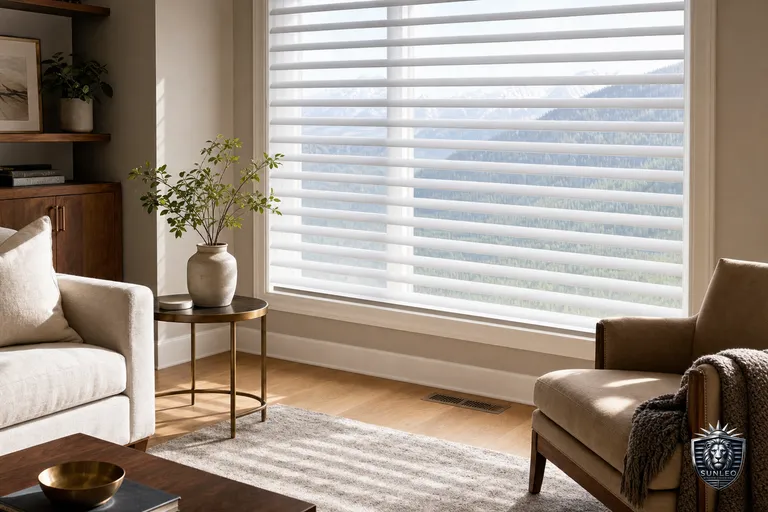
- Sheer / voile — the most transparent level. Filters harsh light into a soft glow, softens glare and keeps a hazy daytime view, but offers little privacy and no darkening. Best for style and light diffusion, not for blocking light.
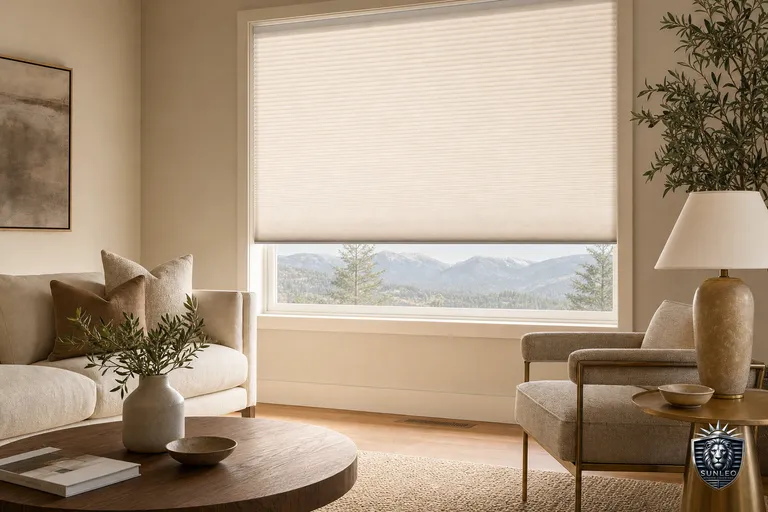
- Light-filtering — a soft, semi-opaque fabric that lets a gentle, even light through while giving good daytime privacy. It brightens a room without harsh glare, but does not darken it or provide full night-time privacy on its own.
- Dim-out / room-darkening — blocks most light and gives strong privacy day and night, but a small amount of light may still glow through the fabric or around the edges. A practical middle ground when true blackout feels too heavy.
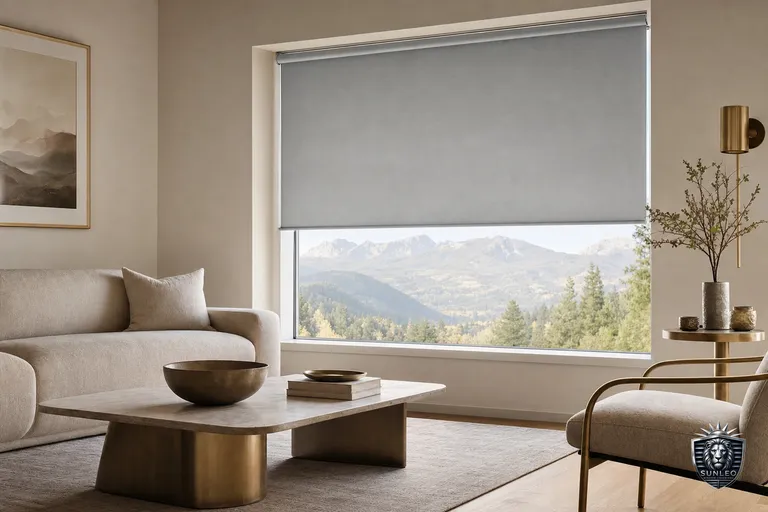
- Blackout — the highest opacity. The fabric itself blocks virtually all light for maximum darkness and complete privacy at any hour. Note that light can still leak at the sides unless the blind uses side channels or a tight recess fit.
Which opacity suits each room
Matching opacity to how a room is used is the fastest way to get window coverings right the first time. In Calgary, exposure matters too: long summer daylight (up to roughly 16 hours in June), low winter sun and bright snow glare all push certain rooms toward higher-blocking fabrics.
- Living room / dining room — light-filtering keeps daylight while cutting glare on TVs and furniture, and zebra or sheer shades keep the view too.
- Bedrooms — dim-out or blackout for sleep. Blackout is ideal for shift workers, nurseries and anyone sensitive to early summer sunrises.
- Home office — light-filtering or a zebra blind to reduce screen glare while staying bright and keeping a connection to outside.
- Kitchen / bathroom — light-filtering for daytime privacy with brightness; blackout is rarely needed.
- Skylights and vaulted windows — dim-out or blackout with a track-guided system controls heat and morning light in bright ceilings.
- Decorative layering — sheer paired with a blackout or dim-out shade gives you soft daytime light and full night darkness from the same window.
Sheer and light-filtering — clearing up the confusion
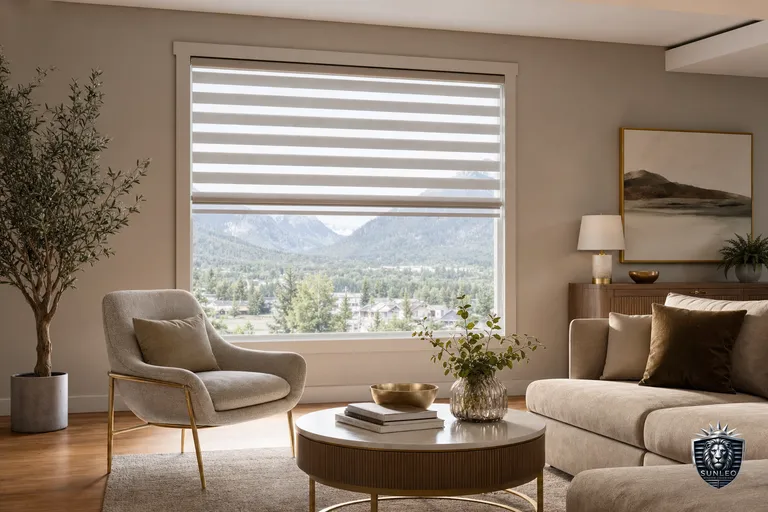
Sheer and light-filtering are often mixed up because both let daylight in, but they are different. Sheer is decorative and diffuses light softly while keeping a hazy view out; it is the fabric in sheer shades and in the sheer bands of a zebra blind. Light-filtering is translucent rather than see-through: it softens glare and gives daytime privacy, but you won't make out the view. One important privacy note: any fabric that lets light through during the day can show silhouettes at night once interior lights are on, so neither is a substitute for privacy in bedrooms or ground-floor windows after dark — close the zebra bands or sheer vanes, or use dim-out or blackout.
How to choose the right opacity
Start with the job the window needs to do, not the colour. Ask what matters most in that room — darkness for sleep, glare control for screens, privacy after dark, or keeping the view — then work back to the opacity level. If a room has competing needs (a bright living room you also watch movies in, or a bedroom you want light in by day but dark at night), layering two fabrics or a dual zebra blind solves it. Colour also affects behaviour: darker fabrics cut glare and improve outward view but absorb more heat, while lighter fabrics reflect heat but can look brighter and slightly reduce privacy. Because opacity behaves so differently once real sunlight and your specific window exposure come into play, seeing samples in the actual room is the surest way to decide. A Sunleo consultant can bring the full opacity range to your Calgary home during a free in-home measurement, so you can hold sheer, light-filtering, dim-out and blackout swatches against your own windows before choosing.