Comparison
Custom Blinds vs. Store-Bought: What's Actually Different
Walk into any big-box store and you'll find blinds in a handful of standard widths, ready to take home the same day. Order custom blinds and you wait a few weeks, but they're built for the exact opening a Sunleo consultant measured in your home. Neither option is "wrong" — they solve different problems. This guide breaks down the real differences in fit, quality, lifespan, installation, and true cost-per-year, so you can decide which makes sense for your window.
The core difference: fixed sizes vs. exact measurements
Big-box and store-bought blinds are manufactured in standard increments (commonly every 1-2 inches) and sold pre-cut or trimmed down at a saw in the store. Your window rarely matches those increments exactly, so you end up with a blind that's slightly too narrow (light gaps on both sides) or trimmed down (which can void warranties and sometimes cuts into the mechanism). Custom blinds are built to the millimetre from measurements taken at your home, for the specific mount type (inside or outside frame) that window needs.
- Store-bought: fixed widths, cut down in-store or at home with a hacksaw
- Custom: built to your window's actual width, height, depth, and mount type
- Out-of-square or older Calgary window frames are common — off-the-shelf sizing assumes a perfectly square opening
Fit and light gaps
This is the difference people notice every day. A store-bought blind trimmed 1/2 inch narrower than the frame (standard practice to avoid friction) leaves visible gaps of light down both sides and at the headrail. Custom blinds are built with the reveal or overlap calculated for your specific window, so they sit close to the frame with minimal light leakage — important for bedrooms, home theatres, and rooms facing morning sun.
- Store-bought gaps: typically 1/4-3/4 inch of visible light per side after trimming
- Custom fit: reveal calculated per window, closer light-block and cleaner sightline
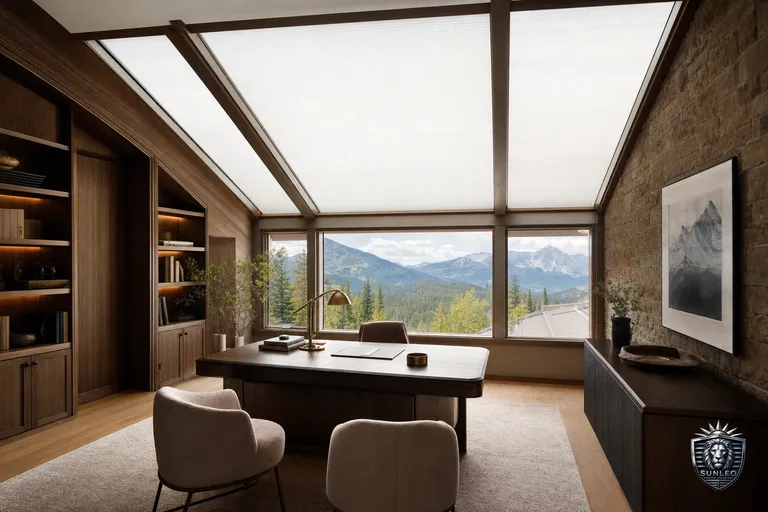
- Corner windows, bays, and skylights rarely have a workable off-the-shelf option at all
Materials, mechanisms, and lifespan
Big-box blinds are built to a price point for mass retail — thinner slats or fabric, plastic components in the lift mechanism, and cords/chains rated for lighter daily use. Custom blinds from a dedicated supplier use heavier-gauge components and mechanisms rated for years of daily operation, which is why the difference shows up most in year 3-5, not on day one.
- Store-bought: functional for 2-5 years of regular use before cords fray or slats warp
- Custom: heavy-duty components typically rated for 10-15+ years of daily use
- Cordless and motorized lift options are far more consistent in custom builds
Installation: DIY trim job vs. professional fit
Store-bought blinds are designed for DIY installation — you trim the headrail (and sometimes slats) to width at home, then mount with the included brackets. It's fast, but any measuring error is permanent once cut. Custom blinds are installed by a professional after measurement, so the brackets, mount type, and any obstructions (handles, sensors, deep sills) are accounted for before the product ever arrives.
- Store-bought: you measure, you trim, you mount — mistakes mean a return trip to the store
- Custom: Sunleo measures and installs, so fit issues are caught before the order is placed
True cost-per-year, not just sticker price
Store-bought blinds almost always win on the price tag you see at checkout. But a $25 blind replaced twice in 8 years costs more over time — and more in hassle — than one custom blind bought once. The honest answer: if you need to cover a window cheaply and temporarily (a rental, a staging job, a spare room), store-bought makes sense. If it's a window you'll live with for a decade, custom is usually the better value once you account for replacements, gaps in light/privacy, and installation time.
- Store-bought makes sense for: rentals, temporary coverage, rarely-used rooms, tight budgets
- Custom makes sense for: primary living spaces, awkward or non-standard windows, motorized/smart setups, long-term homes
| Custom (Made-to-Measure) | Off-the-Shelf / Big-Box | |
|---|---|---|
| Sizing | Built to your exact window measurements, any mount type | Fixed standard widths, trimmed down at home or in-store |
| Fit & light gaps | Close, calculated reveal with minimal light leakage | Often 1/4-3/4 inch of visible gap after trimming |
| Typical lifespan | 10-15+ years with heavy-duty components | 2-5 years before cords, slats, or mechanisms wear out |
| Installation | Professional measure and install, one home visit | DIY trimming and mounting, mistakes are permanent |
| Odd-shaped windows | Handles bays, skylights, corner and out-of-square frames | Little to no option for non-standard openings |
| Upfront cost | Higher upfront, priced per window | Lower upfront, off-the-shelf pricing |
| Best for | Main living spaces, long-term homes, motorized/smart setups | Rentals, temporary coverage, tight budgets |