Comparison
Cellular vs Roller Blinds for Bedrooms: Which Wins for Sleep?
Both cellular (honeycomb) shades and roller blinds come in blackout versions, so on paper they can look similar for a bedroom. The real differences show up in how each handles insulation, light gaps at the edges, cost, and the overall look of the room. Here's how they compare specifically for sleep and style in a Calgary bedroom — plus which one we'd recommend for different priorities.
Insulation: Which Keeps a Calgary Bedroom Warmer?
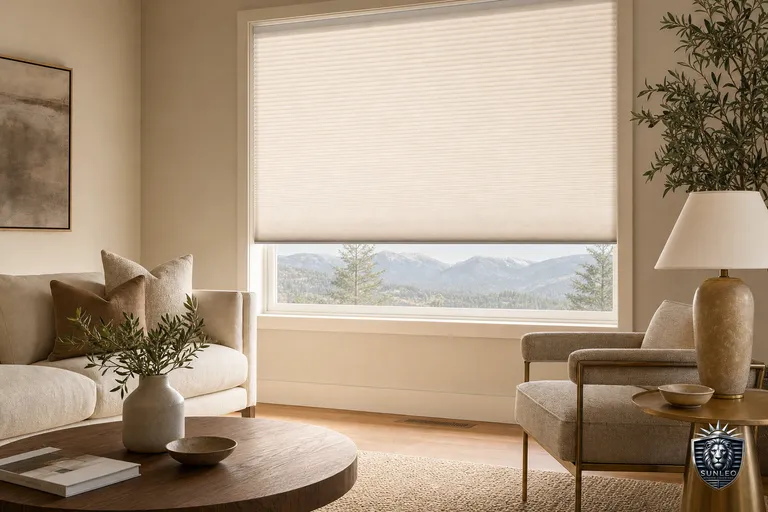
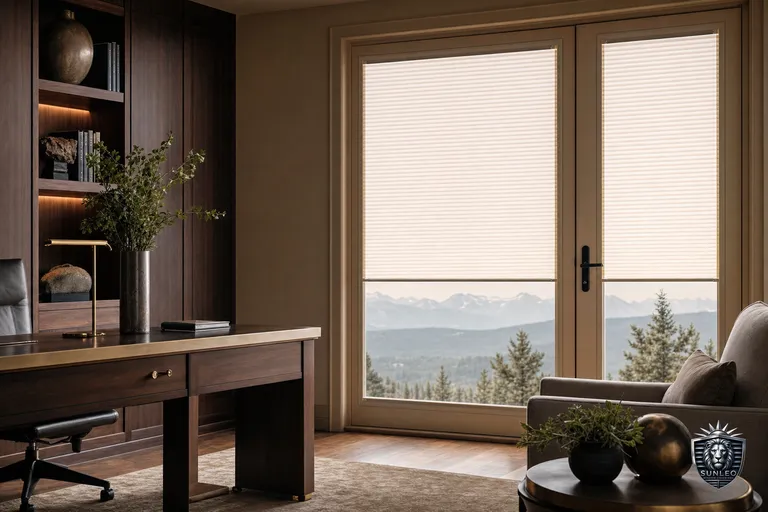
Cellular shades are built from folded fabric that forms honeycomb-shaped air pockets, and that trapped air acts as an extra insulating layer against the window glass. In a Calgary winter, that can mean a noticeably less drafty feel next to the window at night, and less heat loss compared to a single layer of fabric. Roller blinds are one flat layer of fabric — dim-out and blackout fabrics reduce heat gain and glare well, but they don't create an insulating air gap the way a cellular structure does.
- Cellular: honeycomb air pockets add a real thermal barrier at the glass
- Roller: single flat fabric layer, good for glare/heat gain but no built-in insulation gap
- Best for cold bedrooms or big west/north-facing windows: cellular
Blackout Capability & Light Gaps: What Actually Helps You Sleep
Both products come in blackout fabric, so the material itself can block direct light equally well. The difference for sleep is what happens at the edges. A flat roller fabric sits fairly close to the frame, but light can still creep in along the sides and top unless it's mounted in a cassette or fitted with side channels. Cellular blackout shades have the same edge-gap issue, sometimes slightly more due to the pleated shape, but they respond very well to add-on side tracks for a near-total blackout result.
- Neither product is 100% light-sealed on its own — edge gaps are normal on both
- Adding side channels or a top cassette closes the gaps on either option
- For the darkest possible bedroom, blackout cellular + side channels is the strongest combination we install
Cost & Value for a Bedroom Window
Roller blinds are typically the more budget-friendly choice in a blackout or room-darkening fabric, which is why they're a common first choice for bedrooms. Cellular shades usually cost a bit more because of the cell construction and blackout lining, but the insulation benefit can offset some of that over time through comfort and reduced drafts, especially on larger or older windows.
- Roller blackout: typically the lower-cost option
- Cellular blackout: a step up in price, offset by insulation value
- Both are available motorized for wake/sleep automation, with roller usually the lower-cost motorized route
Look & Style: Pleated Texture vs Flat Minimal
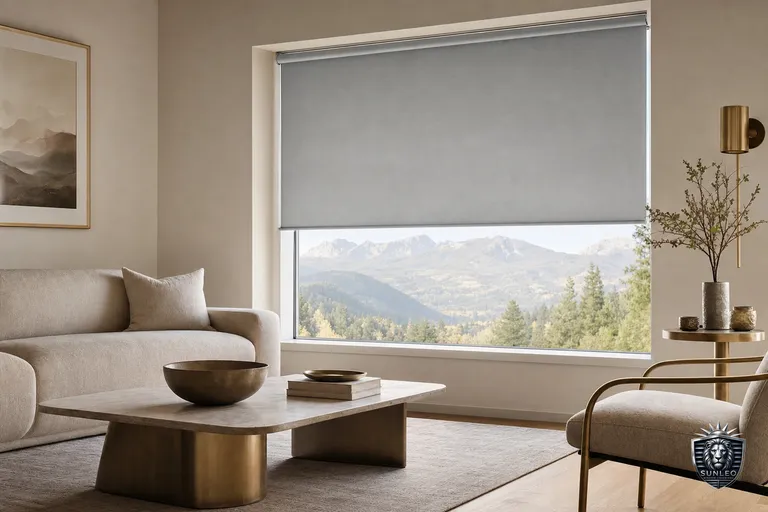
Style comes down to personal taste. Cellular shades have a soft, pleated, textured look that suits cottage, transitional, or cozy bedroom styles, and they add a bit of visual softness to a room. Roller blinds have a clean, flat, minimal profile that suits modern, Scandinavian, or streamlined bedrooms, and they tend to disappear visually when rolled up, which some homeowners prefer for a simple window line.
Verdict: Cellular for Sleep-First, Roller for Style-First (or Combine Both)
If the main goal is temperature control and the darkest possible room for sleep, cellular blackout shades — installed with side channels — are the stronger performer. If the priority is a clean, minimal look with solid light control at a lower cost, blackout roller blinds are a great fit. Some Calgary bedrooms use both: a blackout roller for daily light control layered with a sheer or cellular option for softness, though this adds cost and is only worth it for households with strong light-sensitivity needs.
- Choose cellular blackout if: cold bedroom, big windows, sleep quality is the top priority
- Choose roller blackout if: modern look, tighter budget, good-enough light control is fine
- Combine both if: shift-work schedules or extreme light sensitivity justify the extra layer
| Cellular (Honeycomb) | Roller | |
|---|---|---|
| Insulation | Honeycomb air pockets add a real thermal barrier at the window — noticeable on cold Calgary nights | Single flat fabric layer; dim-out/blackout fabrics cut heat gain but add no air-pocket insulation |
| Blackout capability | Blackout fabric blocks direct light well; needs side channels for a near-total seal | Blackout fabric blocks direct light well; needs a cassette or side channels for a near-total seal |
| Light gaps at edges | Pleated shape can leave slightly more edge gap without a fitted track | Flat fabric sits closer to the frame, often with a narrower gap without a cassette |
| Cost | Usually a step up due to cell construction and blackout lining | Usually the more budget-friendly blackout option |
| Look/style | Soft, pleated, textured — suits cottage or transitional bedrooms | Clean, flat, minimal — suits modern or Scandinavian bedrooms |
| Maintenance | Pleats can hold a little more dust; occasional brush-vacuum needed | Smooth flat fabric wipes clean easily |