Room Guide
Blinds for Casement Windows: Best Options & Fitting Guide
Casement windows crank outward on a hinge, which means the handle, crank mechanism, and sometimes a locking arm all sit inside or near the window frame. That hardware is exactly where a standard blind's bottom rail or side channel wants to hang, which is why so many Calgary homeowners end up with blinds that jam, rattle against the crank, or simply won't sit flush. Get the mount and product right and casement windows are actually easy to dress well.
Why casement windows are trickier than sliders or double-hung
A slider or double-hung window has no protruding hardware in the way, so almost any blind fits. A casement window cranks open on hinges, and the operating handle (plus the crank arm and, on older units, a locking cam) sits low on the sash, usually a few inches up from the sill. If a blind's headrail, cords, or side channels sit in that same space, the crank can't turn without hitting fabric or hardware, and repeated contact frays cords and cracks vanes over time.
- Crank handle projects several centimetres into the room when the window is closed
- Handle position varies by manufacturer - some fold flat, some don't
- Bottom-hung sashes swing outward, so anything mounted too close to the glass can block the sash path
- Casement windows are common in Calgary infills, condos, and newer bungalows, especially at kitchen sinks and bedrooms
Inside mount vs. outside mount on a casement window
This is the first decision, and it depends on how much clearance exists between the window frame and the crank handle.
- Inside mount (fits inside the window recess): looks clean and lets the frame show, but only works if there's enough depth behind the crank arm for the blind to hang without touching it - usually needs 6-7 cm of clear reveal
- Outside mount (fixed to the wall or trim around the window): the safer default for casement windows, since the blind hangs in front of the hardware entirely and never contacts the crank
- A quick check: crank the window fully open and closed, then measure the space between the innermost point of the handle/arm and the front of the frame - that number tells you whether inside mount is realistic
- When in doubt, our consultant checks clearance during the free in-home measurement rather than guessing from a sketch
Best blind types for casement windows
Not every product handles a crank handle gracefully. These options are built or configured specifically to avoid the hardware.
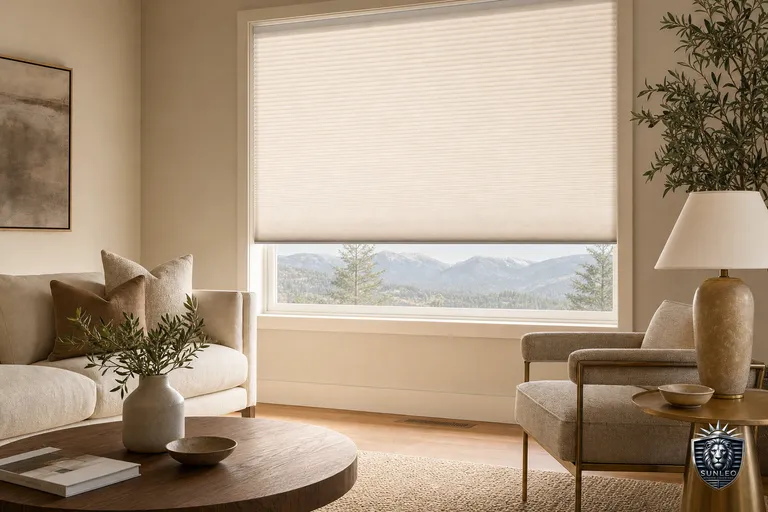
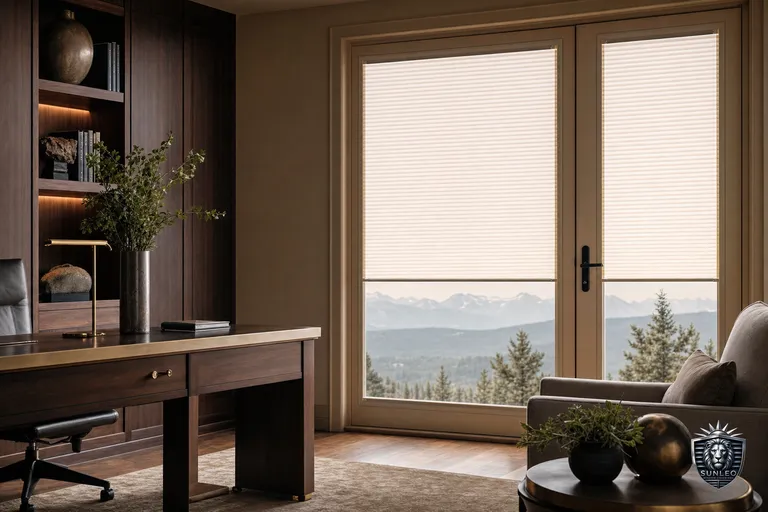
- Cordless cellular (honeycomb) shades - no dangling cords to snag on the crank, and the cell structure sits flat against the glass with minimal projection
- Perfect Fit / door blinds (no-drill frame) - clips directly to the window frame itself rather than the wall, so the blind moves with the sash and never crosses the crank's swing path; ideal for tilt-and-turn or casement-style uPVC frames
- Top-down-bottom-up shades - let you lower the top of the shade for privacy and light control while keeping the bottom clear of the handle, so the crank stays fully accessible
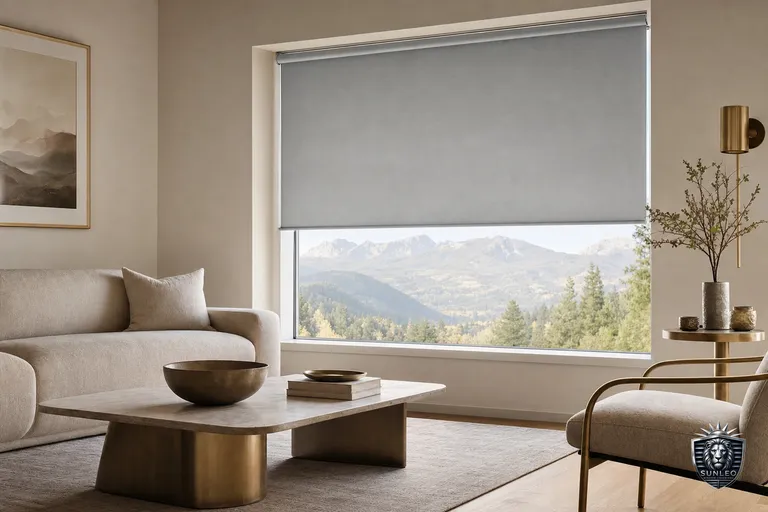
- Cordless roller blinds - a slim, low-profile option when a simple outside mount is preferred over pleated fabric
- Avoid standard corded roman shades or heavy vertical blinds directly over the crank zone unless mounted well clear (outside mount, higher up) - the cords and fabric bulk are the most common source of jamming
Fitting tips to avoid hardware clashes
A few practical rules keep casement windows opening freely for years, not just on install day.
- Always operate the crank through its full range during measurement, not just when closed - some handles extend further mid-swing
- For inside mount, position the headrail as high in the reveal as the frame allows to maximize clearance below
- Choose cordless lift systems near the crank zone so there's nothing loose to catch on the handle
- If the home has multiple casement windows with different handle styles (common in older Calgary renos with mixed replacement windows), each opening may need its own mount decision
- Perfect Fit frames are worth a serious look on uPVC casement windows since they're designed around exactly this constraint
When to get a professional opinion
Crank clearance is a millimetre-level judgment call, and getting it wrong means a blind that either won't sit flush or physically blocks the window from opening. Photos and online guides only go so far.
- Bring us your window's crank style (or a photo) and we'll flag likely clearance issues before you order anything
- Our free in-home measurement includes checking the crank swing and confirming inside vs. outside mount for each window
- No pressure to decide on the spot - samples come with us so you can compare finishes in your own light