Comparison
Blinds vs Curtains: Pros, Cons, Cost, and When to Combine Both
You've picked the paint colour, the furniture, maybe even the rug — and now you're standing at the window wondering whether it wants blinds or curtains. The honest answer is that it depends on the window, the room, and how you live in it. Blinds give you tailored, adjustable control over light and privacy in a compact, low-maintenance package. Curtains bring softness, warmth, and a decorative finish that hard window coverings can't quite match. In many Calgary homes the smartest move isn't either-or; it's layering both for performance and style. This guide breaks down the real differences, pros, cons, cost, cleaning, light control, and insulation, so you can decide with confidence. Sunleo makes custom blinds and shades (not curtains), so we'll be straight with you about where each one wins and how to combine them.
What's the real difference between blinds and curtains?
At the simplest level, blinds are made from rigid or semi-rigid materials, slats, vanes, or fabric on a roller or cellular structure, that you raise, lower, or tilt. Curtains (and drapes) are panels of loose fabric that hang from a rod or track and slide open or closed. That structural difference drives almost every practical trade-off that follows.
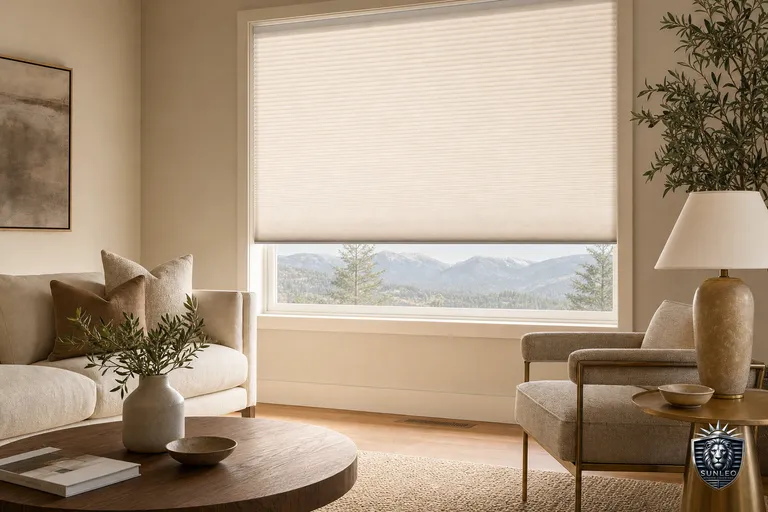
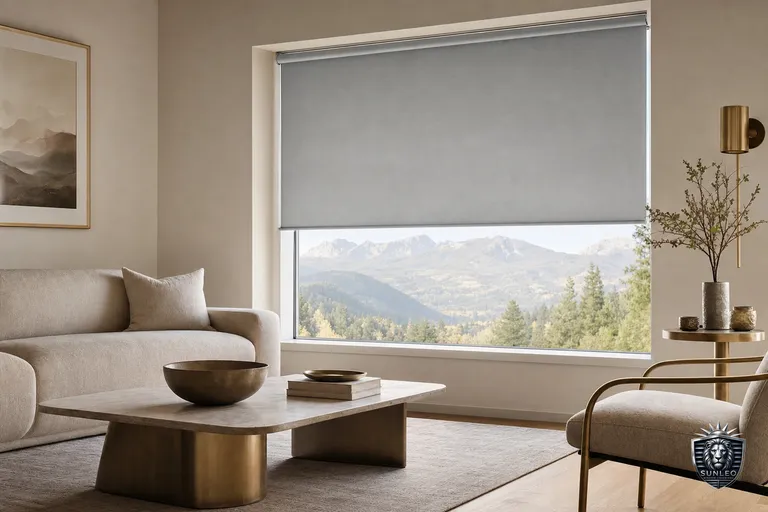
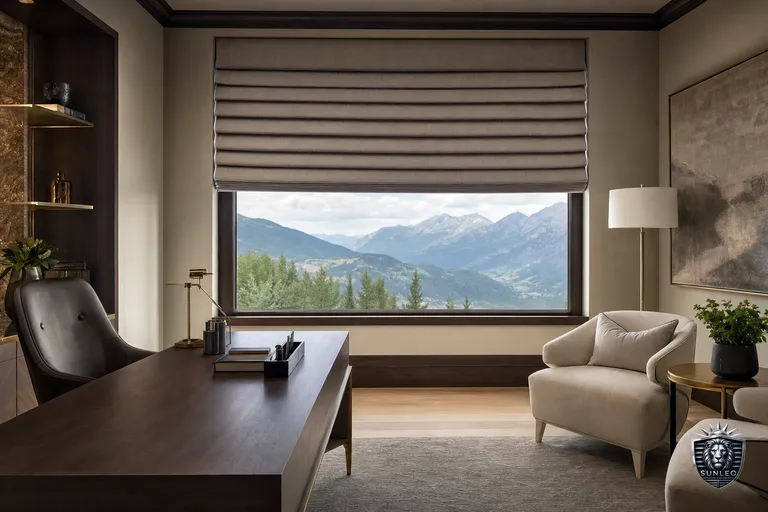
Blinds sit close to the glass, often mounted inside the window frame, so they take up almost no room and suit tight spaces, doors, and awkward shapes. Because the slats or fabric move in fixed increments, you get fine, repeatable control, a half-open tilt every morning, full blackout at night. Categories range from roller and zebra blinds to honeycomb shades, venetian and vertical blinds, plus soft fabric options like Roman shades that read almost like a curtain when lowered.
Curtains are a textile-first choice. They add colour, pattern, and a sense of height, soften hard architectural lines, and dampen echo in a room. But they need clearance to stack back, floor or sill space, and a sturdy rod or track. The same softness that makes them cozy also makes their light and privacy control blunter, usually fully open or fully closed unless you add sheers or a lining.
Neither is objectively better. Blinds win on precision, fit, and upkeep; curtains win on warmth and decorative drama. Knowing which quality a room actually needs is the real decision.
Which gives better light control and privacy?
For everyday light management, blinds are the more versatile tool. Tilting venetian or faux-wood slats lets you bounce daylight up to the ceiling while still blocking the view inside, privacy and brightness at the same time. Zebra (day-night) blinds alternate sheer and solid bands so you can dial in anything from a soft glow to near-blackout by shifting the fabric a few centimetres. For bedrooms and media rooms, blackout roller or honeycomb shades cut the most light, especially with a side channel or outside mount to limit edge leakage.
Curtains are more binary. Open, they let in nearly everything; closed, they block most of it, but the in-between is limited unless you run two layers (a sheer plus a heavier drape). Heavy lined drapes can deliver excellent blackout and a luxurious feel, which is why bedrooms are often where curtains earn their keep. The catch is the gap: fabric panels rarely seal tight to the wall, so a sliver of light usually sneaks around the edges at dawn, a real consideration during Alberta's long June daylight.
On privacy, blinds let you stay private during the day without going fully dark, which curtains struggle to do without sheers. At night, both perform well when fully closed. If a room demands precise, adjustable daytime privacy, a street-facing living room or a ground-floor bedroom, blinds usually have the edge. If you want total darkness and don't mind committing the whole window, lined curtains or a blackout blind both deliver.
How much do blinds vs curtains cost in Calgary?
Cost is where honest framing matters, because the range on both sides is enormous and anyone quoting a single number is guessing. For custom, made-to-measure window coverings in the Calgary market, a reasonable expectation is that simple roller or aluminum blinds sit at the lower end, while specialty options, motorized, blackout-lined honeycomb, skylight systems, or wide window spans, climb well above. As a rough planning estimate only, custom blinds often land somewhere around $150 to $600+ per window, with size, fabric, mount, and motorization moving you within (and beyond) that band.
Custom curtains aren't necessarily cheaper. Once you add quality fabric, lining, a rod or ceiling track, and the labour to make and hang full-height panels, made-to-measure drapery often matches or exceeds comparable blinds. Off-the-shelf curtain panels are inexpensive, but they rarely fit Calgary's many non-standard window sizes well, and ill-fitting fabric undercuts both the look and the light control you paid for.
The fairer way to think about it: blinds tend to give more performance-per-dollar for function (light, privacy, insulation, fit), while curtains spend more of the budget on softness and decoration. For a whole-home project, mixing the two strategically, function where you need it, fabric where you want warmth, usually beats spending heavily on one approach everywhere. See the table below for a side-by-side, and treat every figure as a typical estimate, not a quote.
Which is easier to clean and maintain?
Day-to-day upkeep is one of the clearest wins for blinds. Most slatted and roller styles need nothing more than a quick dust with a microfibre cloth or a vacuum brush; faux-wood, aluminum, and vinyl blinds wipe clean with a damp cloth, which makes them practical for kitchens and bathrooms where grease and moisture collect. Nothing has to be taken down, washed, dried, or rehung. Honeycomb shades hold a little dust in the cells, but a vacuum on low usually handles it.
Curtains are more work. To clean them properly you typically unhook the panels, launder or dry-clean them, and rehang, a chore most people put off, which is partly why fabric drapes trap dust, pet hair, and odours over time. In a city like Calgary, where furnaces run for much of the year and indoor air gets dry and dusty, that accumulation is worth weighing if anyone in the home has allergies.
Durability cuts both ways. Quality blinds last for years and shrug off sun exposure better when made with UV-stable materials, though mechanisms and cords can eventually wear. Curtains are simple, there's little to break, but fabric fades, and constant sun on a south or west window will thin and weaken it over time. If low effort and easy hygiene rank high on your list, blinds are the easier long-term companion; if you don't mind periodic laundering for the sake of softness, curtains are manageable.
Which handles Calgary's climate better?
Calgary's climate puts real demands on window coverings, and it's where the blinds-versus-curtains question gets genuinely practical. Winters are long and cold, summers bring intense high-altitude sun, and Chinooks swing temperatures dramatically in a single day. Windows are the weakest link in a home's thermal envelope, so the right covering does more than look good.
For insulation, the standout is the cellular (honeycomb) shade. Its pleated, air-trapping pockets create a buffer at the glass that helps slow heat loss in winter and heat gain in summer, a meaningful difference on the coldest January nights and the brightest July afternoons. Heavy lined curtains also insulate well when fully drawn, so on pure thermal performance a good honeycomb blind and a thick lined drape are roughly comparable; the blind simply does it in a fraction of the space and with far less upkeep.
UV is the other Calgary factor. At our elevation the sun is strong, and south- and west-facing rooms fade flooring, furniture, and artwork over the years. A light-filtering roller or a sheer shade softens glare while keeping the view, and any blind with a closed slat or solid fabric blocks more direct sun than an open curtain. Curtains help too, but fabric exposed to that much direct light tends to fade faster itself.
For Calgary homes, the most effective setup is often a high-performing blind for daily function and UV control, with the option of a curtain layer for the coldest rooms, which leads neatly into layering.
When should you layer blinds and curtains together?
Layering means using blinds or shades at the glass and curtains over top, and it's how you get the strengths of both without the compromises of either. The blind handles the work: precise light control, daytime privacy, UV filtering, and insulation close to the window. The curtain handles the feel: softness, warmth, colour, and that finished, full-height look that hard coverings alone can't deliver.
Practically, layering also solves real problems. A blackout roller or honeycomb shade behind floor-length drapes gives a bedroom near-total darkness, the blind seals the centre of the window, the curtain covers the light gaps at the edges. In a drafty older living room, a cellular shade plus a heavy curtain stacks two insulating layers for cold Calgary nights. And aesthetically, curtains frame a window and add height while the blind underneath does the precise adjusting day to day.
A few practical tips: keep one layer functional and one decorative so they don't fight each other; match or deliberately contrast tones rather than leaving it to chance; and plan mounting depth early, since an inside-mount blind plus an outside curtain rod needs the right clearance. Sheer curtains pair beautifully with a light-filtering roller or zebra blind for daytime softness, while heavier drapes pair with blackout shades for bedrooms.
This is exactly where a brand like Sunleo fits: we make the custom blinds and shades that form the functional layer, and we'll happily advise on how to coordinate them with curtains you choose separately, even though we don't sell the curtains ourselves.
- Functional layer (at the glass): a blind or shade for light control, privacy, UV, and insulation.
- Decorative layer (over top): curtains for softness, warmth, colour, and height.
- Best bedroom combo: blackout roller or honeycomb shade + lined drapes for near-total darkness.
- Best daytime combo: zebra or light-filtering roller blind + sheer curtains for soft, filtered light.
- Plan ahead: confirm mounting depth so an inside-mount blind and outside curtain rod both fit.
How do you choose the right covering for each room?
There's no universal winner, so the cleanest way to decide is room by room, matching the covering to what that space actually needs rather than picking one approach for the whole house. Think about three things at each window: how much light control you want, how much privacy you need by day, and whether warmth or decoration matters in that room. A street-facing bedroom and a bright top-floor office have completely different priorities, and the right answer usually changes as you move through the home.
A few rules of thumb for Calgary homes:
The hardest part is rarely the style, it's getting the fit, fabric, and light control right for each window, which is where measuring carefully and seeing samples in your own light makes all the difference. Print colours and online swatches shift dramatically depending on a room's exposure and the time of day. Because Sunleo is mobile and works entirely in your home, you can hold real fabrics against your actual windows, watch how each option handles your specific sun and sightlines, and get a custom quote, typically within 48 hours, with no showroom trip required. When you're ready to compare options for your space, booking a free in-home measurement is the simplest next step.
- Bedrooms: prioritize darkness and insulation with blackout roller or honeycomb shades, optionally layered with lined curtains.
- Living rooms: balance view, glare, and privacy with light-filtering roller or zebra blinds, plus optional curtains for softness and height.
- Kitchens & bathrooms: choose wipeable, moisture-tolerant blinds (faux-wood, aluminum, vinyl) over fabric that absorbs humidity and grease.
- Offices & media rooms: cut screen glare with adjustable slats or blackout shades; skip thin curtains that wash out in bright sun.
- Patio doors & skylights: use vertical, perfect-fit, or track-guided skylight systems built for the opening.
- Large or odd-shaped windows: custom-measured blinds fit exactly where off-the-shelf curtains gap or bunch.
| Blinds | Curtains | |
|---|---|---|
| Light control | Precise: tilt slats or raise/lower for dimming to full blackout with blackout fabrics | All-or-nothing unless lined; sheers add some daytime control |
| Daytime privacy | Adjustable: stay private while keeping light in | Full when closed, limited flexibility by day |
| Insulation | Excellent with honeycomb/cellular; moderate with slats | Good with heavy lined drapes, fully drawn |
| Typical cost (estimate) | Custom blinds often ~$150-$600+ per window, varies by size/type | Custom drapery often similar or higher with fabric, lining, rod, labour |
| Cleaning | Quick dust or wipe; nothing to remove | Unhook, wash or dry-clean, then rehang |
| Space & fit | Inside or outside mount; great for tight, odd windows, doors, skylights | Needs wall/ceiling clearance and stack-back space |
| Motorization | Widely available (Alexa/Google/Apple) on most types | Motorized tracks exist but pricier and less common |
| Overall feel | Clean, modern, tailored | Soft, warm, decorative |