Room Guide
Best Blinds for South & West-Facing Windows in Calgary
South- and west-facing windows are the showpieces of many Calgary homes: big feature glass framing the mountains, the river valley or a sunny backyard. They are also the hardest windows to dress. South light pours in all day, and west windows deliver intense, low-angle glare on summer evenings that washes out TVs, overheats living rooms and slowly fades floors, furniture and artwork. The right window covering tames that energy without blacking out the view you paid for. This guide walks through which blinds and shades work best on bright exposures, how to weigh shade against view, and how motorized scheduling quietly handles the worst of the afternoon sun.
Why south- and west-facing windows need special treatment
Not all glare is the same, and Calgary's high-altitude, low-humidity light is unusually strong. Knowing how each exposure behaves helps you choose a covering that solves the real problem instead of just darkening the room.
- South windows get steady, high-angle light most of the day in summer and lower, deeper light in winter that can actually be welcome for warmth.
- West windows are the troublemakers: low evening sun shines almost horizontally, straight into your eyes and screens from roughly 4 p.m. through sunset.
- Calgary's elevation and clear skies mean higher UV, so fade on floors, sofas and wood furniture happens faster than many homeowners expect.
- Big feature windows also lose and gain heat quickly, so the same glass that overheats a room in July can feel cold and drafty in a -25 C January cold snap.
Sheer shades and roller blinds: soften the glare
Sheer shades are a strong choice for bright south and west exposures when the window is a feature. Soft fabric vanes float between two sheer layers, so daylight is diffused into an even glow and you can tilt the vanes to cut glare while still seeing the outdoors through the sheer.
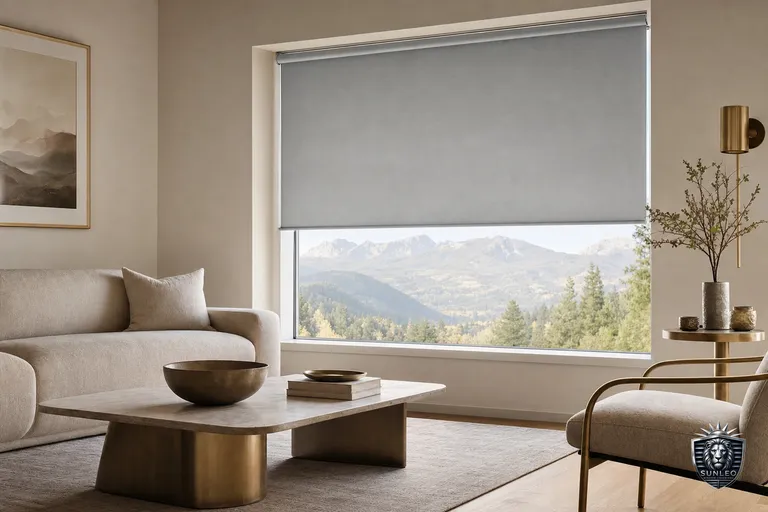
Roller blinds cover the rest of the range. A light-filtering roller softens harsh south light in a living room or office without darkening it, and a blackout roller is the practical answer for a west-facing bedroom or media room where evening sun is the problem.
- Sheer shades: diffused light and a soft view, with tilting vanes for privacy.
- Light-filtering rollers: soften glare and keep rooms bright on south-facing living spaces.
- Blackout rollers: shut out low evening sun in west-facing bedrooms and media rooms.
- Light fabric colours bounce more heat off the glass, which helps on the hottest exposures.
Cellular (honeycomb) shades: the best for heat and cold
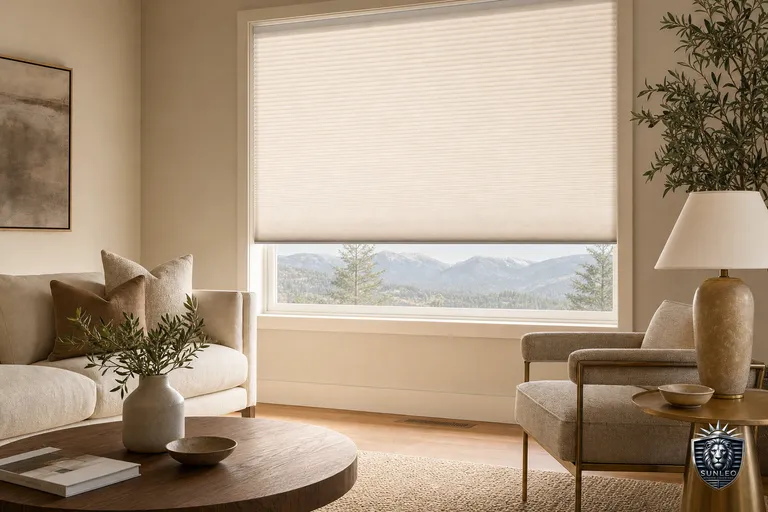
If your south or west window is also an energy problem, cellular shades are the strongest answer. Their honeycomb-shaped pockets trap a layer of air against the glass, which slows heat coming in during summer and heat escaping during a Calgary winter. On a large feature window, that insulation can make a noticeable difference in both comfort and the temperature swings near the glass.
Cellular shades come in light-filtering and room-darkening fabrics, so you can soften harsh south light in a living room or get near-blackout in a west-facing bedroom where evening sun delays bedtime. The trade-off is view: when they are down, you lose the outlook, so many homeowners pair them with a sheer or use a top-down bottom-up option to keep the upper view open while shading the lower glass.
Zebra (day-night) shades: dial in the light all day
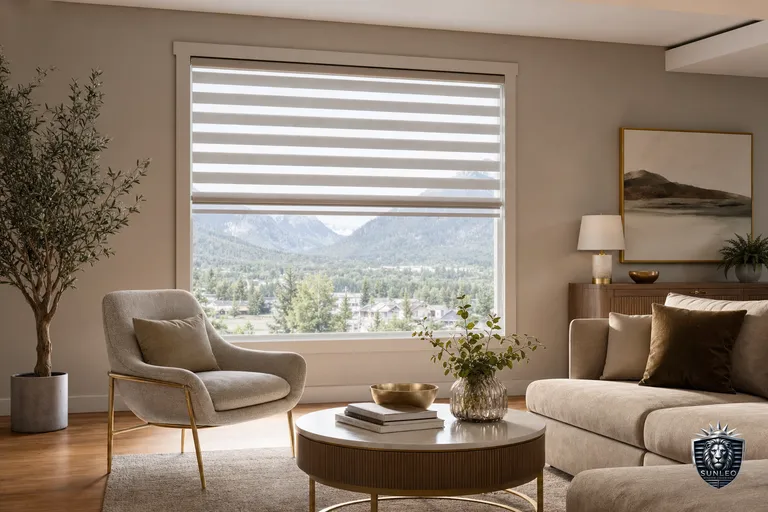
Zebra shades, also called day-night or dual shades, use alternating sheer and opaque horizontal bands. Sliding the bands into alignment gives you a clear, sheer view; offsetting them blocks light progressively. That makes them ideal for windows where the sun's intensity changes through the day, because you can fine-tune exactly how much light comes in without fully committing to open or closed.
On a south window, you might run them sheer in the morning and shift to solid through the bright midday hours. On a west window, they let you cut the worst of the evening glare while still enjoying a softened view at sunset. They look clean and modern on large windows, though in full sheer mode they offer less glare control than with the solid bands closed.
Shade vs view: how to choose the balance
Most decisions for bright windows come down to one question: how much do you value seeing out versus blocking the sun? There is no single right answer, and it often differs room to room.
- Protect the view first: choose zebra or sheer shades and accept a little glare in exchange for keeping your outlook open all day.
- Protect the room first: choose room-darkening cellular or a blackout roller where screens, sleep or fading matter most.
- Want both at different times: choose zebra shades or layer a sheer with a roller so you can switch between open view and full shade.
- Mixing types across one elevation is normal: a zebra blind on the living-room view window and room-darkening cellular in the adjacent west bedroom is a common, sensible combination.
Motorized scheduling: let the blinds handle the sun
Bright south and west windows are where motorization earns its keep. Instead of remembering to lower the shades every afternoon, you can schedule them to move with the sun automatically. Motorized blinds can lower partway as the west sun drops, close before the evening glare hits the TV, and rise again in the morning to let the light back in.
Motorized shades work with Alexa, Google Home and Apple Home, so you can group all the south and west windows and trigger them by voice, time of day or a sunset schedule. For tall or hard-to-reach feature windows above a staircase or in a vaulted great room, motorization is often the only practical way to use the shades at all, and it removes the cords for a cleaner, child-safe look. We can wire schedules to your specific exposure during the consultation so the system matches how the sun actually tracks across your home.