Room Guide
Best Blinds for Cats and Pets
Pet owners shop for window coverings differently than everyone else. A cat treats a windowsill as a climbing gym and a dangling cord as a toy; a dog parked at the patio door will nose, paw, and lean on whatever hangs there. The right blinds hold up to daily pet traffic, keep curious animals safe from cords, and wipe clean of hair and nose prints in seconds. Here's what actually works in a home with cats or dogs, and what to avoid.
What Makes a Window Covering Pet-Friendly
Before comparing product types, it helps to know the traits that separate a pet-friendly blind from one that will need replacing within a year. Look for these four qualities on any product page or during your in-home consultation:
- Cordless or motorized operation — no dangling pull cords or chains a cat can bat, chew, or get tangled in
- Scratch- and puncture-resistant surface — synthetic fabrics, PVC-coated fabric, or coated aluminum stand up to claws better than paper-based shades or delicate natural weaves
- Wipeable, not just washable — a surface that releases hair and nose oil with a damp cloth, no vacuum attachment or dry-clean trip required
- Sturdy mounting — reinforced brackets and headrails that won't pull loose if a dog leans on the sill or a cat jumps onto the frame
Best Blind Types for Cats and Dogs
Not every product on the market is built for pet households. Based on durability, cord safety, and cleanability, these hold up best:
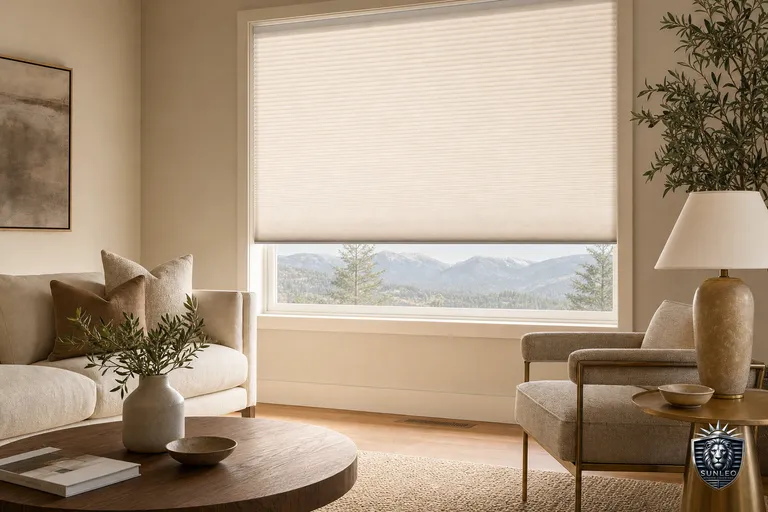
- Honeycomb / cellular shades (cordless) — smooth fabric surface with nowhere for claws to grip, and the cellular pockets resist sagging from paw pressure
- Zebra / day-night blinds — the alternating sheer-and-solid fabric bands are taut and durable, and light-filtering fabric hides nose smudges better than clear glass-adjacent sheers
- Aluminum or faux wood venetian blinds — slats can be wiped individually and replaced one at a time if a cat manages to bend or scratch a single slat, instead of replacing the whole covering
- Roller blinds in PVC-coated or blackout fabric — one continuous surface with no seams or slats for claws to catch, and easy to wipe top to bottom
- Perfect Fit / door blinds — the no-drill, framed system sits flush in the glass channel, keeping cords and slats out of reach on frequently-used patio and back doors
- What to avoid: soft fabric Roman shades with exposed folds, delicate sheer curtains, and any corded lift system in a home with climbing cats or teething puppies.
Materials and Fabrics That Resist Claws and Chewing
Fabric choice matters as much as blind style. When you book your free in-home measurement, ask to feel samples in these categories before deciding:
- Woven vinyl or PVC-laminated fabrics — dense and slick, they resist claw penetration and wipe clean instantly
- Powder-coated aluminum slats — a scratch shows less than on painted finishes, and individual slats are replaceable
- Faux wood (PVC composite) — mimics the look of wood but won't splinter or absorb chew marks the way real wood can
- Tightly woven polyester or blackout-backed fabrics — resist snagging better than loose linen-look weaves that a claw can pull a thread from
Cordless and Motorized: The Safety Non-Negotiable
Corded lift and tilt systems are the single biggest hazard in a pet home. Cats treat dangling cords as prey and will chew, swat, and climb them; a looped cord can trap a paw or a collar. This is also a recognized child-safety issue, which is why cordless design has become the default across the industry, not just a pet-owner preference. Two ways to get a fully cord-free window: cordless spring-lift blinds and shades operated by a wand or gentle pull-and-release, and motorized blinds controlled by a remote, wall switch, or smart-home app (compatible with Alexa, Google Home, and Apple Home). Motorization is worth the upgrade on high-traffic windows and patio doors where a dog or cat is at the glass daily — there's simply no cord left to interact with.
Keeping Blinds Clean With Pets in the House
Pet hair, nose prints, and the occasional muddy paw are unavoidable near a favourite window perch. A little routine care keeps blinds looking new far longer than a deep clean after the fact.
- Wipe hard-surface blinds (aluminum, faux wood, vinyl roller) weekly with a damp microfibre cloth — no cleaners needed for most nose prints
- Vacuum fabric shades with a soft brush attachment every 1-2 weeks to lift embedded hair before it sets into the weave
- Address accidents immediately — pet odour and stains set faster into fabric shades than into wipeable aluminum or vinyl surfaces
- Choose a slightly darker or patterned fabric (like zebra blinds) on windows with a favourite pet perch — it hides nose smudges and hair between cleanings better than plain white