Calgary & Climate
The Best Blinds for Calgary Winters: An Energy & Insulation Guide
If your Calgary home feels draughty by the window even with the furnace running, the window covering matters more than most people think. Glass is one of the biggest sources of heat loss in any house, and a thin roller or a set of slats does little to slow it. At Sunleo, the question we hear most through the cold months is simple: which blinds actually keep heat in? The short answer is honeycomb (cellular) shades — their hollow cells trap air right at the glass and turn the window into an insulating layer instead of a cold spot. This guide breaks down why cellular wins for Alberta, how Chinooks and high-altitude UV change the math, what to do about condensation and draughts, and roughly what energy-efficient blinds cost — so you can choose with confidence before booking a free in-home measurement.
What are the best blinds for Calgary winters?
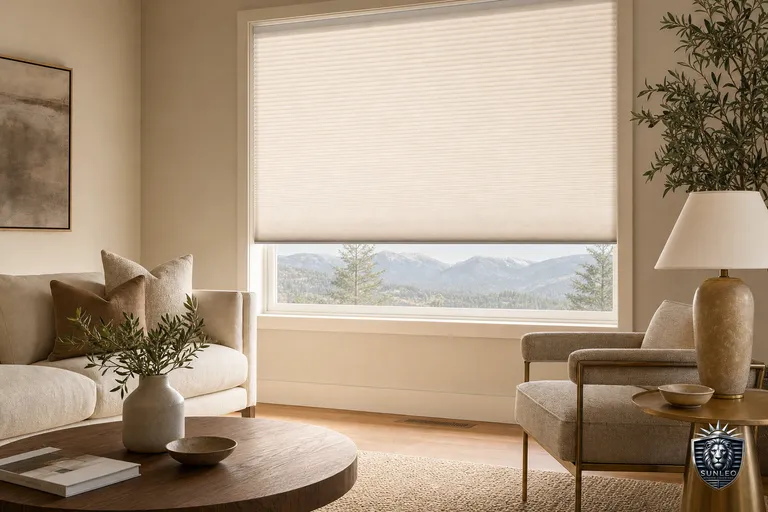
For pure cold-weather performance, honeycomb shades (also called cellular shades) are the clear winner in Calgary. Their fabric is folded into hollow honeycomb-shaped cells that trap a pocket of still air directly against the window. Because still air is a poor conductor of heat, that pocket acts like a thin layer of insulation over the glass — slowing the heat that escapes outward on a −30°C night and softening the cold draught you feel pooling at the sill.
No other common blind does this. A roller blind is a single flat layer of fabric; a venetian or faux-wood blind is a stack of slats with air gaps between them. They control light and privacy well, but they barely touch heat transfer. Honeycomb is the only mainstream style with insulation built into its shape.
That said, the best blind for a given window depends on the window. Honeycomb shades are ideal for bedrooms, basements and north-facing rooms where warmth and morning darkness matter. For overhead glass, insulated skylight blinds tackle the heat that rises and escapes through skylights. For draughty patio and PVC doors, no-drill Perfect Fit door blinds seal the gap without damaging the frame. The smart approach is to match the worst-performing windows in your home to the right insulating style, rather than buying one product for the whole house. That room-by-room read is exactly what an in-home measure is for.
Why do honeycomb (cellular) shades win for Alberta cold?
It comes down to physics, not marketing. Heat always moves toward cold, and on an Alberta winter night the outdoors is brutally colder than your living room. Bare glass lets that heat stream out and pulls warmth off the room-side air, which is why standing near a window in January feels chilly even when the thermostat reads 21°C. A honeycomb shade interrupts that exchange by holding a buffer of trapped air between you and the cold glass.
The cell count changes how much it helps. Single-cell honeycomb gives you one row of air pockets — a solid upgrade over a plain blind. Double-cell honeycomb stacks two rows of smaller pockets, trapping more air and insulating more effectively. For Calgary's coldest spots — north-facing rooms that never catch direct sun, basement windows, and bedrooms over an unheated garage — double-cell is usually worth the modest extra cost.
Fabric opacity matters too. Cellular shades come in light-filtering, room-darkening and full blackout. A room-darkening or blackout cell adds a denser fabric face, which both blocks Calgary's bright low-angle winter sun and adds a little more thermal resistance for sleeping rooms. You can also add a top-down/bottom-up lift so you keep the lower half closed for warmth and privacy while letting daylight in up high. Pair the right cell count with the right opacity and you get a window covering that earns its keep on heating bills all winter, then keeps summer heat out the rest of the year.
How do Calgary's Chinooks and high altitude affect your blinds?
Calgary's climate is unusually hard on windows for two reasons most buyers overlook: Chinooks and altitude.
Chinook winds can lift the temperature by 15–20°C or more in a matter of hours, then let it crash again once the arch breaks. Your windows live through that swing every few weeks all winter. Each warm-up, the indoor air holds more moisture; each plunge back to deep cold, that moisture wants to condense on the coldest surface in the room — the glass. Blinds that sit tight to a cold pane can trap humid room air against it and make condensation worse, while an insulating honeycomb shade keeps the glass-side surface warmer and the moisture problem smaller (more on that below).
Altitude is the second factor. Calgary sits around 1,045 metres above sea level, and there's less atmosphere overhead to filter ultraviolet light. That means stronger UV pouring through your south- and west-facing windows — even in winter, when the sun sits low and shines straight into the room for hours. Strong UV fades hardwood floors, leather, art and upholstery over time.
The takeaway: a good Calgary blind has to do two jobs at once. It needs to insulate against the cold and block UV against the sun. Honeycomb fabrics handle both — the cells insulate, and the fabric face filters UV. For overhead glass, insulated skylight blinds are the only practical way to control that intense, direct overhead sun and the heat loss that comes with it. Choosing for our specific climate, not a generic catalogue, is what keeps a window covering working for years.
Can the right blinds reduce condensation and draughts at the window?
Yes — to a point, and it's worth being honest about where the limit is. Condensation forms when warm, humid indoor air touches a cold surface. In a Calgary winter, your window glass is that cold surface. The colder the glass, the more water beads up on it, which can lead to wet sills, peeling paint and, over time, mould around the frame.
An insulating honeycomb shade helps by keeping the room-side face of the covering warmer than bare glass would be, reducing the cold-surface effect in the room. It also slows the draught — the slow drift of chilled air sliding down off the window and across the floor that makes a room feel colder than the thermostat says. Cutting that draught often lets you feel comfortable at a lower furnace setting, which is where the real winter savings come from.
But blinds are not a cure for condensation on their own. If your home runs humid — from cooking, showers, drying laundry indoors, or simply a tightly sealed house — moisture will still find the coldest glass. The honest fix is a combination: an insulating window covering to keep surfaces warmer, plus managing the moisture source (a bathroom fan, a kitchen range hood, an HRV, or running humidity a little lower in deep cold). One important caveat: a shade pulled down tight to the glass with no airflow can actually trap humid air against the pane and worsen condensation. Leaving a small gap, or using a top-down/bottom-up cellular shade so a little air can move, helps the glass stay drier. We flag rooms at risk during the in-home measure.
What about heat loss through skylights and patio doors?
Two spots quietly leak the most heat in many Calgary homes, and standard blinds ignore both.
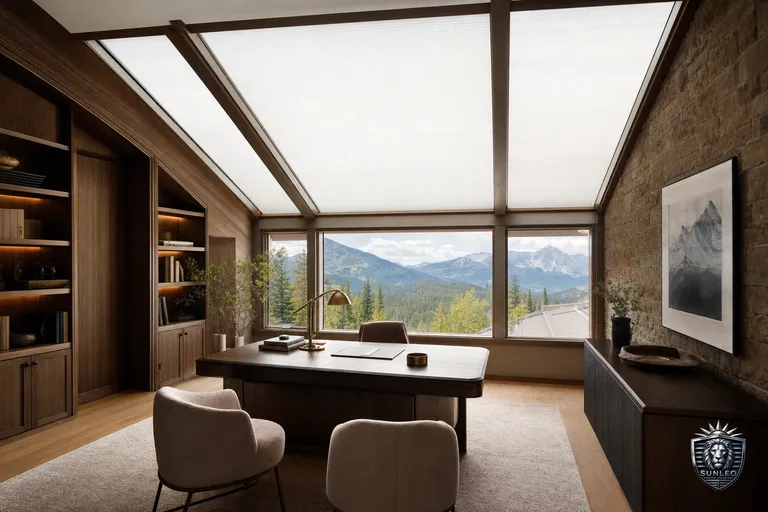
Skylights are the worst offenders. Heat rises, so warm air collects at the ceiling and streams out through overhead glass faster than through any wall window — and bare skylights also dump intense, direct UV onto the floor and furniture below. The fix is an insulated skylight blind built specifically for sloped or overhead glass. Ours use the same honeycomb fabric that insulates so well on regular windows, but run on a guided track inside side channels so the shade stays flat and taut against the angle instead of sagging. For high or vaulted ceilings, a quiet motor and remote handle the reach. The result is a skylight that still floods the room with light when you want it, and seals off heat loss and glare when you don't.
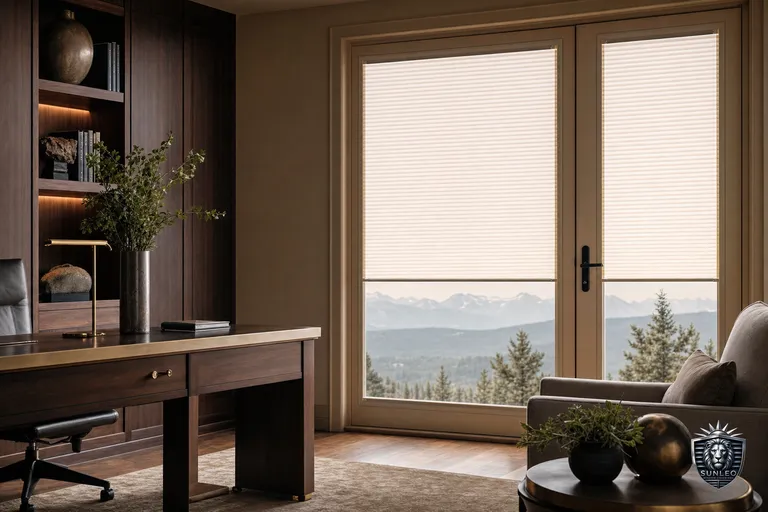
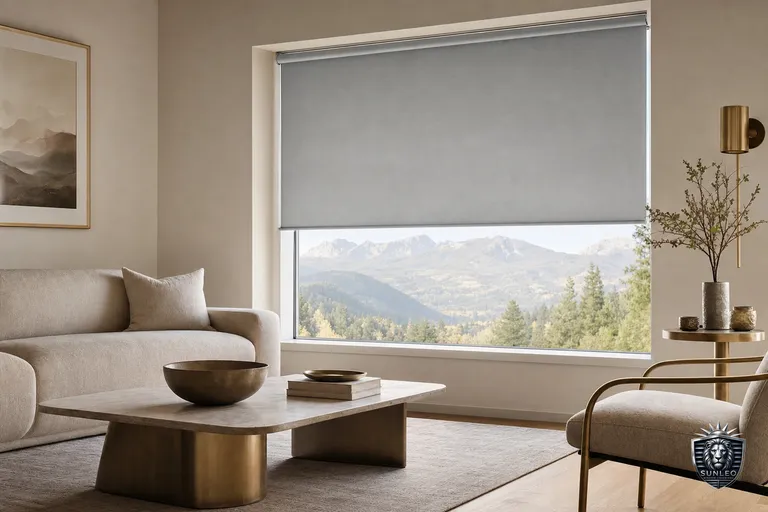
Patio and PVC doors are the other leak. Big single panes of door glass shed a lot of heat, and the gap around a sliding or French door is a classic source of cold draughts. A no-drill Perfect Fit door blind clips into a slim frame fastened to the door bead — no screws, no holes — so the blind hugs the glass on all sides and moves with the door without banging or tangling. Snug to the glass, it adds a layer over that cold pane and helps tame the draught right where you feel it most. For everyday windows in living spaces, blackout or thermal-backed roller blinds are a clean, budget-friendly upgrade over a bare pane too. The principle is the same throughout: cover the cold glass, seal the gap, keep the warm air in.
Do winter blinds help in summer and year-round?
They do — which is what makes insulating blinds a genuinely smart purchase rather than a seasonal one. The same trapped-air cells that hold heat inside during a January cold snap also block solar heat from pouring in during a July afternoon. In winter the cells slow heat escaping; in summer they slow heat entering. You insulate in both directions with one product, so the comfort and energy benefit runs all twelve months instead of four.
That year-round angle matters more in Calgary because of our strong, high-altitude sun. Closing cellular shades on south- and west-facing windows during the hottest part of a summer day keeps rooms cooler and eases the load on your air conditioning, while the fabric keeps filtering UV to protect floors and furniture the rest of the year.
Motorization makes it effortless. With a quiet motor and a schedule, your blinds can lower automatically against the afternoon sun in summer and close at dusk in winter to trap warmth overnight — without anyone remembering to do it. Most of our honeycomb and skylight shades can be motorized and linked to Alexa, Google Home or Apple Home, which is especially useful for high skylights and hard-to-reach windows. The energy logic is simple: a window covering only saves energy when it's actually closed at the right time, and automation closes the gap between intention and habit. Buying for winter and quietly getting a summer and shoulder-season benefit too is the kind of value that makes the room-by-room investment easy to justify.
How much do energy-efficient blinds cost in Calgary?
Honest answer: it depends on the window, so treat any figure as a typical estimate rather than a fixed price. Custom blinds are made to your exact measurements, and the price moves with a handful of factors — so the only accurate number comes from measuring your actual windows.
The main cost drivers are:
With insulating cellular shades specifically, expect to invest a little more than a plain roller or aluminum blind — you're paying for the cellular fabric and the thermal performance that comes with it. Many homeowners offset part of that over time through lower heating and cooling bills, though the exact saving depends on your windows, furnace, habits and how cold the winter runs, so we won't promise a number we can't stand behind.
A practical way to budget: prioritise the worst windows first. Put double-cell honeycomb on the cold north-facing rooms and bedrooms, insulated blinds on the skylights, and Perfect Fit blinds on the draughty patio door, then use simpler roller or faux-wood blinds in rooms where look and light control matter more than insulation. That phased, room-by-room plan spreads the cost while putting the insulating dollars where the heat is actually escaping. We give you a written, itemised quote within 48 hours of the in-home measure so there are no surprises — and no obligation to proceed.
- Size and number of windows — larger panes and more openings cost more
- Single-cell vs double-cell honeycomb — double-cell insulates more for a modest premium
- Fabric opacity — light-filtering, room-darkening or full blackout
- Operation — cordless, top-down/bottom-up, or motorized (motors add the most)
- Specialty work — skylight tracks, shaped windows and no-drill door frames
How do you choose? A winter blinds checklist and free in-home measure
Before you buy anything, walk your home with this short checklist. It turns a vague 'my house is cold' into a clear plan for which windows to treat first.
Work through the list and you'll usually find the same handful of windows account for most of the cold feeling — and those are exactly where insulating honeycomb, skylight blinds or Perfect Fit door blinds pay off fastest.
The catch with custom blinds is that getting the fit right is the whole game: an insulating shade only insulates if it sits snug to the glass, with no gaps for cold air to sneak around. That's why we don't sell off a showroom shelf. A Sunleo consultant comes to your home — anywhere in Calgary, Airdrie, Okotoks, Cochrane, Chestermere or Strathmore — measures every window precisely, brings real fabric and cellular samples so you can feel the difference between single- and double-cell, and reads your rooms for sun exposure, draughts and condensation risk. You see how each option looks against your own walls and light. Nothing about the visit is pushy: you walk away with expert advice, exact measurements and a written quote inside two business days, no strings attached. If you're done fighting cold windows this winter, that in-home measurement — free, no showroom required — is how the fix actually starts.
- Which rooms feel coldest or draughtiest by the window in deep winter?
- Which windows face north (no direct sun) versus south/west (strong UV)?
- Do any windows fog up or drip with condensation on cold mornings?
- Do you have skylights or large patio/PVC doors losing heat?
- Which bedrooms need blackout for dark mornings and better sleep?
- Where would automatic, scheduled blinds save you the most effort?
| Honeycomb / cellular | Standard blinds | |
|---|---|---|
| Winter insulation | Air-pocket cells form a thermal barrier — the strongest insulating blind | Single fabric layer or slats — minimal effect on heat loss |
| Draughts at the window | Slows the cold air drifting off the glass; lets you feel warm at a lower setting | Little effect; slat gaps can let chilled air pass through |
| Condensation help | Keeps the covering's room-side warmer; pairs with airflow to keep glass drier | Negligible; a tight roller can trap humid air against cold glass |
| Cold-room upgrade | Double-cell option traps more air for north rooms and basements | No cellular structure to upgrade |
| Dark winter mornings | Light-filtering through full blackout cellular fabrics available | Blackout on rollers/romans; venetians leak light at the slats |
| Typical investment (estimate) | Mid-range; rises with double-cell, blackout and motorization | Budget aluminum to faux wood — wide range, less insulation per dollar |
| Best winter use | Bedrooms, north rooms, basements, skylights | Living spaces where look and light control lead |