Buyer's Guide
Best Blackout Blinds: How to Get True Darkness in Calgary Bedrooms
If you have ever tried to nap during a Calgary summer — when daylight lingers past 10 p.m. and returns before 5 a.m. — you already know an ordinary blind isn't enough. Blackout blinds block light at two points: through the fabric itself, and around its edges. Get both right and a bedroom goes genuinely dark; get only the fabric right and you'll still see a glowing halo on the wall. This guide explains how blackout actually works, why side-channel (blockout) systems matter, and which custom blinds darken best for bedrooms, nurseries and media rooms. Because every Sunleo blind is made to measure for your exact window, we can close the gaps that off-the-shelf blinds leave behind — and we'll show you fabric samples in your own light during a free in-home measurement, with a written quote inside 48 hours.
How do blackout blinds actually work?
A blackout blind has to win two separate battles. The first is the fabric. True blackout fabric is woven tightly and usually coated or foam-backed, so that held up to a window virtually no light passes through it — unlike 'room-darkening' fabric, which dims a room but still glows. The second battle is the edges. Even a perfect blackout fabric leaves a thin gap where the blind meets the window frame on the sides, top and bottom, plus any hole for a control chain. Light is relentless: it floods through those gaps and paints a bright outline on your wall, which is why so many people feel let down by a blind labelled 'blackout.' Real darkness is therefore a system, not just a fabric. You need an opaque fabric, a mount that covers the gaps (or runs the blind deep into the recess), and ideally side channels that seal the edges. Custom sizing matters enormously here, because an off-the-shelf blind cut narrower than your window leaves bigger gaps by design. When we measure your window to the millimetre, we specify the fabric, the mount and the edge seal together — so the finished blind blocks light the way you expected. That distinction, fabric versus full system, is the single most useful thing to understand before you buy.
What are side channels and 'blockout' systems?
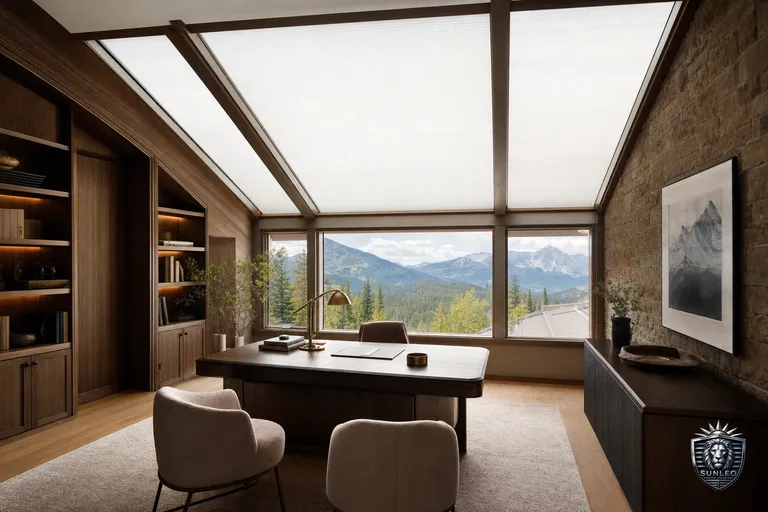
Side channels are slim U-shaped tracks fitted to the left and right of the window that the edges of the blind slide into. Instead of a free-hanging blind with open sides, the fabric is captured top to bottom, so the light gap along each edge is sealed. Paired with a fascia or headbox at the top and a seal at the sill, a side-channel setup is what turns a merely dark room into a genuinely blacked-out one. In the trade this is sometimes called a 'blockout' or zip/track system, and it's the upgrade that makes the biggest visible difference for light-sensitive sleepers, shift workers and babies. Side channels matter even more for overhead and sloped glass. A skylight blind has gravity working against it, so ours run on a guided track inside side channels that hold the fabric flat and taut against the glass — see our skylight blinds for vaulted bedrooms and lofts. Two honest caveats: side channels add to the cost, and they change the look slightly, since you'll see a slim track down each side of the window. For most bedrooms and nurseries that trade-off is well worth it. We'll bring samples of both the fabric and the channel so you can judge the look against your own trim and wall colour before deciding.
- Side channels seal the edge gaps that ordinary blackout blinds leave open
- A headbox/fascia at the top and a sill seal close the remaining light leaks
- Essential for skylights and sloped glass, where the fabric must stay flat
- Adds cost and a visible side track — but delivers true, near-total darkness
Which is best — roller, honeycomb or Roman blackout?
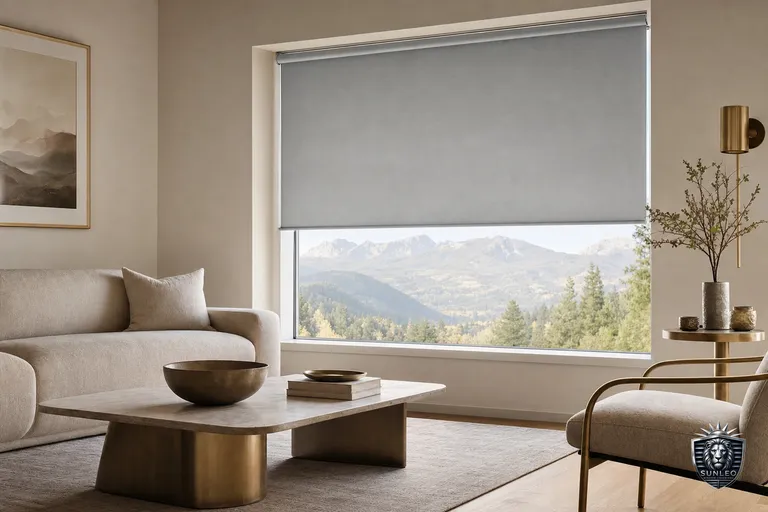
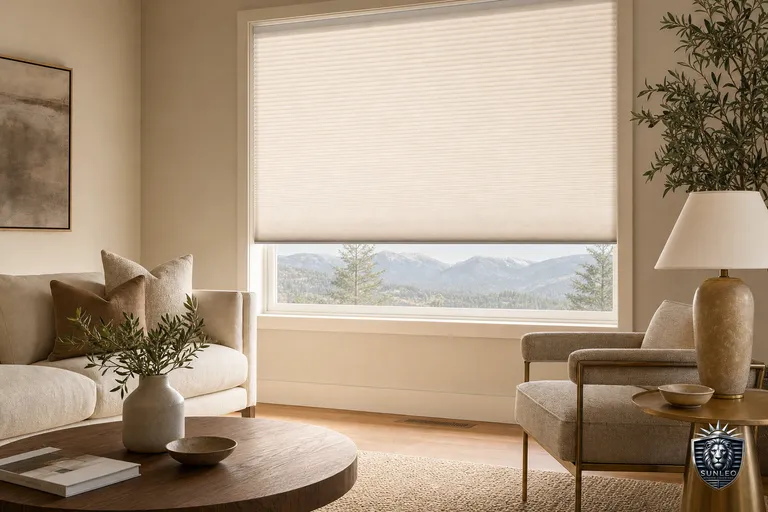
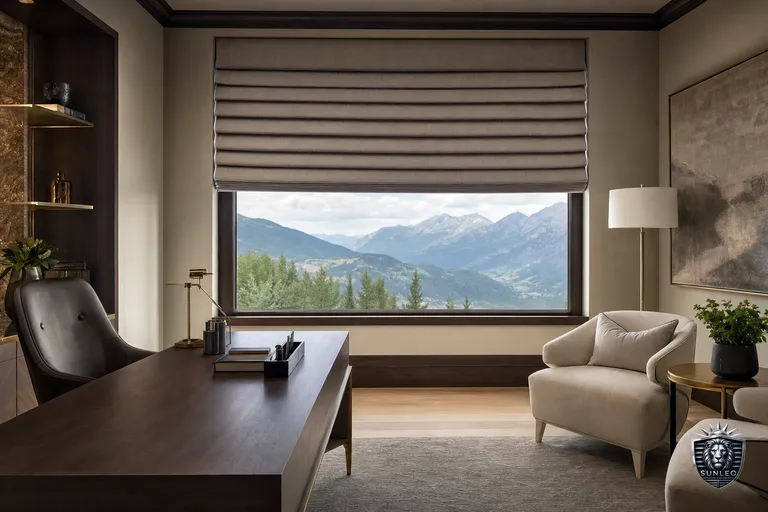
All three can be ordered with true blackout fabric; they differ in feel, function and price. Blackout roller blinds are the simplest and most cost-effective route to real darkness — a single panel of opaque fabric that rolls away to almost nothing, sits cleanly in the recess and accepts side channels easily. For most Calgary bedrooms, a blackout roller is our default recommendation. Blackout honeycomb (cellular) shades do double duty: the same cells that block light also trap a layer of air at the glass, insulating against −30 °C winters and summer heat. A blackout honeycomb hides an opaque liner inside the cells, so you get darkness and lower energy bills in one quiet, soft profile — a favourite for nurseries and north-facing rooms. Blackout Roman shades are the design-led option: premium fabric that folds into tailored horizontal pleats, backed with a blackout lining. They bring the warmth of drapery to a bedroom where the look matters as much as the darkness. The table below sums up the trade-offs and typical estimates. Whichever you lean toward, the darkness still depends on the edges — so in a room you truly need black, we'd pair any of these with side channels. Explore our roller blinds, honeycomb shades and Roman shades to see the fabrics and finishes for each.
What are the best blackout blinds for a bedroom?
Calgary sits far enough north that midsummer days stretch well past sixteen hours, so a bedroom blind here works harder than in most cities. For the majority of bedrooms, the best answer is a blackout roller blind run into side channels: it's clean, affordable, easy to operate and seals the edges where light otherwise leaks. If your room also runs cold — basements and north-facing rooms especially — a blackout honeycomb shade adds genuine insulation, cutting draughts and condensation at the glass through an Alberta winter. There's also a layered approach many homeowners love: a day-and-night setup where a light-filtering or sheer blind handles daytime, with a separate blackout layer behind it for sleeping. It costs more and takes more space at the window, but it gives you both a soft daytime view and full night-time darkness. For larger or higher windows, motorization is worth considering — you can schedule the blinds to close at dusk and lift gently at a set time, which is a kinder wake-up than a sudden alarm. We'll talk through which combination fits your room, your window depth and your budget during the in-home measurement, and show real fabric samples in your own bedroom light rather than under a showroom bulb.
Are blackout blinds safe and effective for a nursery?
Nurseries are where blackout blinds prove their worth — darkness helps babies settle for daytime naps and hold a bedtime through long, bright Alberta evenings. Two things matter most here: darkness and safety. For darkness, a blackout roller or blackout honeycomb with side channels gives the consistent, edge-to-edge black that helps little ones sleep. For safety, we strongly recommend cordless or motorized operation so there are no looped cords within a child's reach — a quiet motor lets you raise and lower the blind by remote, app or a scheduled routine. Blackout honeycomb is a popular nursery pick because it also insulates, keeping the room more even in temperature year-round. One honest note: top-down/bottom-up honeycomb is wonderful for privacy-plus-light in living spaces, but opening from the top lets light in, so it isn't the choice when total darkness is the goal — a standard bottom-up blackout seals better. We'll walk you through the safest configuration for your nursery, including cordless and motorized options, and help you balance full darkness with the look you want for the room.
What about media rooms and home theatres?
A media room has the opposite problem to a sunroom: every stray beam of daylight washes out the screen and kills contrast. Here, edge sealing isn't optional — a side-channel blackout system is the difference between a dim room and a true theatre. Blackout roller blinds are the usual workhorse because the flat, opaque panel sits tight to the glass and disappears when raised; darker fabric colours also reduce reflected glow inside the room. If the space doubles as a cosy lounge in an older or cooler part of the house, blackout honeycomb adds insulation so the room stays comfortable through a movie-length sit. Media rooms often have wide or tall windows, which makes motorization genuinely useful — one button drops every blind for showtime and lifts them afterward, and you can group them to move together. For the deepest blackout, some homeowners layer a blackout blind behind a decorative fabric shade. We'll assess your window sizes, light angles and how dark you actually need the room to be, then recommend the leanest setup that gets you there without over-spending.
How much do custom blackout blinds cost in Calgary?
Honest answer: it depends on the window. Custom blackout blinds are priced by size, fabric, the type of blind, whether you add side channels, and whether you motorize — so a small bedroom roller and a wide motorized media-room shade sit at very different points. The figures in the table below are typical estimates to help you plan, not fixed quotes; your real price depends on your exact windows and the fabrics you choose. As a rule of thumb, a blackout roller is the most budget-friendly route to real darkness, honeycomb costs a little more but earns it back in insulation, and Roman shades sit at the higher end for their tailored, premium-fabric look. Side channels and motorization are the two add-ons that move the number most — and they're also the two that most improve a bedroom or nursery. Rather than guess, we measure every window in your home, show you samples in your own light, and send a written, itemized quote within 48 hours so you can see exactly what each option costs before committing. There's no obligation, and the in-home measurement is free.
- Price drivers: window size, fabric grade, blind type, side channels, motorization
- Blackout rollers are typically the most affordable; Roman shades the most premium
- Side channels and motors add cost but make the biggest difference in nurseries
- All figures are typical estimates — your itemized quote follows the free measurement
| Typical price (est.) | Best for | |
|---|---|---|
| Blackout roller blinds | Typical estimate $200–$550 per window | Simplest true blackout; best all-round bedroom choice and pairs cleanly with side channels |
| Blackout honeycomb shades | Typical estimate $250–$650 per window | Darkness plus insulation for cold Alberta winters; a favourite for nurseries and north-facing rooms |
| Blackout Roman shades | Typical estimate $350–$800+ per window | Soft, tailored fabric look; bedrooms where style matters as much as darkness |
| Side-channel / blockout add-on | Typical estimate +$60–$150 per window | Seals the edge light gaps — turns a merely dark room into true blackout |
| Motorization (per blind) | Typical estimate +$150–$350 | Cord-free safety and scheduling; ideal for nurseries, media rooms and high windows |