Buyer's Guide
Are Bamboo Blinds Worth It? An Honest Calgary Buyer's Guide
Bamboo blinds, more accurately called woven wood shades, are having a moment in Calgary interiors, and it's easy to see why. They bring real organic texture, a relaxed coastal-meets-mountain-modern warmth, and a softly glowing quality of light that painted aluminum or plastic simply can't fake. But "natural" comes with trade-offs that the glossy showroom photos rarely mention.
The honest answer to "are bamboo blinds worth it?" depends on the room, the window's exposure, and what you actually need from a window covering. In a bright living room or sunroom where you want a warm glow, they're fantastic. In a street-facing bedroom where you need to sleep in, a bare woven shade will disappoint you, because you can see shadows and light right through the weave.
This guide walks through the look, the light-filtering behaviour, the privacy limits and how a liner fixes them, real-world durability, and whether bamboo holds up to Calgary's intense UV, dry air, dust and Chinook swings. Just what we'd tell a neighbour. One thing up front: Sunleo does not carry bamboo or woven-wood shades. We make custom blinds and shades, so the last section covers the natural-look options we do supply if you want the texture without the trade-offs.
What bamboo blinds actually are (and the natural look)
Most products sold as bamboo blinds are woven wood shades: thin strips or reeds of bamboo, jute, grasses, rattan or other natural fibres woven together and built into a roll-up or fold-up shade, usually operated like a roman shade. The weave can be tight and uniform or loose and rustic, and the colour ranges from pale honey to deep espresso. That variation is the whole appeal, because no two woven panels are identical the way two extruded slats are.
The look reads warm, tactile and a little imperfect in the best way. Against white walls, a mid-tone woven shade adds the kind of organic depth that designers chase. It pairs naturally with wood floors, linen, leather and houseplants, and it softens the hard edges of a modern condo. In a Calgary home with big mountain-facing windows, the texture catches low-angle light beautifully.
A few honest notes on the material:
- Natural fibre means natural colour variation and visible grain, so expect character, not factory uniformity
- Tighter weaves look more refined and block a bit more light; looser weaves look rustic and let more through
- Stack height matters: when raised, woven wood bundles into a chunkier stack at the top than a slim roller blind
- It is a soft, warm aesthetic, not a sleek minimalist one, so match it to your room's mood
Light filtering: the glow is the whole point
This is where bamboo blinds earn their keep. Because daylight passes through and around the natural fibres, the light that enters a room is warm, diffused and gentle rather than harsh. Lower a woven shade on a sunny afternoon and the room takes on a soft amber cast, similar in spirit to a sheer shade but with far more texture and substance.
That filtering quality is genuinely lovely in living rooms, dining areas, sunrooms, home offices and kitchens, spaces where you want to soften glare and protect furniture from direct sun without going fully dark. It also helps tame the flat, grey quality of Calgary's long winter light, adding visual warmth even on overcast days.
The trade-off is control. A bare woven shade is essentially a light-filtering product. You cannot dial it to true room-darkening on its own, and the amount of light it blocks depends entirely on the tightness of the weave. If your main goal is glare reduction and ambiance, that is a feature. If your goal is a dark nursery or a media room, the unlined shade alone will not get you there, which is exactly what the next section is about. If you like the glow but want more control, a sheer shade or a light-filtering roller in a natural-tone, textured fabric gives similar soft daylight with adjustable privacy.
- Best for: living rooms, sunrooms, offices, kitchens, dining rooms, anywhere you want warm, soft daylight
- Diffuses glare and reduces harsh contrast without making a room feel closed off
- Light blocking varies by weave: tighter equals dimmer, looser equals airier
- On its own it is light-filtering, not room-darkening, so set expectations by room
Privacy limits and why most people add a liner
Here is the single most important thing to know before you buy: an unlined bamboo blind does not give you reliable privacy, especially after dark. During the day the weave mostly reads as opaque from outside. But once your interior lights are on at night, anyone outside can often see soft silhouettes and movement through the gaps in the weave, and you can see streetlights and headlights coming in.
For a back-facing window with no neighbours in view, that may not bother you at all. For a bedroom, bathroom, ground-floor condo, or any street-facing window in a Calgary neighbourhood with houses close together, it's a real issue. The fix is simple and common: add a fabric liner behind the woven shade.
Liners change the product significantly, so choose deliberately:
- Privacy liner: blocks the see-through silhouette effect while still letting the natural texture show from inside
- Room-darkening liner: takes a bedroom or media room close to dark for sleeping in and shift-worker schedules
- Lined shades cost more, add a little weight and a slightly thicker stack, but solve the privacy problem cleanly
- An alternative is layering: a woven wood shade for daytime texture plus a separate blackout roller or honeycomb behind it for night
Durability and how bamboo handles Calgary
Natural fibre is reasonably durable but it is not bulletproof, and Calgary's climate puts specific stresses on it. The big one is UV. Calgary sits at high altitude with intense, direct sun, and prolonged exposure will gradually lighten and fade natural fibres, much like it fades hardwood floors near a sunny window. South and west-facing windows take the most punishment. A liner helps by shielding the back of the shade, and rotating which shades get the most sun, where practical, evens out the wear.
Our dry prairie air is the second factor. Very low indoor humidity, especially in winter with the furnace running, dries natural fibre out and can make it brittle over years, so thin reeds can crack or snap. Chinook swings add to that: rapid shifts in temperature and humidity make natural material expand and contract, which can loosen a weave over time.
A few realistic durability notes:
- Expect some fading over years on high-sun windows; it is normal for natural fibre, not a defect
- Moisture caution: real bamboo can warp in steamy bathrooms or over kitchen sinks, so a faux-wood or PVC look-alike is the smarter pick there
- Dust settles in the weave; a quick vacuum with a brush attachment or a feather dust keeps it clean, no wet washing
- Quality of construction matters more than the species of grass; well-built woven shades last many years with light care
So are bamboo blinds worth it, and what to choose instead
For the right window, they can be. If you want warmth, texture and soft filtered light in a living room, sunroom or office, and you accept the trade-offs, woven wood is one of the most characterful coverings out there. Where it disappoints: bedrooms and street-facing rooms without a liner, steamy bathrooms and kitchen sink windows, and high-sun south and west windows where Calgary's UV and dry air age natural fibre fastest. Bamboo is a style-led choice, so it's worth it when the look genuinely matters to you.
To be clear, Sunleo does not carry bamboo or woven-wood shades. If the natural, textured look is what draws you, these are the custom options we do make and install:
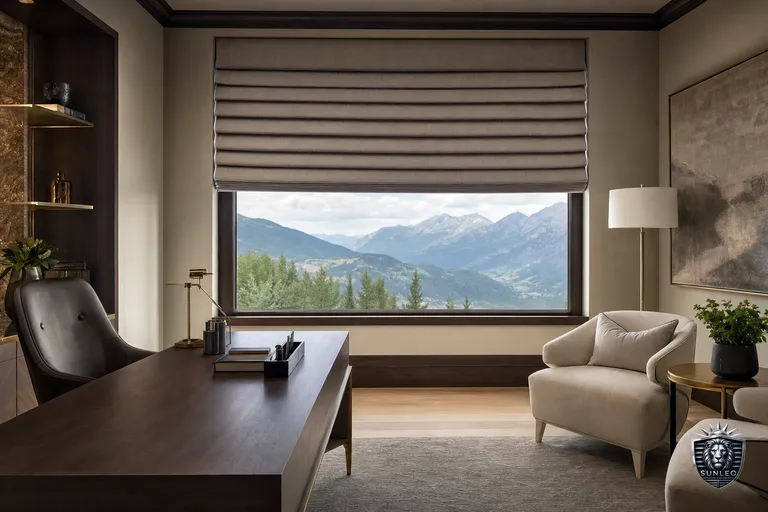
- Textured or linen-look Roman shades: soft folds and visible weave, the closest feel to a woven shade
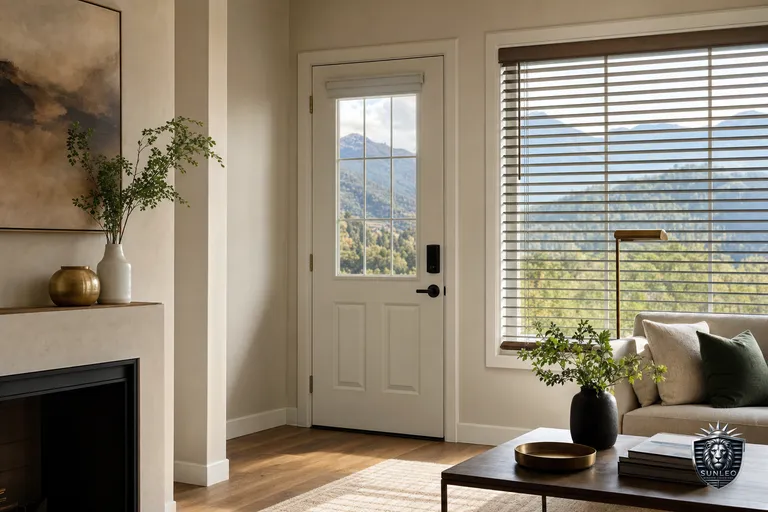
- Faux wood venetian blinds: warm wood-tone slats that tilt for privacy and handle kitchens and bathrooms without warping
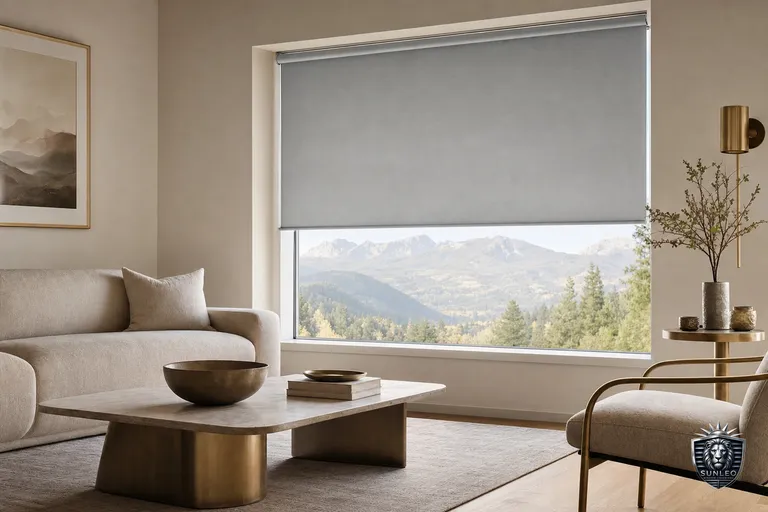
- Light-filtering roller blinds in natural-tone or textured fabrics: a slim, simple way to get a warm glow
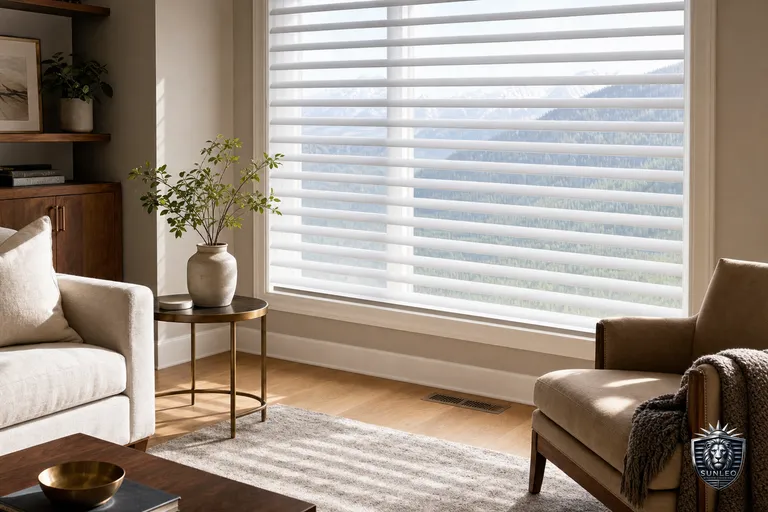
- Sheer shades: soft, diffused daylight, with vanes you can close for privacy at night
- Need warmth or darkness too: a honeycomb shade adds insulation and is available in blackout