Room Guide
Blinds for Angled Gable & Triangle Windows
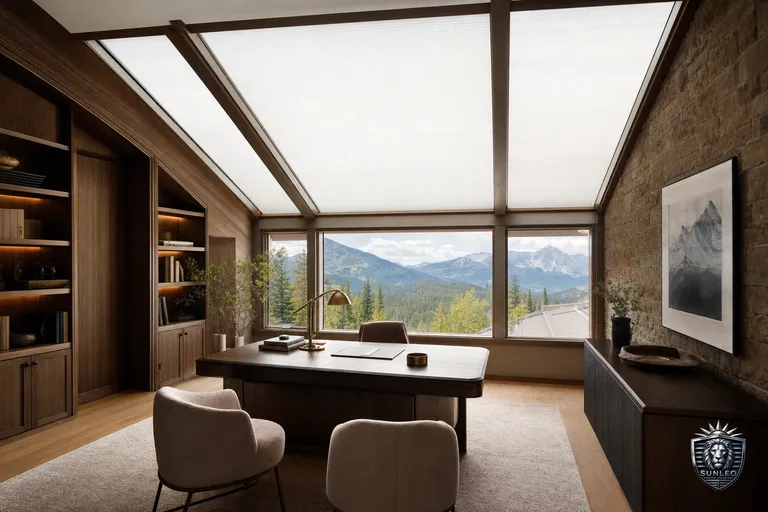
Vaulted ceilings and A-frame-style gables are common in Calgary's newer builds and mountain-modern renovations, and they almost always come with a window shape that standard blinds were never designed for: a triangle, a trapezoid, or a rectangle topped by an angled peak. Most off-the-shelf products stop at the point where the window starts to slope, which leaves homeowners choosing between an expensive custom build, a simple workaround, or doing nothing at all. Here's how to think through that decision.
Why Angled and Gable Windows Are Genuinely Different
A standard blind hangs from a straight horizontal headrail and relies on gravity and a straight top edge to stay square. An angled gable or triangle window has no straight top edge to mount to, so a normal roller, cellular shade, or venetian can't simply be cut down and hung — the fabric or slats would bunch against one sloped side and leave the other side exposed. Any real covering for this shape has to be built (or engineered) specifically for that angle.
- The slope is rarely a standard angle — even two gables in the same house can differ by a few degrees.
- Fabric or slats need to be cut and finished along the diagonal edge, not just trimmed.
- Anything that moves (rather than staying fixed) needs a track or cord system that can travel along an angled or curved path.
- Access is often the real complication — many of these windows sit 12-20 feet up, above a staircase or great room.
Your Three Real Options
Once the shape is measured, most homeowners land on one of three approaches. None of them is universally "right" — it depends on how much light control and privacy that specific window actually needs.
- Fixed shaped panel: a rigid or semi-rigid insert (honeycomb, pleated, or a decorative screen) built to the exact triangle or trapezoid and mounted permanently in place. No moving parts, so no motor and no cord — good for windows that just need glare or heat control and don't need to open and close daily.
- Motorized track solution: a curved or angled track (the same engineering used on skylight and conservatory blinds) lets a shade travel along the slope and retract fully out of view. This is the only practical way to get an angled covering that opens and closes on demand, and it's almost always remote or app-controlled since the window is out of reach.
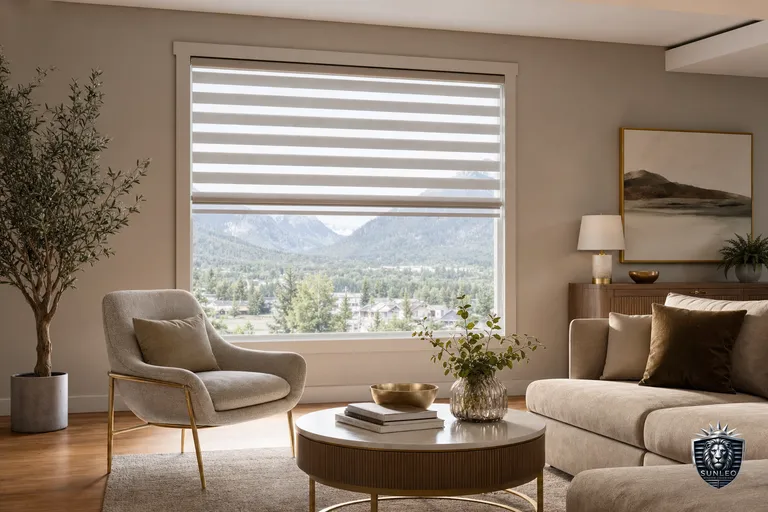
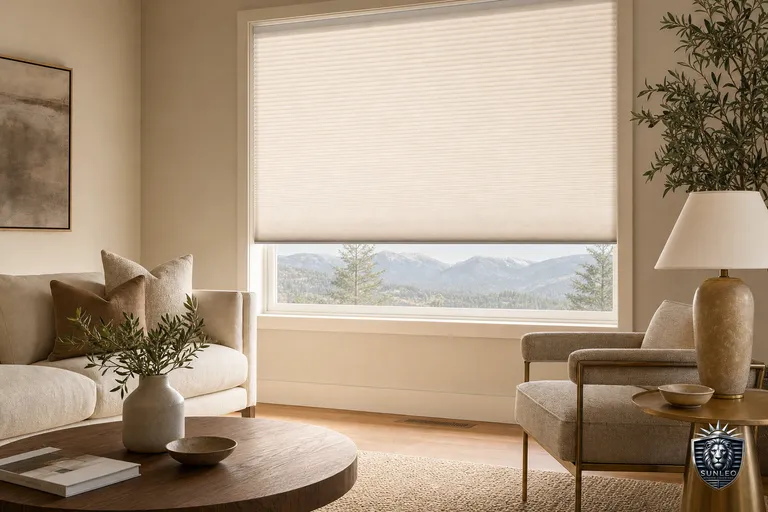
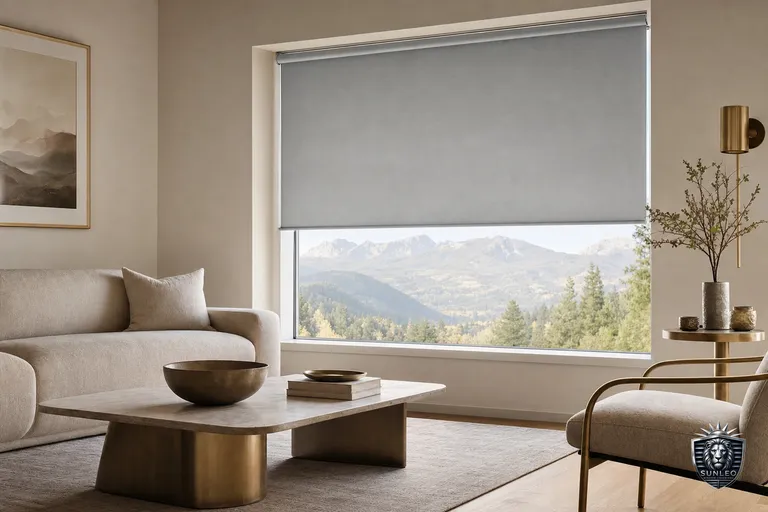
- Leave the peak bare, cover the base: many homeowners only cover the rectangular section of the window below the angle with a standard roller, zebra, or cellular shade, and leave the triangular top glazed and uncovered. This is the simplest and least expensive route, and it works well when the triangle is small relative to the window or purely decorative.
Fixed vs Motorized: How to Decide
The honest trade-off is convenience versus cost and complexity, not one option being better than the other.
- Choose fixed if: the window faces a direction with mild sun exposure, the room doesn't need daily privacy changes (e.g., a stairwell or entry gable rather than a bedroom), or the budget priority is heat/UV control over adjustability.
- Choose motorized track if: the gable is in a living room or bedroom that needs real light control through the day, the window is large enough that permanent coverage would make the room feel dark, or it's paired with skylights that already use a motorized system (so one remote or smart-home scene can run everything together).
- Skip covering the angle if: the triangle is small, high, and mostly decorative, and a standard shade on the rectangular portion below already handles the light and privacy that matters at eye level.
When a Custom-Shaped Covering Is Actually Worth It
It's easy to over-solve this. A custom angled covering makes sense when the gable window is large, faces west or south with strong afternoon sun, sits over a space used daily (living room, primary bedroom, home office), or when glare on a TV or screen is a recurring problem. It's usually not worth the extra cost when the angled section is small, faces north, or is purely architectural — in those cases, a well-chosen shade on the window's rectangular base solves the practical problem (light, privacy, heat) while the triangle stays a design feature rather than a functional one.
What Happens at Your Free In-Home Measure
Angled and gable windows are one of the few situations where an in-person visit genuinely changes the recommendation — measurements, mounting depth, and access all vary window to window. A Sunleo consultant measures the actual angle and height, brings fixed and motorized samples so you can compare finishes side by side, and gives a straight opinion on whether the angled section needs a covering at all or whether the base window alone will do the job. There's no obligation and no online purchase — just a plan tailored to that specific window.
- Laser measurement of the sloped and straight edges, plus ceiling clearance for access.
- Sample fabrics and slat finishes for both fixed panels and motorized tracks.
- A clear recommendation on fixed vs motorized vs base-only coverage, with reasoning.