
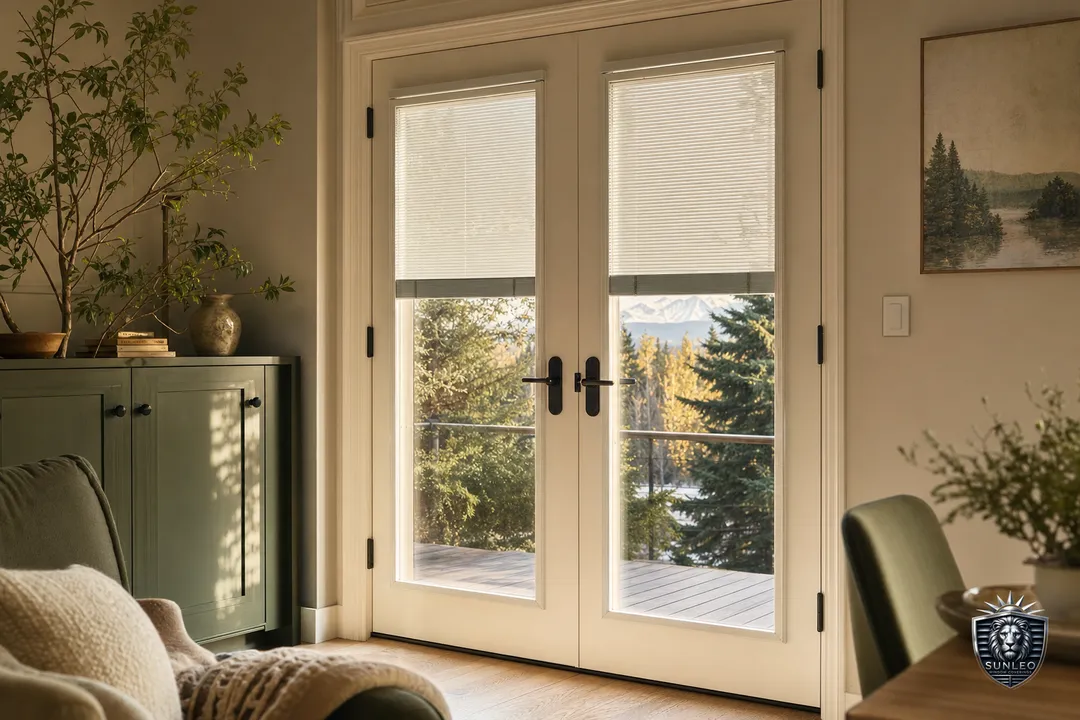
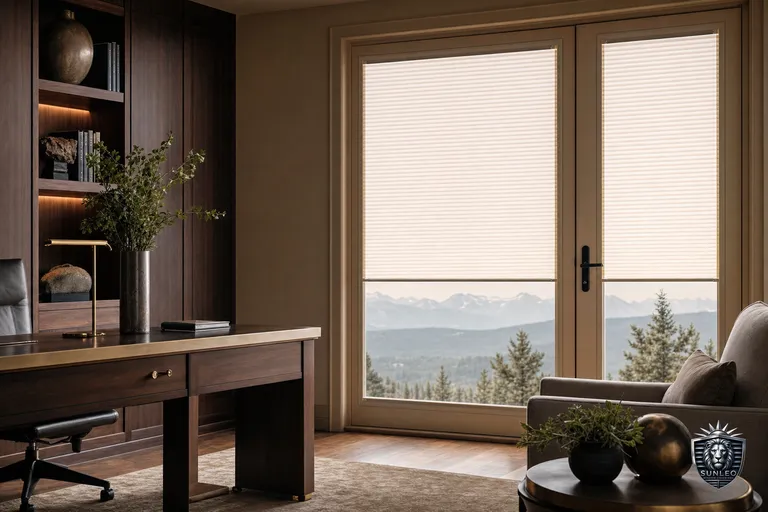
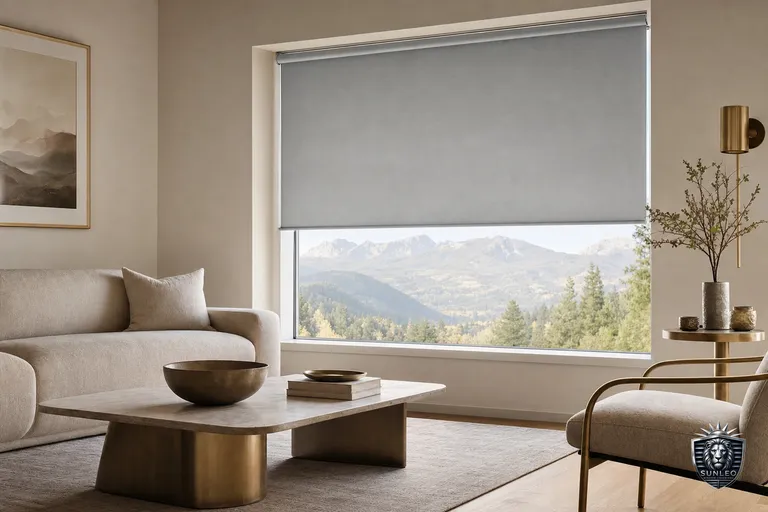
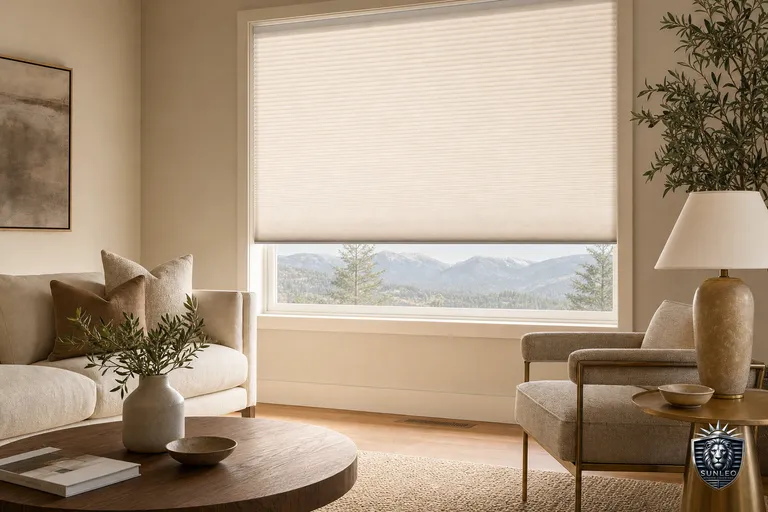
French doors are tricky to dress because each leaf is mostly glass, the doors swing, and there are handles that get in the way. A standard blind screwed above the frame swings out and bangs the glass every time you open the door; one mounted too close fouls the handle. In Calgary, French doors show up everywhere — from character inner-city homes to newer builds in Mahogany, Auburn Bay and Cochrane that open onto decks and backyards — and most of them are PVC or have slim glazing beads you would rather not drill into. Sunleo solves this with no-drill Perfect Fit frames that clip directly onto each glazed panel, so the blind hugs the glass and travels with the door instead of fighting it. We are a mobile, no-showroom service: a specialist brings the actual fabrics and frame samples to your home, measures each door panel precisely, and sends a written quote within 48 hours — no obligation, no online checkout.
Why French doors need a blind that moves with the door
A French door is essentially a window you walk through, and that creates problems a normal window blind never has to solve. The leaf swings, so anything hanging loosely in front of the glass — a roller hung above the frame, slats, a corded shade — swings with it and bangs the glass or the handle every time the door moves. There is almost no flat wall to mount to, the glazing sits inside a slim bead, and the handle protrudes right where a blind wants to hang. Pairs of doors add a second leaf and a meeting point to work around. The fix is a blind that is fixed to the glazed panel itself on all four sides, so it cannot swing — it simply travels with the door, staying flat against the glass whether the door is open or shut. That is exactly what a Perfect Fit frame does. It also keeps the blind clear of the handle, because the frame is shallow and sits within the door's own profile rather than projecting into the room. For Calgary homes where French doors usually open onto a deck or backyard and get used daily through summer, a blind that does not rattle or catch every time you step outside is the difference between a covering you love and one you take down by August.
How no-drill Perfect Fit frames clip on — no damage
Perfect Fit works by clipping a slim frame onto the rubber glazing bead — the strip that holds the glass in a PVC or composite door — using small brackets that push into the gap between the glass and the bead. No screws go into the door, so there are no holes, no damage and nothing to fill if you ever remove it. That matters for two groups in particular: renters who cannot drill, and owners of newer Calgary builds whose PVC and composite French doors often carry a warranty that drilling could void. The blind itself — honeycomb, roller or venetian slats — sits inside that frame, held against the glass on all four sides. Because it is captured top and bottom, it stays put when the door swings and operates with a small tab or cord against the frame rather than a long loose pull. Installation is quick and completely reversible, and the finished look is tidy and built-in, with the blind sitting within the door's sightline rather than bolted above it. The one honest limitation: Perfect Fit needs a bead deep enough to take the brackets and a few millimetres of clearance to the handle, which is exactly the kind of thing a Sunleo specialist checks during the free in-home measurement before anything is ordered.
Light, privacy and insulation at a wall of glass
French doors are mostly glass, which is lovely for light and miserable for privacy, heat and cold — and in Calgary all three matter. A south- or west-facing set bakes a room in summer and our high-altitude UV fades floors and furniture; the same expanse of glass is the weakest point in the wall when overnight lows hit minus 25 or minus 30. The blind you choose at a French door is doing real climate work, not just decoration. Light-filtering fabrics soften the daytime glare while keeping the bright, open feel people buy French doors for. A blackout or dim-out fabric makes sense where the doors are in a bedroom or media room. For the cold, honeycomb cells trap a layer of air right at the glass and noticeably cut the draught and heat loss a single-glazed-feeling door panel lets through. Privacy is the other half: because each panel has its own blind, you can lower one and leave the other open, or close both for full coverage at night without curtains pooling in the doorway. The right balance depends on which way the doors face and how the room is used — judgements that are far easier to make with real fabric samples held against your own glass, in your own light, than from a screen.
Alternatives when Perfect Fit isn't the right fit
Perfect Fit is the first thing we reach for on French doors, but it is not the only answer, and an honest recommendation depends on your doors. If the glazing bead is too shallow or flat to take the clip brackets — more common on older timber French doors than on newer PVC ones — a made-to-measure roller or honeycomb blind can instead be fitted to each leaf with slim brackets and, where needed, a discreet bottom guide or hold-down so the blind still travels with the door without swinging. For wide French or patio doors that double as a main thoroughfare, vertical blinds remain a practical classic: the vanes rotate for light and slide fully clear of the opening so you can walk straight through. And where the goal is simply daytime privacy on a door sidelight or a half-glazed back door — not light control — a slimline roller in a light-filtering fabric is the cheapest way there: it holds the sightline when it is down, keeps the daylight coming through, and rolls away to almost nothing when you want the glass clear. There is genuinely no single right answer for every French door, which is the point of measuring in person. A Sunleo specialist looks at the door type, the bead, the handle clearance and how you actually use the room, then recommends the option that will still feel right in five years — not just the one that is easiest to sell.


