
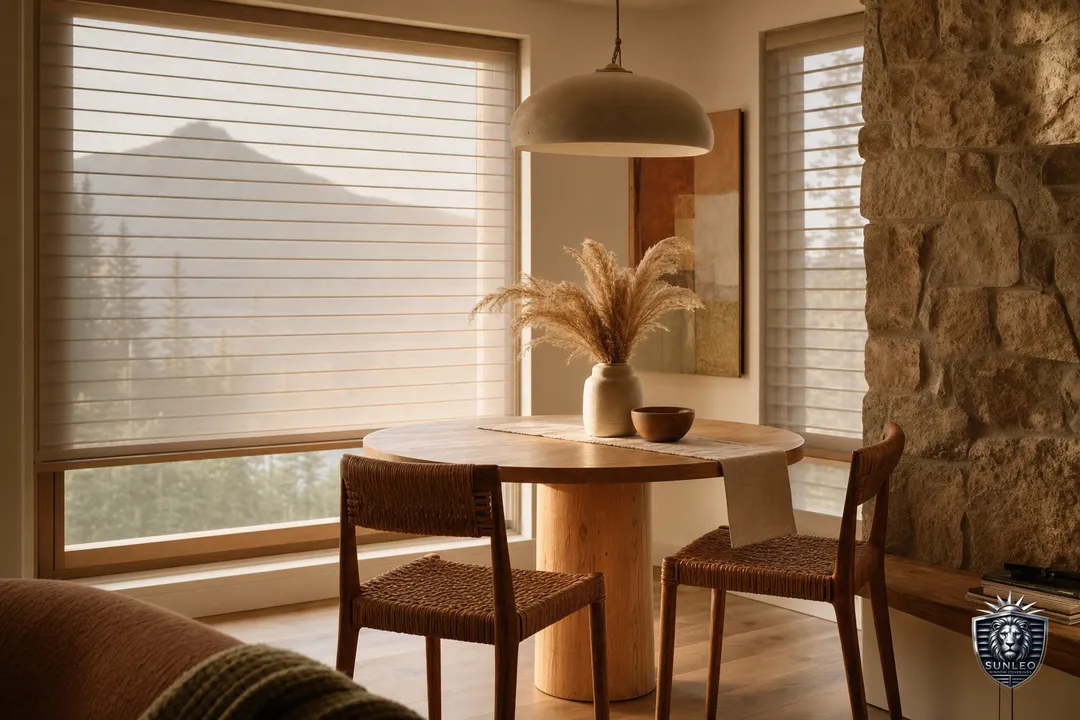
An egress window is the one window in your basement that has a job beyond light and privacy: it has to let someone climb out in a fire or emergency. Building code requires a basement bedroom to have an egress window you can open and escape through from the inside, without keys, tools or special know-how — which means whatever you hang in front of it can never trap, snag or block that opening. That rules out heavy, hard-to-clear coverings and dangling cords, and it makes the way a blind moves matter as much as how it looks. The good news: plenty of styles dress an egress window beautifully while still clearing out of the way in one motion. Sunleo sorts this out in your home, not a showroom — a specialist measures the opening and the window well, checks how the sash swings or cranks, and brings cordless samples so you see exactly how each option clears the escape path. You get a written quote within 48 hours.
What makes an egress window different — and why your blinds matter
An egress window is an emergency exit, and that changes the rules. Alberta building code requires a basement bedroom to have a window that opens wide enough for a person to climb out, that can be opened from the inside without tools, keys or special knowledge, and that isn't blocked on its path to the outside. A window covering can quietly undermine all three. A blind that's awkward to raise, a cord wrapped around a cleat, or a fabric panel that has to be fought out of the frame are exactly the kind of delay you don't want when seconds count — especially for a child or a guest who doesn't know the window. The covering also can't physically obstruct the opening: a bottom rail that wedges, a side channel that has to be pried off, or a bulky valance that catches the sash all work against escape. So the core principle for egress is simple — the covering must clear the entire opening quickly and in one obvious motion, and a child or anyone else in the room should be able to do it instinctively. That's why we steer egress windows toward cordless, lift-clear styles and away from anything that lingers in the opening. It's also why guessing from an online photo is risky here: the right answer depends on your specific sash, well and ceiling height, which is what an in-home measure confirms.
Coverings that clear the opening completely
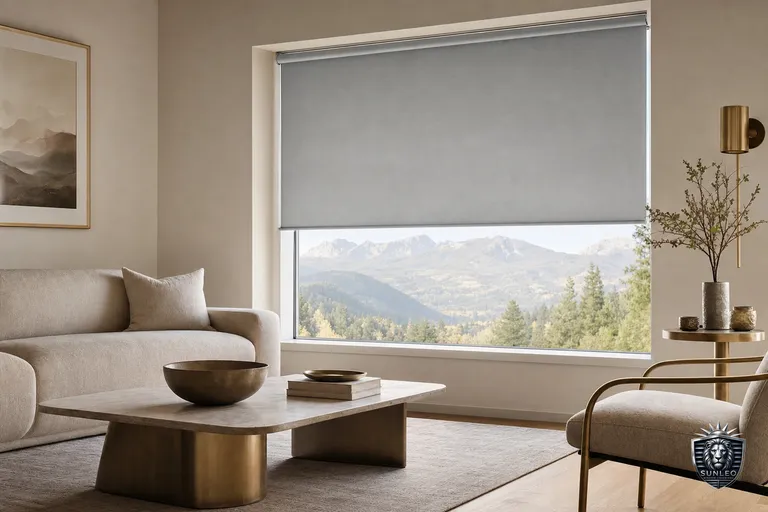
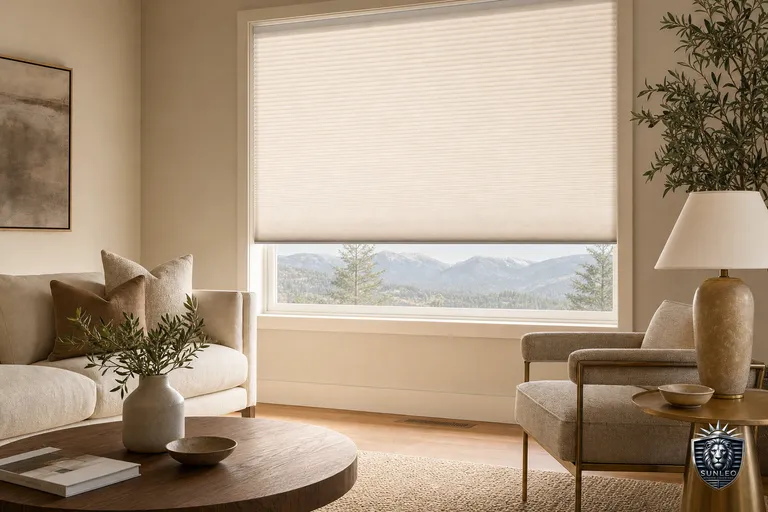
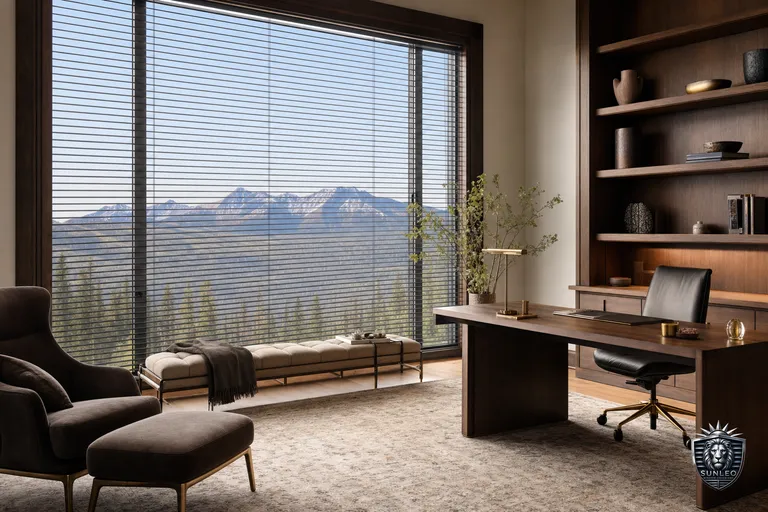
The safest egress coverings share one trait: they get entirely out of the way when raised. A cordless roller blind is the standout — a single sheet of fabric winds up into a slim cassette mounted above the frame, so a quick lift leaves the whole window clear with nothing hanging in the opening. Cellular (honeycomb) shades behave the same way, stacking into a tight band at the top, with the bonus of insulating a cold basement window. Lightweight aluminum blinds also lift fully clear and tilt for light, and they're an inexpensive, practical choice for a utility or guest basement. The key with all three is the mount: fixing the headrail above the opening, tight to the ceiling or wall, means the raised blind sits clear of the sash and the escape path, not part-way down the glass. Outside-mounting also lets the covering overlap the frame for better privacy and light control without intruding on the opening itself. What to be wary of are styles that don't fully retract or that need disassembly to move — fixed panels, anything bolted across the opening, or tight side-channel systems that capture the fabric and resist a fast pull. They can look great, but on an egress window the few seconds they add are the wrong trade-off. We confirm the mount height and retraction clearance on site so the raised blind genuinely vacates the opening.
Privacy without blocking your escape route
Basement egress windows often sit low, close to a patio, walkway or neighbouring fence, so privacy is a real concern — but you can have it without compromising the exit. The cleanest trick is a Perfect Fit blind: a slim frame clips onto the glazing bead with no screws, so the blind sits tight to the glass and travels with the sash — the window still cranks or swings open exactly as it should, with nothing hanging into the escape route. It is the privacy option that adds the least obstruction, which makes it ideal for an egress window where you want daytime privacy but minimal hardware. For adjustable privacy, top-down/bottom-up honeycomb shades let you drop the top to pull daylight into a dim basement while keeping the lower glass screened — and the whole shade still lifts clear when you need the window. A light-filtering or dim-out roller fabric gives daytime privacy and glare control while staying easy to raise in one motion. The honest caveat is the same as on any window: a sheer or light-filtering fabric that hides the room by day reverses after dark, when interior lights are on and the basement is the bright side. Where you need real nighttime privacy or full darkness in a basement bedroom, a blackout-capable roller or honeycomb is the answer — chosen so it still lifts fully clear of the opening, covering both day and night without blocking the exit. We'll flag which of your basement windows need that second layer during the visit.
Cords, chains and motors: the safety details for egress
On an egress window the operating mechanism deserves as much thought as the fabric. Long lift cords and bead chains are the obvious problem: they're a child-safety hazard anywhere — Canada's corded-window-covering rules took effect May 1, 2021 for exactly this reason — and on an escape window a cord that's looped, knotted or wrapped around a cleat is one more thing between a person and the opening. Cordless-spring lift solves it cleanly: you push the rail up by hand and it stays, with nothing dangling near the sill or the well. Motorization is the other cord-free route, and it's genuinely useful for a high basement window that's awkward to reach — one tap raises the blind. But motors deserve an honest note for egress specifically. An emergency can come with a power outage, and you never want the only way to clear an escape window to depend on a working motor, charged battery or a remote nobody can find. So if you motorize an egress blind, choose a system with a reliable manual override or a simple manual backup, and make sure anyone sleeping in that room can clear the window by hand without thinking. For most basement bedrooms we lean toward cordless-spring as the default — it's the simplest, most fail-safe, and the most affordable safe option — and reserve motorization for genuinely hard-to-reach glass where someone can still operate it manually if needed.
Calgary basements: cold, window wells, low light and our in-home service
Calgary basements bring their own challenges that shape the right egress covering. Below-grade rooms run cold, and a basement window is a real heat-loss point on a −30°C night — which is why an insulating honeycomb shade often earns its place here, trapping a layer of air at the glass to make a basement bedroom more comfortable and a little cheaper to heat, while still lifting fully clear of the escape opening. Many egress windows also sit in a window well, so the sash typically cranks outward or slides; the covering has to clear the operating handle and the crank's swing, which is easy to get wrong from a tape-measure guess. Light is the flip side — basements are dim, so a light-filtering fabric or a top-down option helps you borrow what daylight the well lets in. And Calgary's high-altitude sun and bright Chinook afternoons still reach south- and west-facing wells, so UV-fading and glare aren't only a main-floor issue; a light-filtering or dim-out roller protects a basement office setup and any furniture below the window. Because Sunleo is mobile with no showroom, all of this gets judged on site, in your actual light: a specialist measures the opening and the well, confirms the sash action and the clearance a raised blind needs to keep the exit free, and brings cordless samples to hold against the glass. That in-home visit wraps with a written quote inside 48 hours, and installation follows wherever you land in the service area — Calgary, Airdrie, Okotoks, Cochrane, Chestermere, or Strathmore.


