
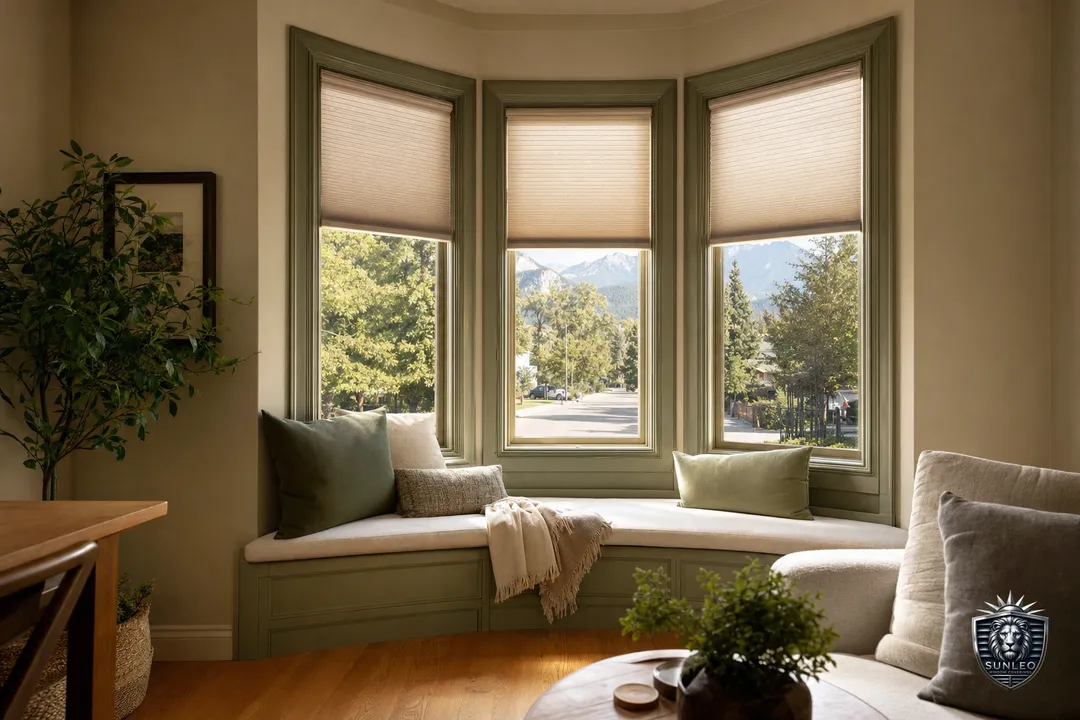
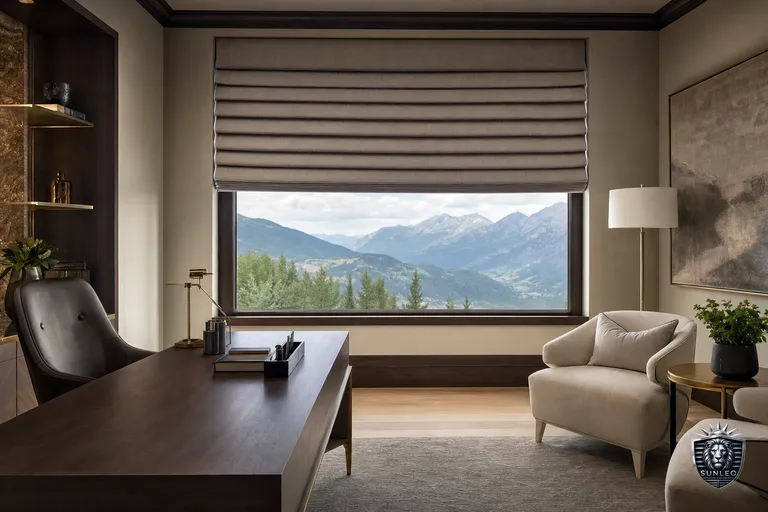
Bay and box windows turn one wall into three or five panes of glass set at angles — which is what makes them a Calgary favourite for light, and a genuine headache to dress. Instead of a single flat opening, you're working with several panes, so there's no one-size blind that covers it neatly. The standard, best-looking solution is a separate made-to-measure blind for each pane, planned as a set so the corners line up and nothing collides. Get the measurements, mount type and hardware right and the bay becomes a showpiece; get them wrong and you're left with light gaps and blinds that rub. This page walks through how bay and box windows work, how each pane is measured, and which blind types suit them best for Alberta's climate and newer suburban builds. Because Sunleo has no showroom, a consultant measures and fits every pane in your home — with samples held against your real glass — so the whole bay is right the first time.
Why bay and box windows need a blind for every pane
A bay window projects out from the wall in a set of separate glass panels — usually a wide centre pane flanked by two angled side panes, while a box or bow window may have four, five or more sections. Because the panes sit at different angles, you can't cover the whole opening with one blind the way you would a flat window. The practical answer is one blind per pane, each made to that exact section. This gives you independent control — open the sunny side, keep the cold side closed — and a clean, tailored look that follows the architecture. The catch is the corners: where two blinds meet at an angle, their headrails or brackets can collide, and tilting slats or a projecting fascia can clash with the neighbouring blind. That's why each pane's width, the mounting depth, and the join angle all have to be checked before anything is ordered. Get it right and a bay becomes the best-dressed window in the house; get it wrong and blinds rub, leave light gaps, or won't sit square. Sunleo plans the whole bay as a set so every pane lines up and operates without fighting its neighbour.
How to measure a bay window (and why a pro does it best)
Measuring a bay starts with treating each pane as its own window. For an inside mount, measure the width at the top, middle and bottom of every section and use the narrowest figure, then do the same for height. Check the depth of the frame — angled side panes often have less usable depth than the centre, which decides whether a blind can sit inside at all. The trickiest part is the angle where panes meet: you need clearance so adjacent headrails, brackets and any cranks or motors don't collide, and so slats can tilt fully. Window handles, trim, and the projecting return on the side panes all eat into space and are easy to miss with a tape measure and a phone photo. This is exactly where a measuring error gets expensive, because every blind is custom-cut and non-returnable. Since Sunleo has no showroom and comes to you, a consultant measures all of this on site, confirms inside vs. outside mount for each pane, and accounts for clearances and trim in person — so the order is right the first time. You also see fabric and opacity samples against your actual glass and Calgary light, which photos online never get right.
Best blinds for a Calgary bay window: climate comes first
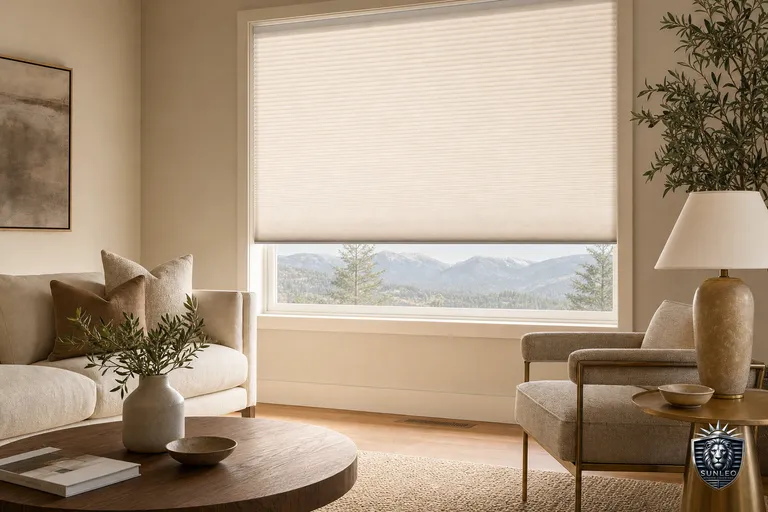
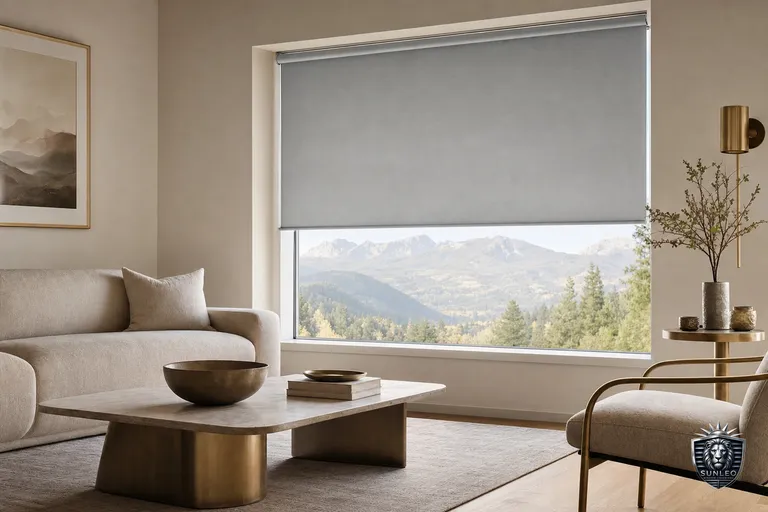
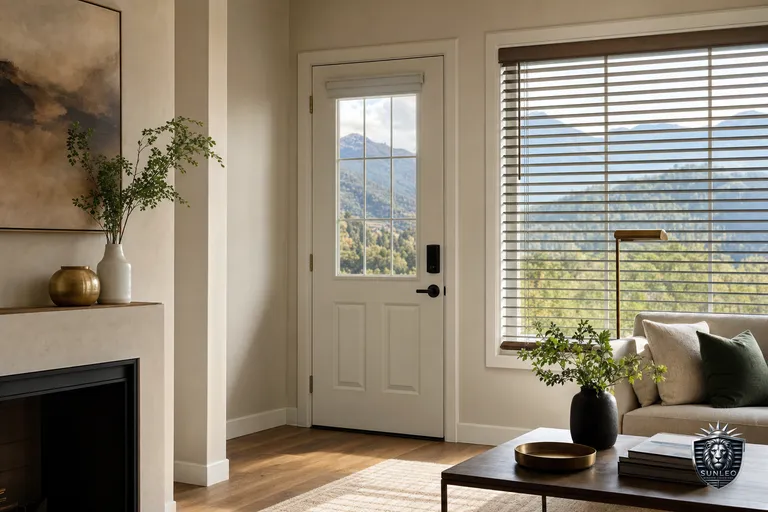
A bay window is mostly glass, and a lot of it — which means it's the room's biggest source of heat loss in a −30°C Calgary winter and the worst spot for glare and overheating in July. That makes insulation the first thing to weigh, not the last. Honeycomb (cellular) shades trap a layer of air at each pane, adding a thermal buffer that helps hold heat in winter and block it in summer, often the single most practical choice for a north- or west-facing bay in newer Calgary suburbs like Mahogany, Cranston, Evanston or Nolan Hill, where bay and box windows are common in dining nooks and front rooms. If the bay is a sunny breakfast nook, a light-filtering roller or zebra blind cuts glare while keeping the room bright; for bedrooms, blackout fabric on each pane keeps early summer sunrises out. Want precise, adjustable light? Faux-wood venetian slats tilt to the degree and shrug off kitchen humidity. Prefer softness and a high-end look in a front living-room bay? Roman shades fold into tailored pleats. There's no single right answer — it depends on the room, the exposure and how the bay is used, which is exactly what an in-home consult sorts out.
Inside mount, outside mount, and the corners that catch people out
Most bay windows look best with an inside mount — a separate blind recessed into each pane for a crisp, built-in finish that shows off the trim. It only works if every section has enough depth, including the shallower angled returns, so this gets confirmed pane by pane. Where depth is tight or the frames are uneven, an outside mount (blinds fixed to the face of the frame or wall) is the fallback; it's more forgiving on odd angles and hides light gaps, but needs careful planning so adjacent blinds don't overlap or bang at the corners. Either way, the join between panes is the make-or-break detail. Slim, low-profile headrails — like those on roller and honeycomb shades — leave the most room at tight angles, which is why they're often easier to fit cleanly in a multi-pane bay than bulkier hardware. Bottom-up/top-down honeycomb options also let you keep a bay private at street level while still pulling daylight in above — handy for front-of-house bays on a Calgary corner lot. None of this needs guesswork on your part: Sunleo confirms the mount type, hardware and clearances for each pane during the free measure, then builds the set to match.


