
Basement windows break almost every rule a normal window follows. They sit high on the wall, they're often short and wide, the glass frequently looks straight out at grade level — so anyone walking past or standing in the yard is looking down into your room — and the space behind them runs colder and damper than the rest of the house. On top of that, a basement bedroom usually has at least one egress window the building code requires to open freely for escape, which limits what you can hang in front of it. A covering chosen for an upstairs bedroom will often look wrong, fit badly, or quietly fail down here. Sunleo handles this in your home, not a showroom: a specialist measures each basement opening, checks which are egress, factors in the cold and moisture, and brings real samples so you can judge aluminum, honeycomb, roller and zebra blinds in your own basement light — then follows up with a written quote within 48 hours.
Why basement windows need a different approach
Almost everything about a basement window is unusual, and each quirk steers the choice of covering. The opening is usually small and set high on the wall, so a blind has to look deliberate at that size rather than stranded in a sea of drywall, and the controls need to be reachable. The glass often sits right at grade level or inside a window well, which flips the privacy problem upside down: instead of neighbours looking across at you, people look down and in from the yard, the sidewalk or the deck above. Behind the glass, a basement is the coldest, dampest zone in most Calgary homes — concrete walls, below-grade temperatures and higher humidity near laundry and mechanical rooms. And at least one window per finished basement bedroom is almost always an egress window, legally required to open fully and quickly for escape in a fire. Add it up and the brief is specific: cover the lower glass for privacy without killing the limited daylight, resist moisture, hold warmth, and never get in the way of an emergency exit. That's a different job than an upstairs window, and it's why the right basement blind is rarely the same product you'd hang in the living room.
Privacy from grade level — without making the room a cave
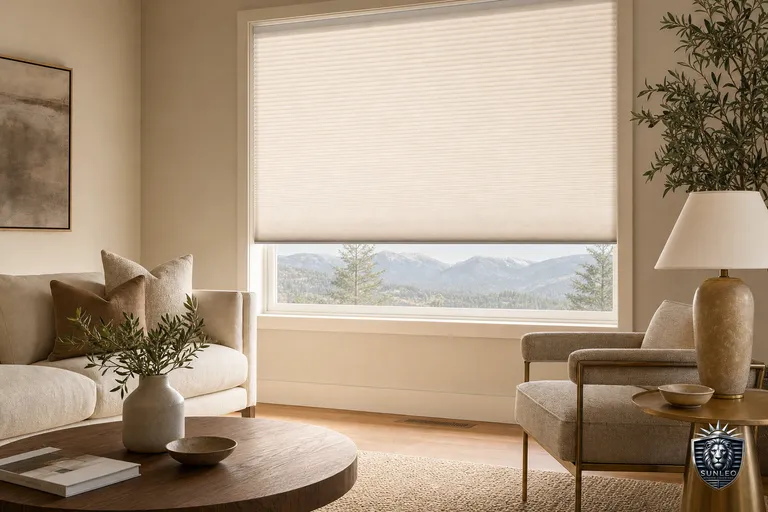
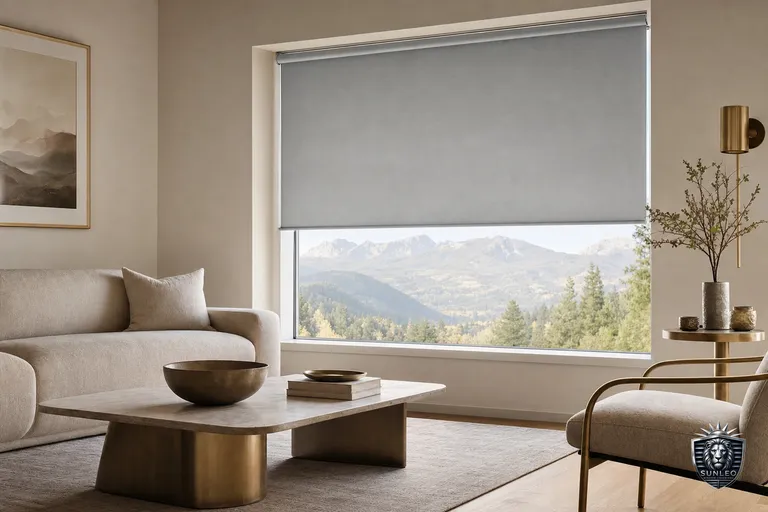
The hardest balance in a basement is getting privacy from people at ground level while keeping what little daylight you have. Because the sightline comes from above and the side, the part of the glass you most need to block is the bottom — yet that's also the easiest light to lose. The cleanest answer is a top-down-bottom-up honeycomb shade: you lower the top rail to let daylight pour in over your head while the lower half stays covered, so the room is bright but no one at grade can see in. A zebra (day-and-night) blind solves it differently — line up its alternating sheer and solid bands and you get a soft, lit privacy that obscures the view without going dark, then overlap them to close the room off when you want. For a basement bedroom, home theatre or guest room where you actually want it dark, a room-darkening or blackout roller is the simpler call. The wrong move is a single cheap blind that's either fully open or fully shut, which forces you to choose between privacy and a cave. Which solution fits depends on how the window faces, whether it's in a well, and what the room is used for — exactly what a measurement sorts out.
Moisture and cold: the basement's two quiet enemies
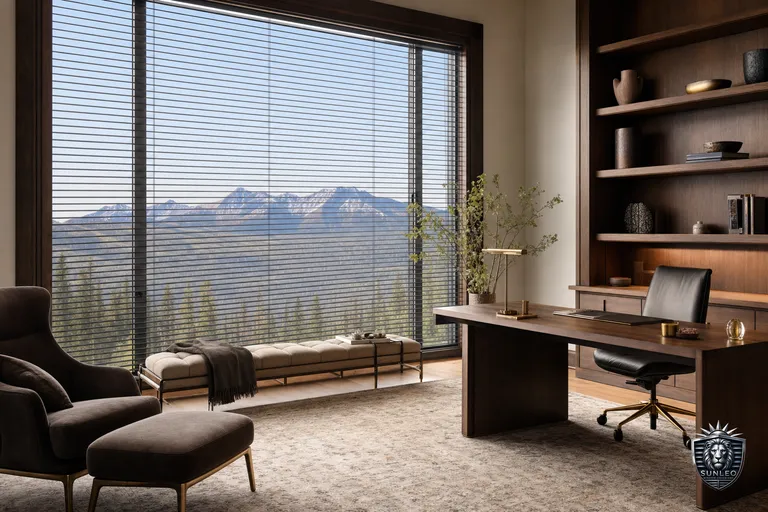
A basement window has to survive conditions the rest of the house doesn't, and the wrong material ages fast down there. Moisture is the first enemy. Near a laundry, a bathroom, a mechanical room or simply against cool concrete, humidity runs higher and condensation can form on the glass in winter. Real wood blinds are a poor choice here — they can swell, warp and discolour over time. Moisture-resistant materials win: aluminum blinds and faux-wood slats shrug off damp, wipe clean, and keep their shape, which is why aluminum is the sensible, affordable pick for utility and laundry windows. The second enemy is cold. Below-grade glass and concrete are a real heat-loss path, and a basement routinely sits a few degrees cooler than upstairs — a gap you feel on a −30°C Calgary night. This is where honeycomb (cellular) shades earn their place: their hexagonal pockets trap a layer of still air against the glass, slowing heat loss better than any other covering we fit. In a finished basement you're heating anyway, that insulation helps the room hold warmth and takes some load off the furnace. The honest trade-off is that the toughest moisture choice (aluminum) and the warmest choice (honeycomb) are different products — so the right pick depends on whether a given window's bigger problem is damp or cold.
Egress windows: safety has to come first
If your basement has a finished bedroom, it almost certainly has an egress window — an opening sized and positioned by code so a person can escape, and a firefighter can enter, in an emergency. That single fact outranks every style decision. Whatever covers an egress window must let it open fully and instantly: the blind has to clear the opening when raised, must never block the crank, latch or sliding mechanism, and shouldn't rely on a fiddly two-handed operation in the dark. For a child's room this matters even more, which is why we steer egress and kids' windows toward cordless or motorized lifts — there's no dangling cord, and the blind clears the glass with a single motion or a tap. Most of the systems we recommend for basements — rollers, honeycombs, zebras — can be built and mounted to respect an egress opening, typically outside-mounted high enough that the raised blind sits well clear of the window. What you don't want is a heavy, hard-to-move, or permanently fixed covering on the one window that's there to save your life. During the free in-home measurement, a Sunleo specialist identifies which of your basement windows are egress and recommends only options that keep them compliant and easy to open.
Calgary basements, real conditions, and a measure in your own light
Calgary basements have their own character. Developed lower levels in communities like Tuscany, Evanston, Cranston, Mahogany and out in Airdrie, Cochrane and Okotoks lean on small high windows and window wells to meet light and egress rules, and our climate pushes hard on them — intense high-altitude UV through any sunny well, dramatic Chinook temperature swings that drive condensation, and a low winter sun that glares in at an awkward angle for a few bright hours. Judging a fabric for a basement is genuinely hard from a catalogue, because the light down there is dim, often artificial, and unlike anywhere else in the house. That's the case for Sunleo's mobile, no-showroom service: a specialist comes to your basement, measures each opening, flags the egress windows, and holds real samples against your actual glass in your actual light so you can see how a honeycomb glows, how dark a blackout roller truly goes, or how a zebra reads at that height. You get honest guidance on which window wants moisture-tough aluminum and which wants insulating honeycomb, then a written quote within 48 hours and professional installation across Calgary, Airdrie, Okotoks, Cochrane, Chestermere and Strathmore.


